
$612. That is what my best day paid, and it is also the number that nearly made a liar out of me. Here is what the screenshot of it leaves out.
You have seen the screenshot: a web app built in one Saturday, zero coding, $19 a month, money arriving. I am the person in that story. I am 34, I managed a photography studio in Austin for seven years, and my coding began and ended with HTML. On one Saturday in March, 8 a.m. to 9:40 p.m., I built and shipped Remindly, which sends automatic invoice reminders for freelance photographers.
Day one paid $0. A typical day now runs $150 to $220. Over 30 days I grossed $4,180, and roughly $3,600 of it stayed after card fees and refunds. So yes, a weekend and no coding skill will get a paying tool live, because the AI writes the code. The weekend goes to accounts and DNS records instead, and the income lasts exactly as long as someone answers the email.
By the end you will know the four things a Saturday costs and the one first step that makes the idea worth building at all. One Saturday and a $20-a-month AI subscription genuinely got a paying app live with zero coding, but the day buys only the build. The customers, the card fees, the bug that cost me 11 refunds and the 45 minutes of daily email are the part no AI did for me, and that is where the $600-a-day headline goes wrong.
| Item | Cost | What it covered |
|---|---|---|
| AI coding subscription | $20 / month | Wrote the reminder scheduler and the sign-up page |
| Hosting | $20 / month | Ran the app and kept the logs I later needed |
| Domain | $12 / year | Gave the app an address to point a payment link at |
| Payment link | $0 to start | Took cards and handled retries on failed renewals |
| Card processing | ~3% of each sale | About 55 cents out of every $19 month |
| Refunds (first 30 days) | $180 | Mostly the duplicate-reminder bug, not unhappy customers |
The idea was a paid complaint, not an invention.
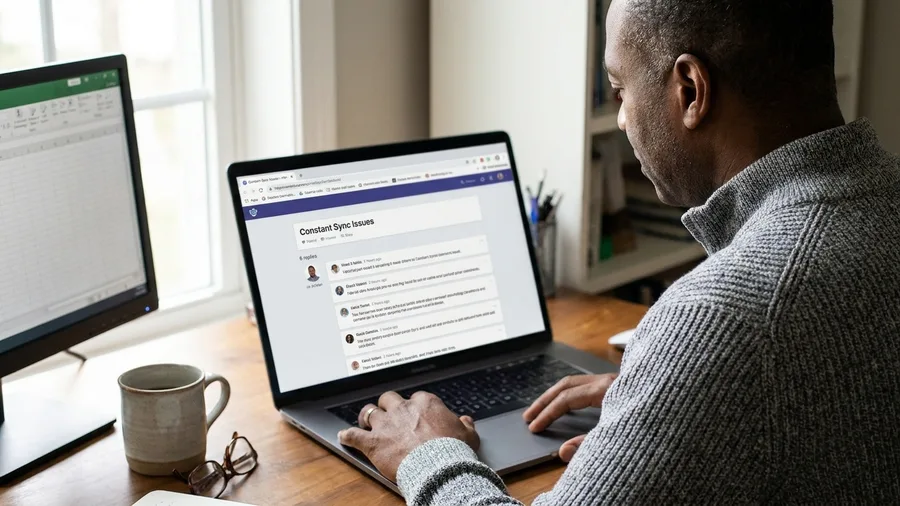
I didn't invent Remindly. I found it in a thread on a paid photographers' forum where a member described her monthly invoice chase: spreadsheet open on one monitor, client list on the other, typing the same nudge email out one at a time.
Six other members replied to that post with their own versions of the same chore. People who had already paid $40 a month just to be in that room, describing work they resented. That reply count was my market research, and it cost nothing.
What survived from my long idea list was one screen: automatic reminder emails, nothing more. I cut the invoice generator, the template editor, the dashboard, the mobile version. Each one died on the same test, it wasn't in the complaint.
Confirming the idea took 20 minutes, much like testing ChatGPT side hustles: a search through the forum's back pages for how often this came up, and six short replies asking if they'd pay $19 to stop doing it. Twenty minutes, and no money beyond the $20 AI subscription I was already paying for other work.
That's the difference between this and the app ideas I'd started before. Nothing was invented, so nothing was speculative. The worst case was losing a Saturday, not dipping into savings or borrowing.
Four subscriptions and $52 built the entire app.
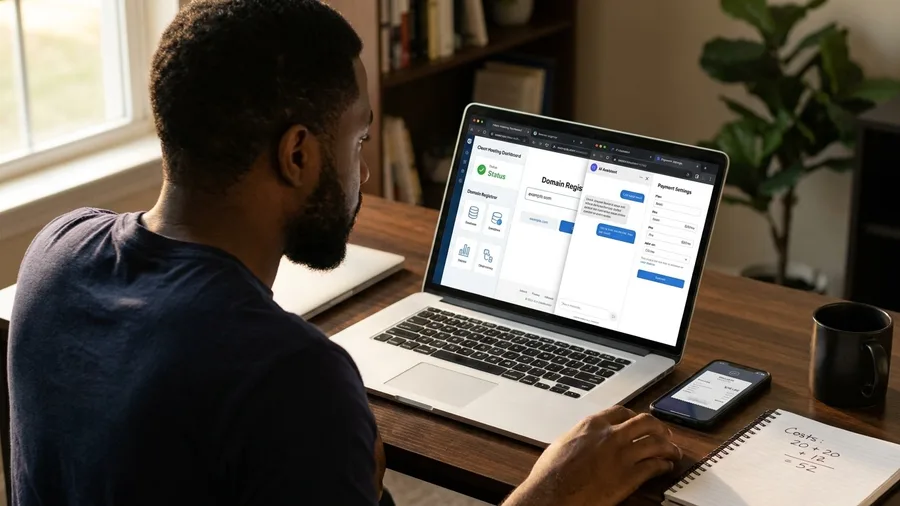
Making that one screen exist on the internet took four paid pieces, and the whole stack cost $52 to start: the AI coding subscription, a month of hosting, a yearly domain, and a payment link with no setup fee.
The AI assistant wrote the reminder scheduler and the sign-up page outright. What I couldn't get it to reason out was the glue, the webhook that told the app a card had cleared, and the piece that fired off the email. I found both in the processor's and the host's own docs, copied the sample code, and pasted it into the files the assistant pointed me to.
Here's the split that surprised nobody but me: $20 a month for the AI, another $20 for the first month of hosting, and $12 covering the whole year for the domain.
The payment link cost nothing upfront. The processor simply skims its cut per sale, so I could accept a card on day one without paying a setup fee or a monthly minimum. That arrangement kept my cost near zero until somebody actually bought something.
The $52 bought a finished, running app. That is all it bought. Not one piece on that list introduces your product to a stranger who might pay for it.
⚠️ COMMON MISTAKE
The $52 buys a running app, not a business
Nothing on that list of four subscriptions finds you a single customer. I didn't learn that lesson the hard way only because I already knew where my customers hung out. Budget your attention for that, not for the tools.
AI wrote the code; I spent the day on accounts.
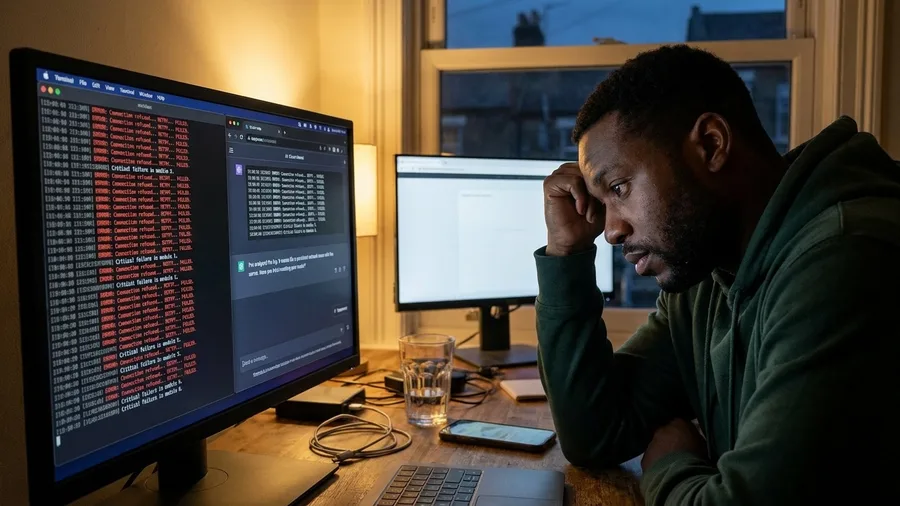
The clock ran from 8 a.m. to 9:40 p.m., and two of those hours went to a single DNS record that pointed my domain at the host backwards. The app was built and unreachable, and I sat there reloading a blank page until the record finally resolved.
About four hours went to prompting the assistant for the scheduler and the pages. The other five went to sign-ups, API keys, DNS and pasting the fixes into files. That wiring half is what nobody warns you about when they say a weekend and no code.
Zero coding in practice looked like this: read the error message, copy the line the assistant named, save the file, reload the page. Then do it again. Not one line of the app came from my fingers.
The quitting moment hit around 6 p.m. The payment webhook failed on every test transaction. What finally unstuck it was pasting the host's raw log output straight into the assistant instead of my own description of what I thought was wrong.
The day went to accounts and configuration. The code itself took the least time of anything I did that Saturday.
🛠️ One Saturday, Hour by Hour
8:00 a.m. — Accounts first
Signed up for the AI assistant, hosting, domain and payment link before writing a single prompt.
9:00 a.m. — The scheduler prompt
Described the reminder logic in plain English and let the assistant write the first working version.
1:00 p.m. — The pages
Sign-up page and a one-screen dashboard, generated and then corrected a dozen times each.
4:00 p.m. — DNS, the two lost hours
The domain pointed at the host backwards; the app was built and unreachable until it was fixed.
6:00 p.m. — The webhook
Payment confirmation failed every test until I pasted the host's raw logs into the assistant.
8:30 p.m. — Checkout
Created the hosted payment link, set the 14-day trial as a toggle, and ran one live $19 charge on my own card.
9:40 p.m. — Live
The app was taking money. Nobody knew it existed yet, and that was the next problem.
Taking money took 20 minutes, not a week.
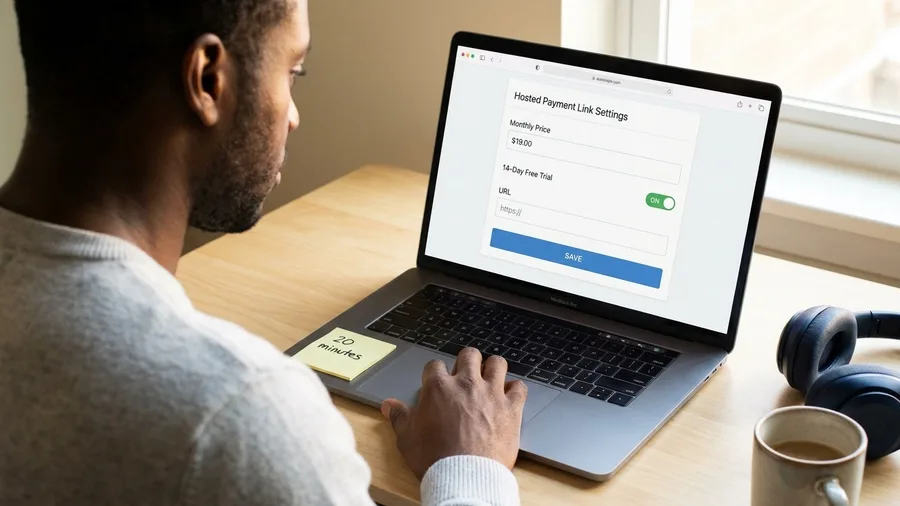
The last thing I wired on that Saturday was the money, and it turned out to be the fastest twenty minutes of the whole day.
I didn't build a checkout. I opened the payment processor's dashboard, created a hosted payment link, pasted that link onto a page on the new domain, and flipped the 14-day free trial on as a toggle inside the link settings. That toggle was the entire trial system. No trial logic went into the app at all.
I set the price at $19 a month for a deliberate reason: the photographers in that forum already paid $40 a month just to belong to the community, so $19 sat comfortably under the threshold where a freelancer starts asking an accountant whether it's deductible.
The processor swallowed the rest. It ran the cards, emailed the receipts, and retried on its own when a card failed at renewal – I never saw a card number, never stored one, never touched a PCI form. About 3% left at the door on every sale: roughly 55 cents out of each $19 month, taken before the money reached my account.
Twenty minutes, one link, money coming in.
$612 was my best day; $150 is a typical one.
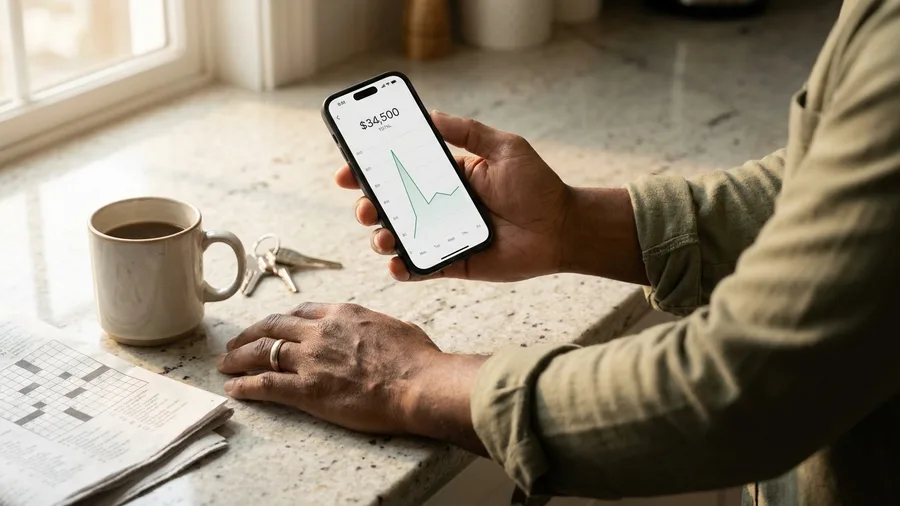
Day one, the app was live and had taken exactly nothing.
No post, no launch, no audience. The payment link sat there ready to accept cards and the counter read $0, which was the honest number for a product nobody had heard of.
Then the 40-second video peaked. The app made $612 in one day, and that is the figure sitting on top of the headline.
Every day since has run $150 to $220, about a quarter of that one spike. Across the first 30 days the gross came to $4,180.
between the quiet day and the $612 day, I changed nothing in Remindly. Not the price, not the page, not a single reminder email. The product was identical. What changed was the traffic pointed at it.
The $4,180 also is not a clean run rate. One hundred forty customers at $19 is roughly $2,660 a month recurring. Much of the rest was first charges from a wave of new signups, money that lands once and does not repeat at the same pace next month.
A good day is real. A good day every day was the thing the screenshot implies and the bank account does not show.
One TikTok drove 80% of sales and then stopped.
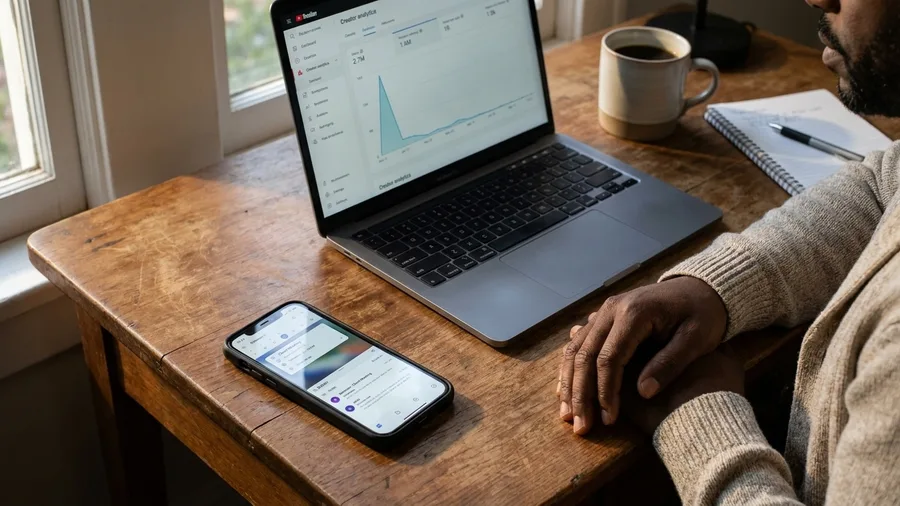
A single 40-second TikTok drove about 80% of the sales, and it drove them for roughly a week.
Day two, I posted a screen recording. No face on camera, no voiceover, no music bed. Just my screen scheduling a reminder in Remindly, cut to a client's phone showing the reminder email landing in her inbox 40 seconds later.
It took off: 1.2 million views, 900 trial signups, and 140 people who entered a card and became paying customers. One in six trial takers converted.
The signups arrived in a wave while the feed was still pushing the video. When it dropped out of rotation, the wave stopped and traffic fell to a trickle within days.
I tried two other channels and both came back near zero. A post inside the same photographers' forum pulled a handful of trials. Cold DMs to photography accounts on Instagram produced nothing I could measure.
For about a week I had distribution, and it was rented from an algorithm that never sent an invoice. Then the rent came due, and the account that had been paying it stopped.
Fees and refunds eat about 14% of every dollar.
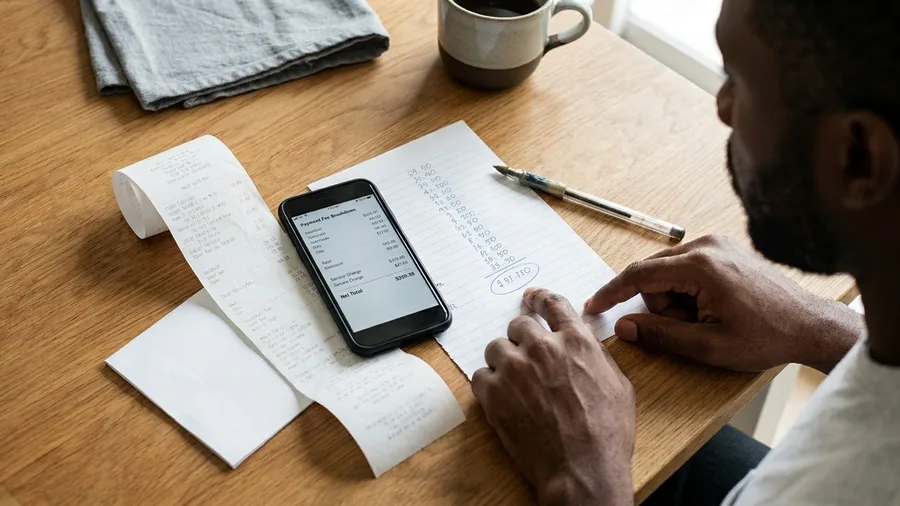
Strip out the tools before you count a single dollar of card money. The processor kept close to three cents on every charge, which worked out to $125.40 gone before a cent of the $4,180 ever touched my account. Hosting billed $20 on the same date each month, the AI assistant billed $20, and the domain set me back $12 for the full year, a dollar a month. Add those and I was spending about $33 a month just to keep the lights on.
Then the refunds. $180 came back out, eleven of those from the duplicate-reminder bug that was mailing the same client twice.
The hidden charges did the rest. Refunded sales still carried their processing fee, failed cards on renewal got retried and rebilled, and one renewal landed on a Sunday when the customer had already cancelled but the trial-to-paid window didn't align. Small stuff, and nobody puts it in a screenshot.
Push it all together and roughly $580 vanished from that $4,180, landing me at about $3,600 in hand. Fourteen cents on every dollar, before I wrote a single answer to a support email. None of it is clawback-able. The card fee was already taken; the host bills whether I make a sale or not; the refunds were a permanent hole.
What surprises a reader who's never run a paid tool: the fees are fixed and the revenue isn't. On a $612 day the 3% cut felt like nothing. On a $0 first day the $33 in tool bills still went out.
The bug that mattered took three days to find.
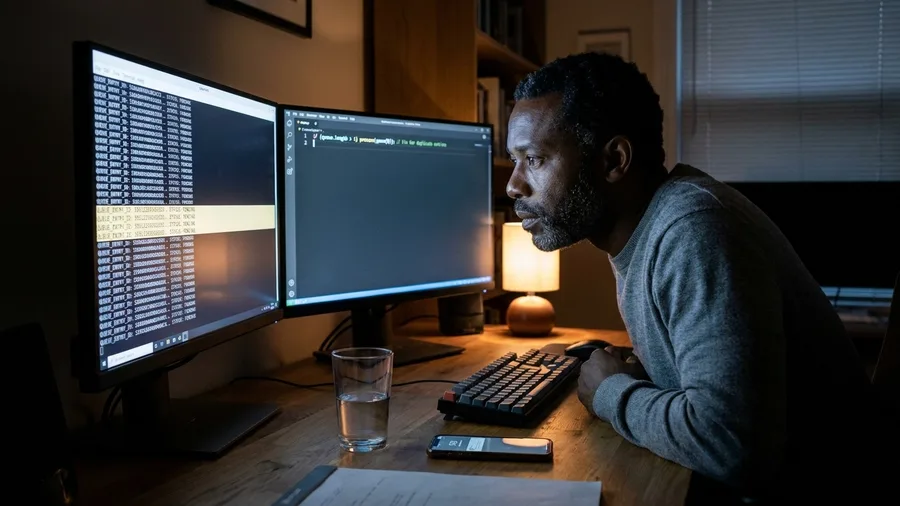
$180 of those refunds came back to one cause: a customer record saved twice inside the same sixty seconds queued the reminder job twice, and two identical emails hit the client hours apart. It never showed on my test account, because my test account had one client and a single save. It only fired on real photographers with several clients and records they'd gone back in to edit.
The AI gave me four fixes over three days. Every one patched the sending code, which was working fine. None of them touched the queue behind it, so every fix looked like success on my screen and failed on a customer's inbox by Thursday.
I found the cause at 11 p.m. on a Tuesday night, scrolling the host's raw job log. Two identical queue entries, same client ID, same second. I forwarded the log to a developer friend who read it and confirmed the diagnosis in fifteen minutes on his phone. The fix was one line. The eleven refunds and the goodwill from the photographers who'd recommended it to their clients were already gone.
What the AI couldn't do was see the system it had built. It read the code I showed it and answered about the code. The log read the running app. Those are different things, and the gap between them is where the money leaked.
What the AI Did and What It Didn't
Handled by the assistant
- Writing the reminder scheduler and sign-up page from plain-English prompts
- Generating the first working version of each screen in minutes
- Explaining an error message in words I could act on
- Patching code once I knew exactly what was wrong
Still on me
- Reading host logs to diagnose a queue problem it patched four times blindly
- Deciding which feature to cut and which complaint to build
- Answering 8 to 12 support emails a day
- Finding customers after the video stopped being pushed
Support runs 45 minutes a day, mostly one question.
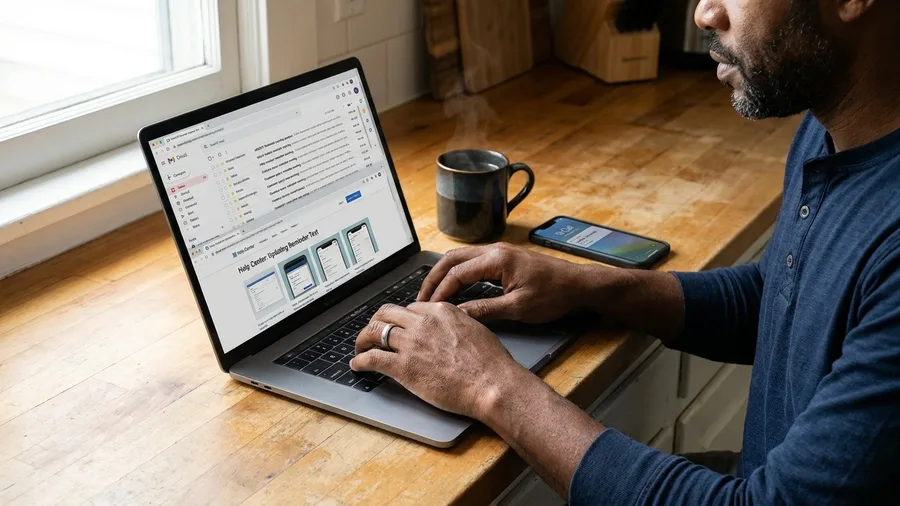
The bug stopped the refunds but not the inbox. Eight to twelve emails land in my account every day, weekends included, and answering them properly takes about 45 minutes. That's a morning coffee and a commute's worth of my time, every day, forever, or the product stops feeling alive to the people paying for it.
The single most-asked question by a wide margin: how do I change the reminder wording. I'd hardcoded the reminder text at signup. Photographers wanted to write to their own clients in their own voice, not mine, and they wanted it yesterday.
I wrote a help doc with four screenshots and posted the link in the app. Within a week that one question was cut roughly in half. That felt like a minor win until I realized the other half of the inbox was now showing up.
The questions that still land in my lap personally: billing, refunds, can-it-do-this, and anything where a photographer is worried about how a message looks to their client. A doc can't answer those. Those need a human reading a real complaint and writing a real reply. Forty-five minutes is small in any single day, and it is permanent. There is no month where the inbox is empty. The build was a Saturday; the answering is the rest of it.
What the First Month Actually Looked Like
Sales figures from my own processor dashboard, 30 days after launch.
Zero coding gets you launched; it won't get you growth.
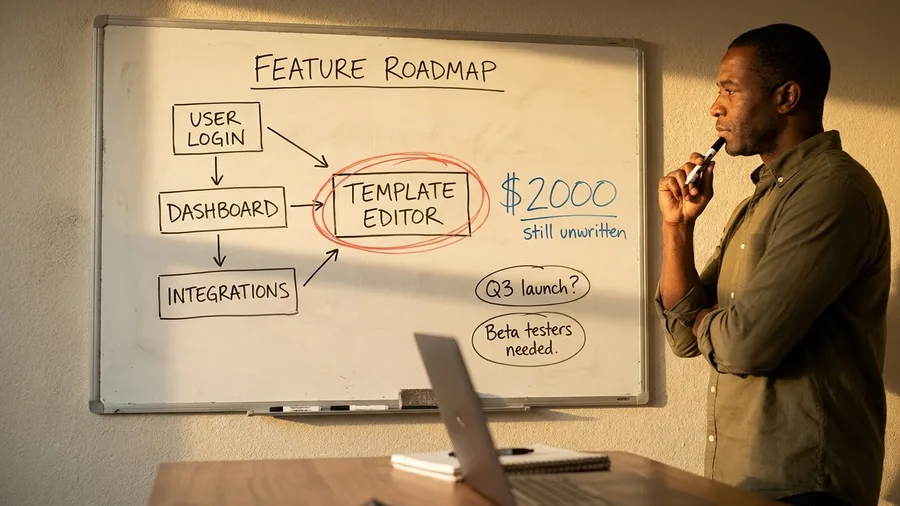
A template editor is the first thing customers have asked for that I can't hand to the assistant and expect back working by dinner.
All day, a reminder that went out in my fixed wording was fine; the moment photographers wanted their clients to hear their own voice, the request stopped being a screen and became a piece of engineering. I priced it the way I now price everything: a developer quoted roughly $2,000, and the cheque is still sitting unwritten on my desk, because the feature that would grow the product costs more than the whole launch did.
If I ran that Saturday again, the first hour goes to the paid forum before the AI tool opens: confirm the complaint, build only the one feature it names, then launch.
That order suits a single-feature tool for a service business, run by someone who will answer email every morning and open a hosting log when a client says the emails arrived twice. It does not suit anyone chasing money that arrives while they sleep, anyone set on a phone app, or anything with payments more tangled than one monthly charge – the assistant runs out of road well before those are solved, and then you are the one reading logs at 11 p.m.
So the honest split: the assistant built the app in a day, and everything that came after it – the support inbox, the bug hunt, the feature nobody will write for free – was mine.
Frequently Asked Questions
Can I really build an app with zero coding skills?
Yes, if it's a single-feature web tool. I built Remindly in one Saturday using an AI coding assistant, a host, a domain and a hosted payment link, and I hadn't written code since high school HTML. What I couldn't do was diagnose a queue bug without reading server logs, which took three days and a developer friend.
How much does it cost to start an AI-built app?
My total was $52 to get live: $20 for the AI subscription, $20 for the first month of hosting, and $12 for a year of the domain. The payment link cost nothing upfront and took about 3% per sale instead. Budget a little more for the second month before revenue arrives.
Is $600 a day realistic from an AI app?
It happened once and it wasn't repeatable. Day six hit $612 when a video peaked, then typical days settled between $150 and $220. Over 30 days the app grossed $4,180, which after fees and refunds left about $3,600. Treat any single-day number as a launch event, not a salary.
How do I find an idea worth building if I don't have one?
Mine came from a paid photographers' forum where one member complained about chasing late invoices by hand and six others said they had the same problem. Look for a complaint repeated inside a community people already pay to join, then build only the feature that complaint names. My confirmation took 20 minutes and six replies.
What breaks after launch, and will the AI fix it?
The bug that mattered sent duplicate reminders to some clients and took three days to find; the assistant suggested four fixes and none worked, because it couldn't see the queue behind the email code. Server logs gave it away, and the fix was one line. Expect to learn to read logs, or to pay someone who can.
How much time does the app take once it's live?
About 45 minutes a day, 8 to 12 support emails, every day including weekends. Most asked how to change the reminder wording, which one help doc with four screenshots halved. Billing questions and anything touching a customer's relationship with their own client still come to you.
Find the complaint people already pay to fix
If you try this, do one thing first: find a complaint people already pay to solve, like realistic ChatGPT side hustles, inside a paid community, a $40-a-month forum, a trade group, a Slack, and build only the one feature that ends it. Not the platform, not the mobile app, not the template editor. My own confirmation took 20 minutes and six replies, and it was worth more than every prompt I typed on that Saturday.
A straight answer on who should stop before opening the AI tool: anyone chasing passive income, anyone set on a mobile app, and anyone whose product needs complicated payments. The one day gets you launched. The customers, the daily email and the hosting log you have to learn to read are the part no AI does for you.
The $612 was real, and it was one day, sitting on top of a $0 first day, a $580 hole and 11 refunds from a bug I found in hosting logs. What the Saturday actually bought was a product and a job: 45 minutes of email a day, a $150-to-$220 Tuesday, about $3,600 kept out of $4,180. Look at the $612 once more, then decide whether that is a business you want or a weekend you shouldn't spend.
Check the complaint before you build
Spend 20 minutes in the forum you already pay for: search the history, count the replies to one repeated complaint, and ask six people if they'd pay $19 a month to make it stop.