
A 700-word article took about 120 minutes by hand, about 1 minute for ChatGPT to draft, then 60 minutes to check and fix. Almost all the work sits after the AI finishes.
That gap explains the $890-a-day screenshots posted next to a $497 course link. The headline works out to about $26,700 a month, or roughly $324,850 a year before costs and refunds.
Research cited by Tech Funding News puts most beginners at $500 to $1,000 a month early on. It calls $3,000 to $8,000 a month realistic inside a year, and the $300-a-day figure a fantasy.
Every method here is a real deliverable with a buyer, a fast AI first draft, and human review, sales and follow-up that cannot sleep. Sort them by what they demand of you, then finish one deliverable this week.
The $890-a-Day Claim, Priced
Services clients pay for now
Start where one client can pay you this week. Service work needs no audience, no product and no launch. It needs a deliverable the buyer can sign off on.
Every method below follows the same rule: ChatGPT writes the fast first draft, and you do the checking, the client questions and the follow-up that buyers actually pay for.
1. Freelance writing pays, but editing is the job

About 1 minute is what ChatGPT needs for a 700-word draft. By hand, the research and writing run about 120 minutes. Review and edits take another 60. The client is paying for the sign-off, not the raw output.
The catch is two-part. ChatGPT can invent facts, quotes and links, so every claim needs a source before it ships. Some employers also restrict AI-written content outright.
ZipRecruiter put U.S. AI writer average pay above $80,000 a year as of mid-September 2026, nearly $40 an hour. First clips will not hit that average. Pitch two local businesses with a free 300-word rewrite to show edited work, not raw AI output.
💡 Tip: Keep a source link next to every fact in your draft. If you cannot find one in two minutes, cut the sentence.
| Method | One deliverable | By hand (min) | ChatGPT time | Review/edit (min) | Realistic early money |
|---|---|---|---|---|---|
| Freelance writing | Signed-off 700-word article | 120 | ~1 min | 60 | Near $40/hr average; first clips lower |
| Virtual assistant | Two-hour admin batch | 120 | ~2 min | 30 | $26.38/hr average |
| Tutoring | 60-minute lesson plan | 45 | ~30 sec | 15 | $10–$150/hr |
| Resume help | Resume plus LinkedIn pass | 90 | ~1 min | 40 | Check local rates |
| Travel itineraries | Five-day itinerary | 180 | ~2 min | 60 | A few hundred to several thousand/mo |
| Local chatbots | FAQ bot for one shop | 240 | ~5 min | 90 | Setup fee plus monthly; no set rate |
| Automation consulting | Intake-to-invoice flow | 180 | ~3 min | 60 | Fixed-scope audit first |
| Social media | Week of four approved posts | 120 | ~2 min | 45 | Monthly retainer; no set rate |
| Paid speaking | Tailored pitch | 150 | ~10 min | 60 | Follow-up books it, not the list |
| Prompt packs | 30-prompt pack | 120 | ~5 min | 90 | $4.99–$19.99 tiers after audience |
| Mini-courses | 45-minute outline | 60 | ~1 min | 30 | ~$3,300/yr average on Udemy |
| Printables | Five-page printable set | 45 | ~30 sec | 20 | No figure; build-once product |
| Faceless video | 60-second script | 30 | ~30 sec | 15 | $2–$10 per 1,000 views |
| AI niche blog | 1,200-word article | 120 | ~1 min | 60 | Unproven; one blog lost in 2 weeks |
| Selling the dream | Course sales page | 120 | ~2 min | 60 | $497 course price, refunds first |
2. Virtual assistant work sells reliability, not magic

No. A virtual assistant sells calendar control and answered email, and a client pays for replies that actually arrive. What went into the bot is only a draft of them.
Ask what happens when a client's login or a tax statement goes into a personal chatbot. It should never come up. The failure that loses the account is a missed message or a wrong booking, not a slow paragraph.
One two-hour admin batch runs about 2 minutes of AI drafts, then 30 minutes of your review and personalization. Virtual assistants average $26.38 an hour per Indeed, cited by Investopedia. Sell one fixed task as a five-hour weekly block after a paid trial.
💡 Tip: Write a one-page confidentiality note before the first client. Most competitors do not have one.
3. Tutoring bills subject knowledge, not prompts
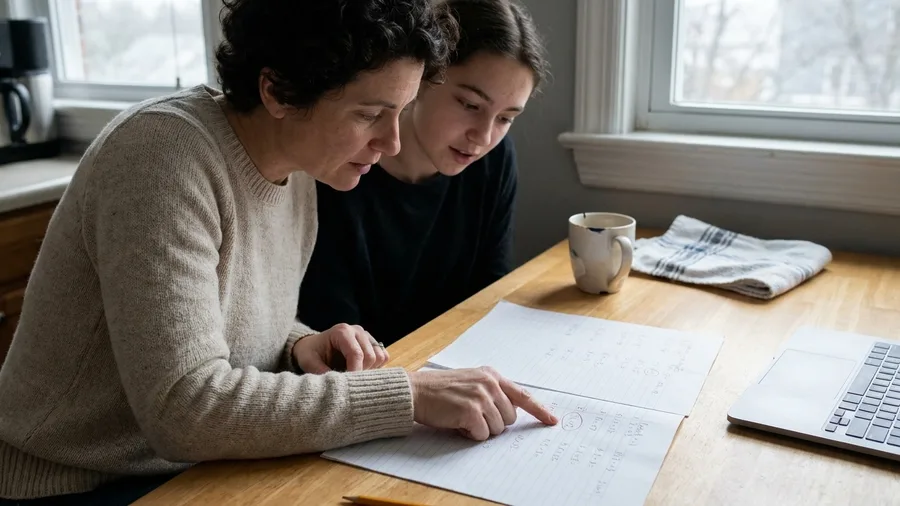
Writing practice questions by hand for a Wednesday lesson is the dull hour, and a parent will still pay for someone who knows which answers are wrong.
Trust carries over from admin work and turns into subject knowledge here. Build that subject once and the lesson plans stop taking your evening.
One afternoon gets a worksheet template, an answer key and a short question bank set up in ChatGPT.
Adapting a 60-minute lesson for a student then takes about 15 minutes of review, against 45 minutes by hand. Using the same base every week is what saves the time.
The catch sits right there. ChatGPT will mark a wrong answer as correct with total confidence, and a bad explanation in front of a paying student ends the booking. Stay in a subject you have already passed and work the problems yourself first.
Tutors earn roughly $10 to $150 an hour, per Investopedia. The low end is crowded with people reading off a screen. Parents buy a sharp explanation of why the answer is wrong, so the high end needs proof you can catch one.
Sell a four-session exam-prep package and hold a short call with the parent before the first lesson. That call is where you show the setup already in place, and where the trusting relationship starts.
💡 Tip: Save every practice set you write. By month three you have a bank no competitor can copy.
4. Resume help is a package, not a chat
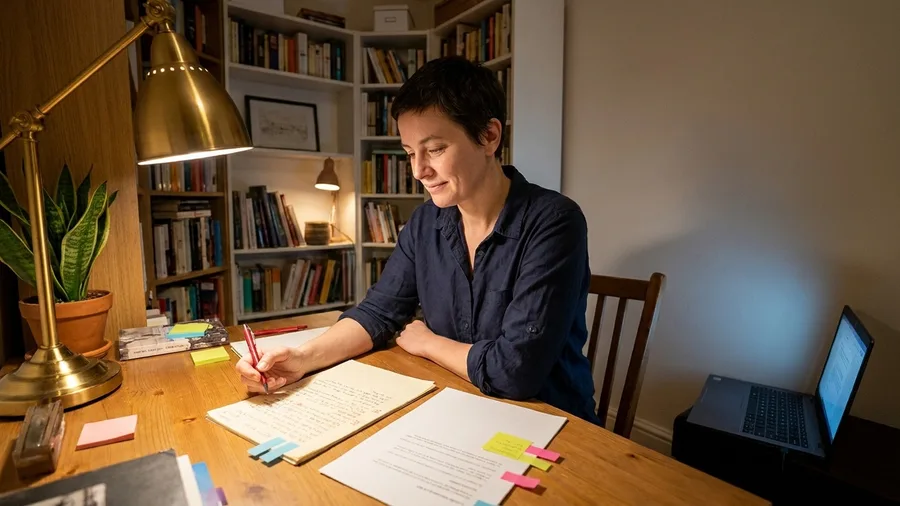
Prompt to copy
You are helping me rewrite a resume truthfully. Here is my current resume: [paste all of it]. Here is the job posting: [paste it]. Rewrite my experience bullets to match the posting's language, but only using skills and numbers I have already given you. For every bullet, list the line in my resume it came from. If you need a number I have not given you, write NEED INPUT instead of guessing. Format: bullets for one page, then a separate list of matching LinkedIn headline and summary. Do not add titles, dates or achievements I did not provide.
That prompt produces a clean draft in about a minute. Paste it into ChatGPT and you get rewritten bullets plus a LinkedIn pass.
What it does not give you is a finished package. Rewriting and checking a real resume still takes about 90 minutes by hand.
Applicant-tracking systems and hiring managers punish inflated claims. The client must approve every bullet and own every number.
No research figure covers resume packages, so charge a flat fee after checking local rates. The buyer pays for a truthful document, not a stack of AI bullet points.
Offer a before-and-after audit as the first paid step. It is small, quick and shows the client what they are buying before you touch a full rewrite.
⚠️ COMMON MISTAKE
Do not sell the AI draft as the product
Every method here falls apart when the buyer receives raw ChatGPT output. The invoice is for the checking, the client questions and the follow-up. Price the human hours, and the AI is the tool that shortens them.
5. Travel itineraries need bookings, not just prose
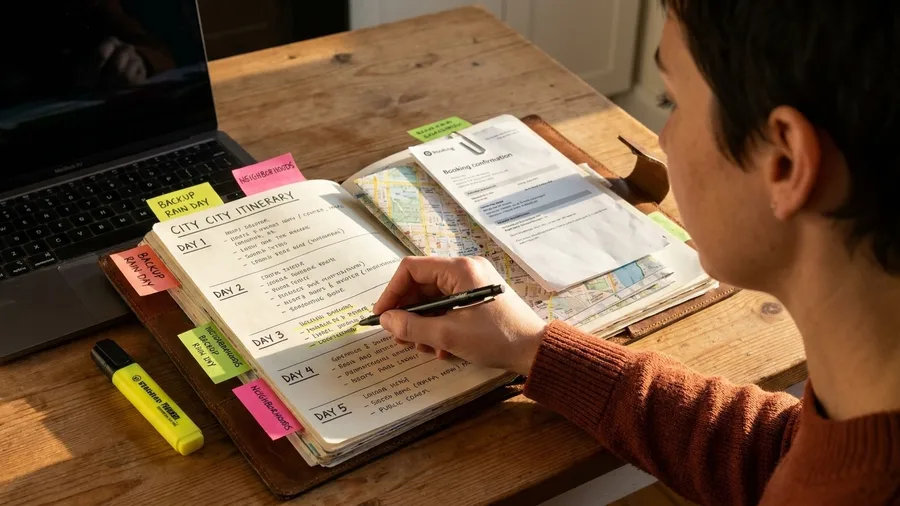
What came back was a five-day Lisbon itinerary with each day mapped to a neighborhood, transit notes and a rain backup. It took ChatGPT about two minutes to draft.
Getting it actually bookable was the work. Building the same itinerary by hand, research and layout, takes about 180 minutes.
Verification and client revisions added about 60 minutes. ChatGPT can invent prices, opening hours and booking rules. Check every detail against the official site and never promise refunds or visa outcomes. The buyer pays for verified bookings and backup plans, not a travel essay.
Travel planners as a side hustle often earn a few hundred to several thousand dollars a month, per Investopedia. That range sits on bookings someone confirmed. Sell a paid planning call before writing the full itinerary, so the client commits before the hours go in.
Time check: about 2 minutes for the AI draft, about 180 minutes by hand, and about 60 minutes for verification and revisions.
🧾 One Service Client, From First Message to First Payment
Pick one deliverable
Choose a single output you can finish in a day, such as a 700-word article or an inbox batch.
Write the free sample
Use ChatGPT for the first pass, then edit it so the work is genuinely yours.
Send five messages
Pitch local businesses with the sample attached and a flat price for the first job.
Run a paid trial
Charge for one small job so the client proves they will pay before you scale up.
Invoice on delivery
Deliver, fix one round of notes, and ask for the next batch the same week.
Small-business and B2B work
These methods add a sales call. That is the trade: fewer clients, bigger invoices, and a buyer who needs convincing before money moves.
The work itself is not harder than a freelance article. What is harder is getting a shop owner or a manager to answer the phone and approve the scope.
6. Local chatbots need sales calls, not code

A local chatbot that answers a shop's questions is a sales job with a build attached. A resume and an itinerary live on paper.
The bot answers a real person at 7pm, and when the hours change it keeps giving the old ones until someone updates it.
Prompt ChatGPT with the shop's hours, services and five common questions, and it drafts the flow in about 5 minutes. Mapping the real questions and writing the copy takes about 240 minutes. Testing and owner review take another 90.
Add a human handoff, a privacy policy, and a monthly check on the menus. No research figure here sets a rate, so ask for a setup fee plus maintenance after a paid pilot, priced from the calls the shop stops missing.
Fastest win: the draft is the 5-minute part. The 240 minutes of asked-and-answered mapping is what the owner is buying.
💡 Tip: Build one demo for a shop you already use. Real questions beat a portfolio every time.
Automation Consulting: What the Buyer Sees
Worth paying for
- A flow that works end to end with dummy data
- Written access approval before live accounts
- A rollback plan if an invoice double-sends
- A one-page map the owner can read
Refund territory
- A prompt that describes automation instead of building it
- Live testing on real customer records
- Two tools connected without a spending limit
- No documentation when you hand it over
7. Automation consulting pays for mapping, not prompts

A broken integration can drop a lead or charge a customer twice. Before any live account, run the whole flow on dummy data and get written approval for access.
A shop's contact form should end as a sent invoice without anyone retyping details. Old way, a person copies each request into a spreadsheet, then into billing: about 180 minutes of mapping and rekeying for one flow.
New way, ChatGPT lays out the same steps in roughly 3 minutes, then you build it in Zapier or Make and test it, about 60 minutes with review. The saving is real, but you still own every edge case.
Tech Funding News lists this as working side-hustle ground but names no rate, so sell a fixed-scope audit first. Price it from hours saved and risk tested, and the buyer is paying you to map and prove it, not to describe it.
Pick one workflow at a business you already know, document it, and offer that audit as the way in.
8. Social media retainers die without approvals
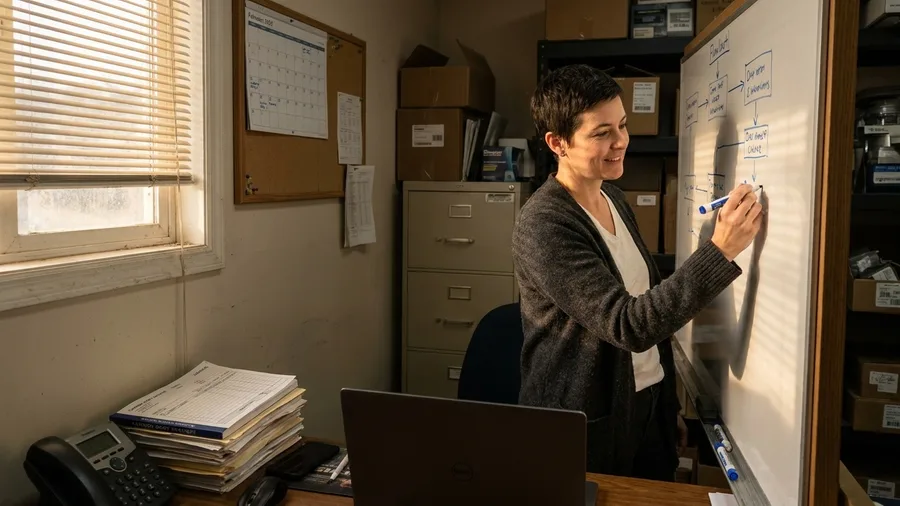
Four posts take about 2 minutes for ChatGPT to draft, then roughly 120 minutes of planning and sourcing before a client sees anything.
Step 1: Map the week in ChatGPT. Paste the shop's services and voice notes, and ask for four post ideas with hooks. You should see a themed week, not four random captions.
Step 2: Write the captions, then the catch. Owners reverse decisions, formats shift, and one post published without sign-off can cost the account. Cap it at two approvals and use platform roles, never the owner's password.
Step 3: Send for approval, then schedule. Review, sign-off and scheduling run about 45 minutes; the moment the client clicks approve, the week is theirs to publish.
Investopedia lists this as a beginner-friendly option but gives no rate, so charge a monthly retainer because approvals recur. Sell a two-week trial with four posts and one call to land it.
9. Paid speaking leads need follow-up, not a prompt

Prompt to copy
Act as a speaking-bureau researcher. Using public event pages, professional association calendars and conference agendas from the past 18 months, build a list of 50 organizations in [region] that book speakers on [your topic]. For each, give the organization name, event name, month, the person who handles speaker bookings, their public role, and the specific topic they booked last. Mark any row you cannot verify from a live page. Leave out fee estimates and anything you cannot source. Return the list as a table sorted by how recently they booked.
That prompt does the finding. Paste it into ChatGPT's deep research and it returns the list in about 10 minutes. Run it in the tool, then open every page it names. A name and a role that check out is the only output that counts.
Follow-up is the part AI cannot do. Building the list of 50 by hand takes about 150 minutes, and writing one tailored pitch takes about 60 minutes. Five pitches a week turn a list into a booking, and a list alone is not a booking.
Forbes says the $100,000 figure tied to this method is only potential and much follow-up is needed. So no fee is promised here. The first money comes from the emails you send and the calls you book after them, not from the deep research.
Start with a 50-organization list, then send five tailored pitches a week. The research finds decision makers; the follow-up that turns them into a booking is still yours.
The $4,000-a-Month Prompt Site, At a Glance
📧 Subscribers at $4,000/mo
20,000
💰 Big ad spot
$500
💵 Small ad spot
$50
🧾 Planned tiers
$4.99 / $9.99 / $19.99
⏳ Timeline to that revenue
Two years of list building
👤 Founder age
26
The catch
PromptVibes reached $4,000 a month after 20,000 newsletter subscribers, not on launch day.
Products built once
Product income compounds slowly. You build a file, a pack or a course once, then sell copies. The first months often pay nothing, and the fourth or fifth can surprise you.
The buyer here is someone with a specific problem, not a browser. Traffic is the hard part, and no product sells itself.
10. Prompt packs sell distribution, not prompts

Building a set of prompts is the fast part. Selling it is a crowded, uphill job. Buyers want an organized pack from someone they already follow, not 30 prompts they could paste together themselves.
PromptVibes hit $4,000 a month only after 20,000 newsletter subscribers, per Entrepreneur, not on day one. Its ad spots sold for $500 and $50, and planned tiers were $4.99, $9.99 and $19.99 a month.
The check that catches this: count your subscribers before you count your sales. For one 30-prompt pack, ChatGPT drafts the prompts in about 5 minutes, selecting and writing examples by hand takes about 120 minutes, and testing and editing take about 90 minutes.
Most beginner packs earn little without traffic, so start by giving away a free 10-prompt sampler and collecting emails.
Only once that sampler list grows does the full pack have buyers waiting. The prompts were never the product; the audience is.
11. Mini-courses average $3,300 a year on Udemy
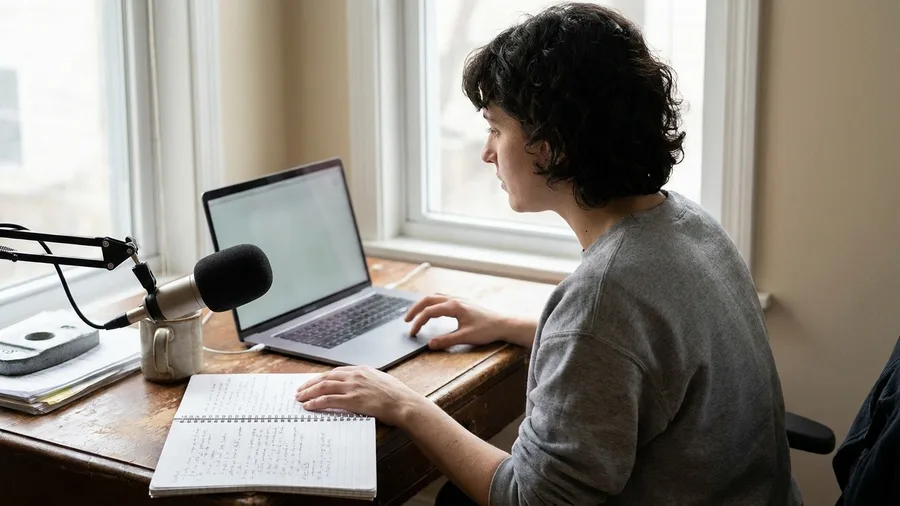
A ChatGPT-written course is not passive income, because the platform runs the discovery and the average take is small.
Motley Fool reports that Udemy instructors average around $3,300 a year, so treat that figure as a ceiling for the typical seller, not a first-month target.
Buyers on a course platform are not paying for an outline. They pay for a short course that fixes one problem, such as setting up a freelance invoice or reading a profit-and-loss sheet.
Discovery happens on Udemy's side, so your title and first lesson do the selling.
For one 45-minute course, ChatGPT drafts the outline in about a minute. Building the outline and examples by hand takes about 60 minutes, and reviewing the lessons and putting them in order takes about 30 minutes. Recording, editing and updates come after that.
Prompt to copy
You are a course designer for beginners. I want to build a 45-minute Udemy course that solves one problem: [the problem, e.g. first freelance invoice]. Draft a lesson-by-lesson outline with learning goals and one worked example per lesson. Use plain English, keep it to six lessons, and mark where I need my own screenshots or numbers.
Even a finished course pays slowly. $3,300 a year works out to about $275 a month, and the average is not a launch plan. Before you record anything, run a free live workshop on the topic and sell seats to the room first.
Three Ways Product Sellers Lose Money
12. Digital printables need copyright care
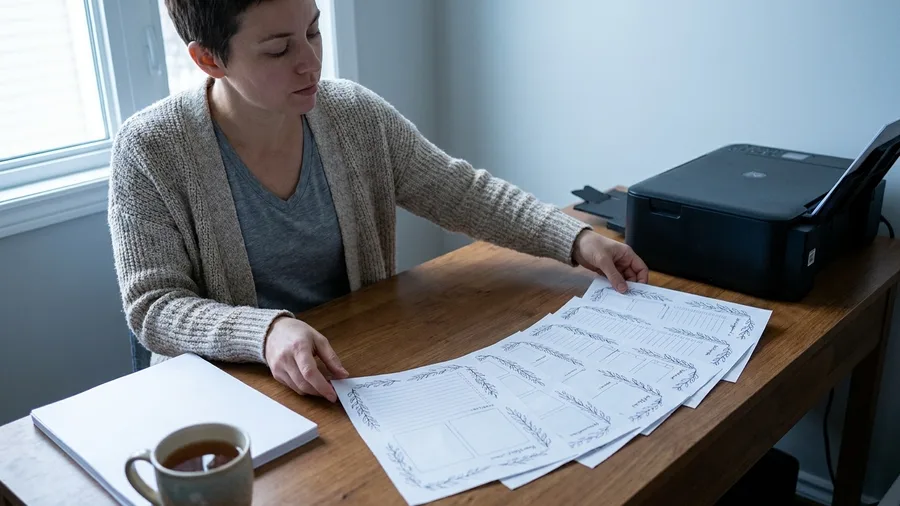
Printable sets can sell, but the safe way is different from the quick way. Investopedia warns that content generated entirely by AI may not be protected by copyright unless a person adds creative work.
Add layout, illustrations or writing of your own, or a copycat can resell your file.
The old way meant hours in a design tool before anything was listed. The new way: ChatGPT writes the five pages of copy in about 30 seconds, design and layout take about 45 minutes by hand, and review and file cleanup take about 20 minutes.
The design is the part that carries the copyright.
No research figure here gives a printable income, so treat this as a build-once product rather than a salary. Track the first ten sales before making more, then bundle three related sets and sell the bundle before expanding.
Audience and platform plays
These methods pay only after an audience exists. The platform rents you the attention, and it can take it back. That is the whole risk in this group.
If you cannot publish consistently for three months without income, skip to below and count that as a win.
13. Faceless video pays pennies per view
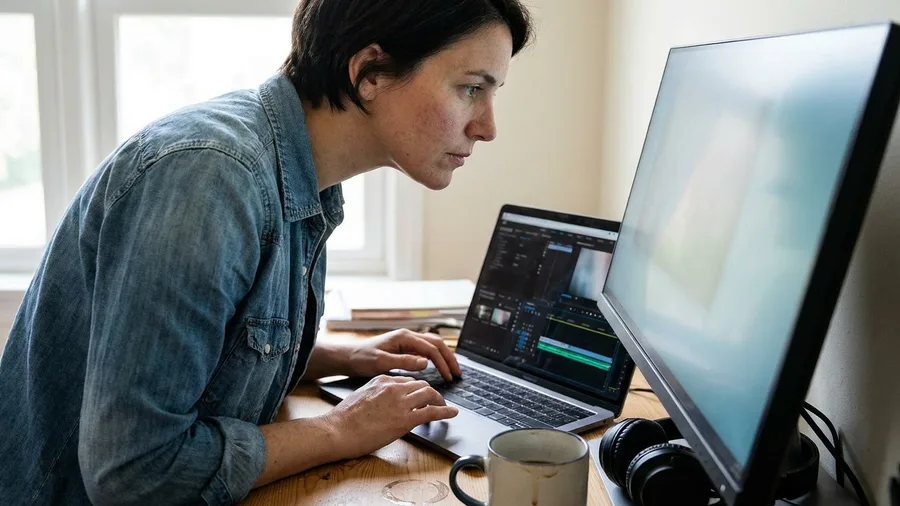
A faceless video is a clip with narration and visuals but no one on camera, published to a platform that pays by views. A printable sits still until traffic finds it. Video rides the same attention, and the platform is the one paying.
Prompt to copy
Act as a scriptwriter for a faceless YouTube channel about personal finance for beginners. Write a 60-second script for a video titled 'Three money habits that quietly drain your account.' Use a hook in the first five seconds, three short points with one concrete example each, and a closing question that invites comments. Keep the narration under 150 words, plain English, no hype, and no claims about how much money viewers will make.
ChatGPT returns the script in about 30 seconds; the idea and angle by hand take about 30 minutes, and your review and edits about 15 more, before any production.
Motley Fool says most Partner Program creators earn $2 to $10 per 1,000 views after YouTube's 45% cut, so 100,000 views might pay $200 to $1,000 before costs. Publish ten videos before buying gear or quitting anything.
14. AI niche blogs can vanish in two weeks

An AI-built blog can lose every visitor in a fortnight. A Reddit poster quoted by Yahoo Finance had a niche blog 'nuked' by Google two weeks after about $200 in tool subscriptions.
A blog runs on search traffic, which a video algorithm can also pull away, and search can cut it faster.
The setup that survives is dull: one 1,200-word article on a question real people search, with sources a reader could click. ChatGPT drafts it in about 1 minute, but research and outlining take about 120 minutes by hand, and fact-checking and editing about 60.
Set up once: start the email list the day the first post goes live, and put one signup link on every page. Spend about 30 minutes on it, and the audience keeps existing after a search update wipes the traffic.
The same Yahoo Finance report calls the boom '99% about selling the shovel,' so treat blog income as unproven until it arrives. The email list is the part you hold.
💡 Tip: Put the signup form in the article body, not just the footer. Readers on phones rarely scroll to the bottom.
15. Selling the dream is the real business

Prompt to copy
Design a sales page outline for a $497 course that teaches beginners to make money with ChatGPT. Give me the hook, the three pain points it addresses, the outcome I can honestly promise, the objections buyers raise, and a refund policy that matches those claims. Do not invent testimonials, income figures or student results. Flag any claim I would need proof for before publishing.
That prompt aims at the real market here, where a blog needs distribution that outlasts a platform change and the loudest instructors sell the dream of it.
The page draft comes back in about 2 minutes, but building the offer takes about 120 minutes and the review, compliance and testimonials about 60 more.
The catch sits in the refunds. Forbes warns get-rich-quick AI schemes are usually too good to be true, and the $497 course quoted by Yahoo Finance is a real price point, not proof of $890 a day.
Refunds, platform rules and ad costs come off first. If teaching, document a result actually got. Otherwise skip the course and test one method on the free ChatGPT plan, or $20 a month for Plus if the limits bind.
Frequently Asked Questions
Can any of these really make $890 a day while I sleep?
No. $890 a day is about $26,700 a month, and research cited by Tech Funding News puts most beginners at $500 to $1,000 a month early on. The methods here pay after the review, the sales call and the follow-up, which happen while you are awake.
Which method pays fastest for a complete beginner?
Freelance writing or virtual assistant work, because one client can pay within weeks and no audience is needed. Start with two pitched local businesses and one free sample so they see edited work, not raw output.
Do I need ChatGPT Plus?
Not to start. The free plan costs $0 a month, though uploads, image creation, voice and deep research are limited. Plus is $20 a month per user and raises those quotas, so upgrade after a paid client, not before.
Is it safe to put client files into ChatGPT?
No. Never paste passwords, client files or financial records into a chatbot. On free and personal plans, chats may be used to improve the company's models unless you switch that off in settings.
Can I get in trouble for selling AI-written content?
You can. Some employers restrict AI-written content, and ChatGPT can invent facts, quotes and links, so check every claim. For products, Investopedia warns that fully AI-generated content may not be protected by copyright unless you add your own creative work.
Do I need to know how to code?
No for writing, tutoring, resumes, itineraries and social media. For chatbots and automation, you need to test carefully and get written access approval, but the build itself happens in tools like Zapier without code.
The $26,700 month does not happen while you sleep
No method here reliably produces $890 a day while you sleep. The money arrives after the review, the sales call and the follow-up, and the small AI draft is the fastest part.
Pick by your situation. Service work pays fastest, local and B2B work pays more if you can sell, AI services with almost no competition beat products that compound slowly, and audience plays need consistent publishing before they pay a cent.
Skip the $497 dream-selling course and finish one deliverable this week.