
The headline says $497 a day on four hours a week. I read it last July with a ChatGPT tab open and a Pinterest account I had barely touched, and I decided to run it for 90 days and count every dollar.
I'm a freelance graphic designer in Austin, Texas. From July 6 to October 3, 2026 I published pins through Pinterest's own scheduler and bulk CSV upload, wrote copy in ChatGPT, made images in Canva free, and logged every commission in a spreadsheet.
By the end I had grossed $705.40 and netted $645.40 after $60 in costs. That is $7.17 a day over 90 days. And yes, one of those days was $497.00 exactly.
Here is the whole ledger, including the two methods that never paid a cent and the twelve days of silence before the first $4.80.
The figures in this article are one illustrative example, not typical results.
| Method | Weekly hours | First money | Jul 6-Aug 5 | Aug 6-Sep 5 | Sep 6-Oct 3 |
|---|---|---|---|---|---|
| Amazon Associates | 1.5-2.0 | $4.80, week 3 | $0 | $41.60 | $226.80 |
| Blog display ads | 1.25 | never | $0 | $0 | $0 |
| $19 template pack | 0.75 | $19, day 88 | $0 | $0 | $437.00 |
| Pinterest Creator Rewards | 0.5 then 0 | never | $0 | $0 | $0 |
$497 was one day, not a daily rate
I did make $497 in a single day, and I can tell you the exact date: October 1, 2026, day 88 of my run.
Amazon commissions that day came to $79.00. Twenty-two people bought the $19 template pack, which added $418.00 and brought the day to $497.00.
Then the ledger closes at 90 days, and the picture changes. My gross was $705.40.
I had spent $60, so the net came to $645.40 spread over 90 days, about $7.17 a day.
That one Thursday accounts for more than 70% of everything I grossed in three months.
Take October 1 out and run the math again. The remaining $148.40 net, divided by the other 89 days, is $1.67 a day. Most of July, August and September were quiet days with no sale at all, and my spreadsheet shows plenty of zeros.
What the day actually shows is a launch, not luck. I had spent twelve weeks priming the account around one $19 product. Its first sale landed on day 88, and 22 more followed inside the same 24 hours.
So test any Pinterest-plus-ChatGPT claim against a 90-day net, never a screenshot. Ask what the account made after costs across three months, and what a single day removed leaves behind.
Four hours a week was four separate jobs
Four hours a week bought me four separate jobs, and I wrote each one into the calendar.
For the first six weeks: 1.5 hours on affiliate pins, 1.25 on blog posts and display ads, 0.75 on the template pack, 0.5 on a Creator Rewards application. Exactly 4.0 hours.
In week 6 I gave up on Creator Rewards, mostly because the application had gone nowhere. Those 30 minutes went to affiliate pins instead, giving 2.0, 1.25 and 0.75. Still 4.0. Across 13 weeks and 52 hours, I never once worked past that budget.
Half the calendar never produced a cent. Creator Rewards paid nothing, and the display ads on my free blog paid nothing either. Two jobs out of four took my time and left the ledger at $0.
What that fixed four-hour week bought was repeatability. I held the same shape from July 6 to October 3, 2026, through a slow August where quitting would have been reasonable. A bigger daily push would have burned me out by week three.
If you have four spare hours, the real decision is which jobs go in them. A four-way split caps you near $7 a day. It stays near $7 until one job gets a launch behind it.
The words in the headline, decoded
Startup cost was $60 and a lot of patience
My startup cost was $60, and every dollar of it went to ChatGPT Plus. At $20 a month for three months, that was the whole bill.
Canva, a Pinterest business account and a blog on a free subdomain cost me nothing, and I never paid for Tailwind.
The $20 plan was convenience, not a requirement. The free ChatGPT plan handles pin titles, descriptions and keyword ideas fine.
Paying bought me longer sessions and fewer limits, according to ChatGPT's own pricing page, which is worth it only when you are batching copy every day.
The number I watch is the hourly rate next to the cost. Net was $645.40 over 52 hours, which works out to $12.41 an hour.
Strip out October 1 and those same hours paid $2.85 an hour, which is the rate that matters before a launch arrives.
So start at $0 on the free plan this week, and spend the $20 only if the copy starts piling up. Patience is the larger outlay. The bill is small.
🗓️ How the first 90 days actually ran
Week 1
Opened the Pinterest business account, applied to Creator Rewards, and set up the free-subdomain blog.
Week 3
First Amazon commission landed: $4.80, with pins publishing on the 10-15 a day schedule.
Week 6
Dropped Creator Rewards after no approval, moved its 30 minutes to affiliate pins.
Week 10
Built the $19 template pack, wrote its sales page, started priming pins toward it.
Week 12
First Amazon payout reached the bank, after the program's own payout schedule.
Day 88 (Oct 1)
First template-pack sale, then 22 more in 24 hours, plus $79 in Amazon commissions.
ChatGPT drafts the words, you check every one
Twenty pin titles and descriptions took me roughly half an hour when I wrote them myself.
ChatGPT returned the full set in about forty seconds, and then I spent fifteen minutes cutting two lines and rewording one.
That is the pattern: the words are cheap, the check is the job.
For keyword ideas the gap was even wider. My own list of twenty took about twenty minutes.
ChatGPT offered thirty in about thirty seconds, and I then spent ten minutes typing each one into Pinterest Trends, which shows up to two years of searches by region, to see whether anyone actually looks for it.
An affiliate link is a tracked web address that credits your account when someone clicks it and buys.
Every product price and detail behind one was confirmed on the seller page before it went into a description. ChatGPT states false facts and invents links with total confidence.
What that bought me was a week of pin copy written in one sitting every Sunday. The checking sat on the calendar next to the writing, instead of surfacing the morning a pin was due to publish.
💡 PRO TIP
Check every product detail before it enters a pin
ChatGPT will confidently invent a price, a shipping time or a product feature. Paste the product page text into the chat and tell it to use only those facts, then still check the output against the page.
Pins went out through Pinterest's own tools

You do not need Tailwind. Pinterest's own scheduler, free on a business account, holds pins up to 30 days ahead, so I filled a month on one Sunday evening.
Its bulk upload turns one spreadsheet file into as many as 200 image or video pins, and that is what carried most of my batches.
Affiliate pins are pins that carry the tracked link from the paragraph above, so a buyer who clicks pays you a commission.
Pinterest's guidelines limit repetitive affiliate pins and unofficial automation. Keeping to their API, a CSV file or their own scheduler is what keeps the account in bounds.
An API is the doorway a website opens for approved software to send it posts directly. Pinterest's version, and the CSV, both keep you on the sanctioned side of the line. Nothing about compliance required a subscription.
Volume sat at 10 to 15 pins a day. Third-party data on 15,412 pins put reach per pin at a median of 23 impressions for 11 to 20 posts a day, dropping to 13 past 21. I stayed in the first band.
Tailwind starts at $17.99 a month billed yearly. I never paid it. The free route was also the compliant one, which is the part the tool ads leave out.
Twelve days of nothing, then the first $4.80

The first commission landed in week 3: $4.80. The cash hit my bank account in week 12, because Amazon runs its own payout schedule and settles on its terms, not yours. Amazon's help pages carry the current ones.
Ad money on the blog never arrived at all. Neither did anything from the template pack until day 88, which meant three months of writing and uploading before a product of mine paid anything.
The early zeros were not a dead account. Pinterest works as a visual search engine rather than a feed, so a pin that ranks keeps pulling visitors for months. An Instagram post is gone in a day or two.
So the money was late, not absent. Judge a run like this at 8 to 12 weeks. A blank first fortnight tells you nothing about whether it works.
Two of the four methods never paid
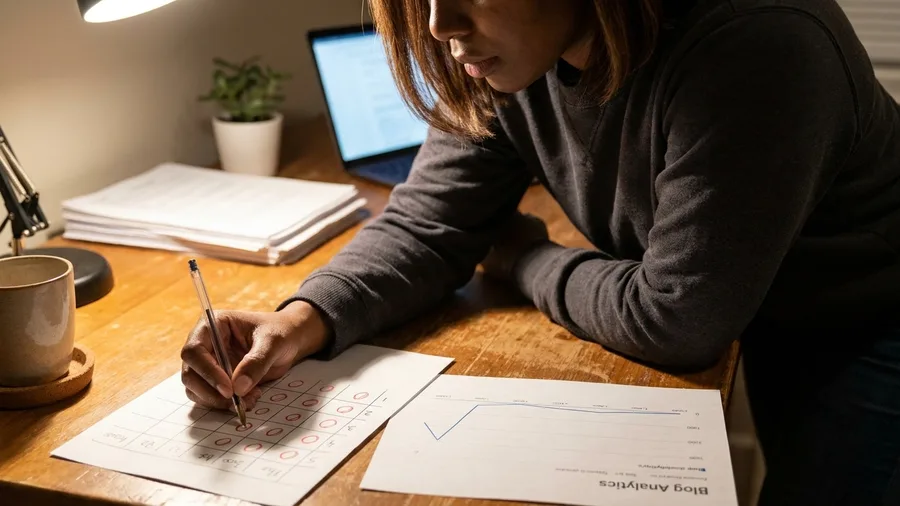
Patience only pays when the job pays at all, and two of my four weekly jobs never moved a dollar. I logged both as zero anyway, in the same spreadsheet as the commissions.
Pinterest Creator Rewards was the first. I applied in week 1 and waited, and the approval never came through in 13 weeks.
UniLink's reporting puts creator payouts around $50 to $500 a month for the people inside the program. I was never one of them, so it returned $0.
In week 6 I dropped it. The 30 minutes it held each week went to affiliate pins, which doubled that job from 1.5 to 2.0 hours. Those minutes produced income; the application produced an email I never got.
Blog display ads were the other zero, and the reason was audience size. A blog on a free subdomain never reached the visitor count any ad network I checked asks for.
Each network sets its own threshold, so read the network's own page, not a blog post about it.
I kept writing the posts anyway. They carry the affiliate links behind the late commissions: $226.80 of my $268.40 Amazon total landed in the Sep 6-Oct 3 block. The ad money failed; the writing itself paid.
What kept the account alive vs. what got dropped
Kept and paid
- Affiliate pins with #affiliate and direct links
- Blog posts that host affiliate links
- $19 template pack primed for 12 weeks
- Publishing through Pinterest's own scheduler
Dropped or never paid
- Creator Rewards (never approved, $0)
- Display ads on a free subdomain ($0)
- URL shorteners (blocked, cost clicks)
- More than 20 pins a day (reach fell)
Affiliate pins need #affiliate and direct links
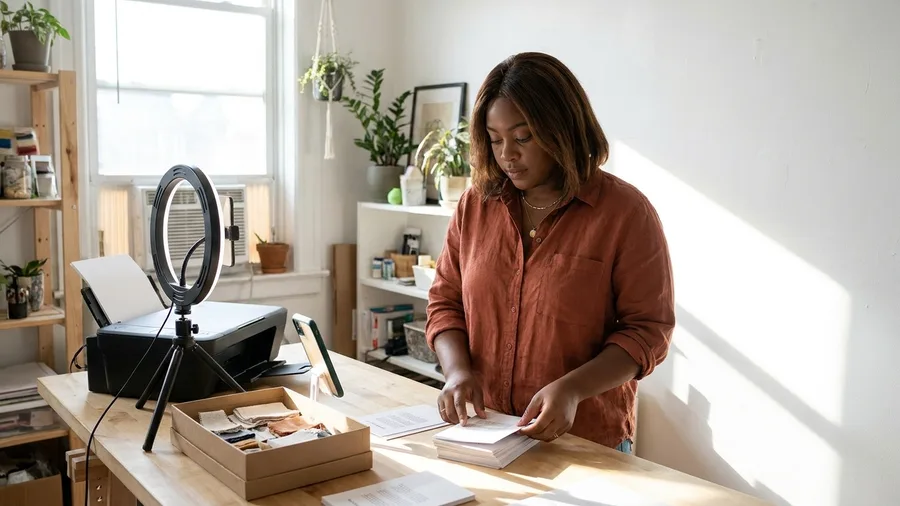
Every pin that stayed up stayed up because it followed three rules, and the money in the ledger sits on the right side of them. Break one and the click, or the commission, or the account goes.
Pinterest accepts direct affiliate links, but the description has to carry '#affiliate' or 'Affiliate link'. It also blocks many shorteners, bit.ly and tinyurl among them. I put the full product URL on every pin, so no pin died at a redirect screen after someone clicked.
The FTC wants a clear disclosure next to every affiliate link and sponsored recommendation, and that applies to the blog post as much as the pin. Mine sat in the line above the link, not buried under a footer.
Pinterest also limits repetitive affiliate pins and unofficial automation. My pins went out through Pinterest's own scheduler and the bulk CSV upload, never a third-party tool. Each network and agency publishes its own current wording, so read the source before you publish.
None of this cost me anything. The compliant version is the one still earning in October, and it is where that $226.80 came from.
What to expect from four hours a week
What I would do differently in week one

Three changes, all to where the same four hours pointed in week 1. I would build the product first, cap the pins where the data caps them, and skip the application that paid nothing.
I made the $19 pack in week 10. Twenty-two of its 23 sales landed on one launch day in week 13. Built in week 1, that day sits inside the window with room for a second launch.
I kept pushing pins past 20 a day for a few weeks. Third-party data on 15,412 pins found reach per pin peaks at 11 to 20 a day and drops past 21. The extra pins bought nothing.
The 30 minutes I spent on the Creator Rewards application go to affiliate descriptions and disclosure checks, where the money actually came from.
Same four hours, aimed this way, stop depending on one lucky October day. They start compounding from week one.
⚠️ COMMON MISTAKE
Do not chase more pins for reach
The data on 15,412 pins was clear: reach per pin peaked at 11-20 a day. Pushing past 21 dropped the median from 23 impressions to 13, so extra pins spent hours for nothing.
What never goes into a ChatGPT prompt

Re-aiming the hours does not change the writing itself. Passwords, client files, medical records and bank statements stay out of every chatbot window, on the free plan and the paid one. In 52 hours I never typed a single one.
ChatGPT Free shares your chats with the company by default. Notebookcheck's late-2026 check found the 'Improve the model for everyone' toggle already switched on in a fresh free account. Turn it off in settings before the first pin title, not after.
The risk in this method is small, because the copy never needs real people. I wrote every pack description from one blank product template. Buyer emails and Gumroad and Amazon order data stayed in the spreadsheet and never touched a prompt.
The pin copy came out exactly as good. The twenty titles and descriptions over 15 minutes of edits did not depend on knowing a customer's name. Keep the list, keep the chat clean, and use the blank template.
Frequently Asked Questions
Do I need to pay for ChatGPT to make this work?
No. The free plan covers titles, descriptions and keyword ideas, and I started on it. I added Plus at $20 a month only when I was batching copy every day, and the ledger's $60 cost is that subscription for three months. Start free and upgrade only if the batching gets daily.
How many pins a day should I publish?
Aim for 11 to 20. Third-party data on 15,412 pins found reach per pin peaked in that range at a median of 23 impressions and fell to 13 past 21 a day. Pinterest's own scheduler and bulk CSV upload make that volume manageable without paid tools.
Can I use bit.ly links on Pinterest?
Pinterest blocks many shorteners, including bit.ly and tinyurl, so a shortened link can cost you the click. Use the direct affiliate link and put '#affiliate' or 'Affiliate link' in the description. The FTC also requires a clear disclosure next to affiliate links.
What is the realistic first-month income?
In my run, the first 30 days produced zero. The first commission of $4.80 arrived in week 3, and the first cash reached the bank in week 12. Judge the account at 8 to 12 weeks, not at day 14.
Do I need a blog to make the affiliate income?
You can link directly to affiliate products from pins, but in my run the blog posts hosted the links that produced $226.80 of the $268.40 Amazon total. A free-subdomain blog costs nothing and gives each pin a page to point at.
Is this method against Pinterest's rules?
Not if you publish through the official API, a bulk CSV upload or Pinterest's own scheduler, use direct affiliate links with disclosure, and avoid repetitive affiliate pins. Unofficial automation and shorteners are what get accounts limited.
The $497 day was real, and it was one day out of 90
This is a real but slow method: roughly $7.17 a day over 90 days, $2.85 an hour once the launch day is removed.
It is worth it if you have a product to launch and twelve weeks of patience. It is wrong if you need money this month.
Your first action, before you write a single ChatGPT prompt: build the $19 product you will prime pins toward, and publish 11 to 20 compliant affiliate pins a day. That is the version of four hours a week that compounds from week one.