
Your agent can build a whole feature while you make a coffee. So what is your role in the process anymore?
Matt Pocock has an answer. He teaches developers for a living, and his folder of agent skills has drawn more GitHub stars than React itself. On October 4th, he shipped version 1.3.
Imagine a coffee subscription app, and you type a request asking it to let users pause their subscription. Ten minutes later, a pause button exists, the tests pass, and everything appears to work. Then a customer pauses on the 29th and still gets a bag of coffee on the 1st because it was already roasted and packed.
Something had to determine the fate of that bag. Your agent made that call. It further chose whether the bill stops today or at the end of the month, how long a pause can last, and what the reminder email says. You wrote one sentence, so it filled every gap with a guess and kept going.
| Command | What it settles | When to use it |
|---|---|---|
| grill-me | Frontier decisions: packed bag, billing stop, pause length, email wording | Before any code exists, on every feature |
| grill-with-docs | Glossary definitions so pause, skip and hold stop blurring | Project jargon is fuzzy or new |
| wait-what | Re-pitches the last message in plain English using your glossary | The agent says something like 'genuinely load-bearing' |
| to-spec | Problem, fix, numbered user stories, test seams | The frontier is empty and you agree on seams |
| to-tickets | Slices that each fit one fresh session under 150,000 tokens | Spec is longer than one session can hold |
| implement / implement-spec | Test-first code at the agreed seam | One ticket at a time, or all tickets in parallel |
| retro | Permanent checks: instructions, lint rules, standards | Before you clear the chat after a build |
One vague sentence hides every decision
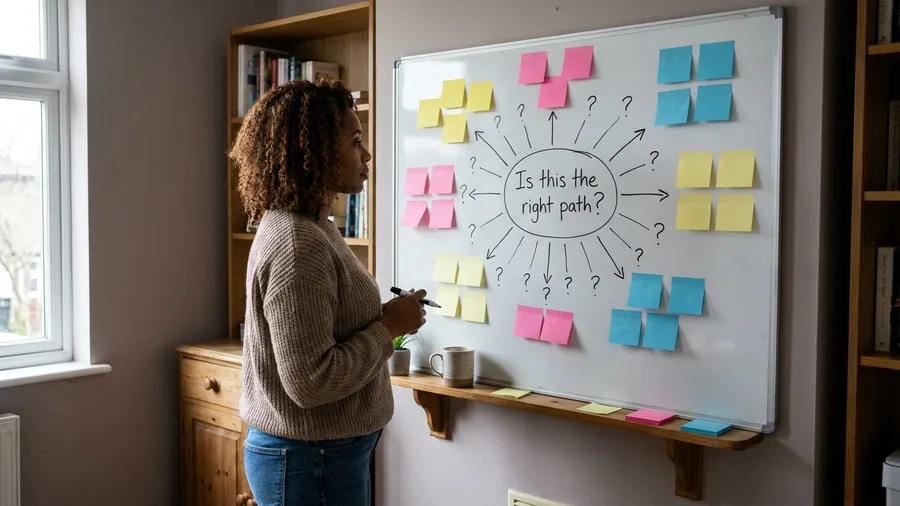
A one-line feature request hands the agent a blank check, and it fills every empty line with a guess. Your code review then becomes archaeology on decisions nobody agreed to.
Take "Let users pause their subscription." Looks tidy. It is actually a bag of unstated decisions wearing a sentence. Does the customer who pauses on the 29th still get the bag already packed on the 1st? Does billing stop today or at the end of the month? What is the maximum duration of a pause before it expires? What does the reminder email say word for word as the resume date creeps up?
The agent guessed the lot and kept going. Politely. Agents are like that.
So picture the customer who pauses on the 29th, bag already boxed in the warehouse. On the 1st it ships anyway, because the agent quietly decided a packed bag still goes out. No charges until the resume date, sure. The delivery still lands, the customer still opens a bag they thought they'd stopped, and nothing in the code throws an error.
That's the part people miss. A crash is loud. A passing test suite hiding a rule you never made is worse, because the wrong policy ships green and nobody argues with green.
To catch this in your own work, do one slow pass over the prompt before the agent touches anything. List every noun it leaves dangling: pause, billing cycle, resume date, reminder. Then list every rule it doesn't settle: what happens mid-cycle, what length limit applies, what triggers an email. If the answer isn't in the sentence, the agent is inventing it. That list is your to-do for the next step.
A longer prompt only covers what you thought of

A longer prompt only documents the decisions you already thought of, so the packed bag still wouldn't make the cut, because nobody thought of the packed bag.
You could sit there for an hour and write three pages of detail on pausing a subscription. You'd cover billing, resume dates, the reminder email. You'd never write "customers who pause on the 29th don't get the bag on the 1st," because it never crossed your mind that a bag was already packed.
Length doesn't create knowledge you don't have. It just writes down what's already in your head.
That's the trap. Prompt-writing is one-way: you push information at the agent and hope you covered the edges. An interview runs the other way. The agent asks you what it can't know, which surfaces the current frontier of decisions instead of whatever happened to occur to you at your desk.
Here's a quick test you can run right now. Look at your last prompt. Does it contain any questions aimed at you? If the answer is no, the agent is probably still guessing at the gaps, just more quietly than before.
The fix isn't a better prompt. It's flipping the direction of the conversation. It helps to see how a repeatable AI agent build workflow briefs an agent before it touches code. Stop writing at the agent and let it grill you instead.
The agent grills you before any code

The grill is a skill called grill-me, and it works by mapping your feature as a tree of decisions, then asking you the whole current frontier in one numbered round.
Picture pause sitting at the top of that tree. Hanging under it: billing, the packed bag, how long a pause can last. Each of those branches out into yet more questions, further into the fog.
The frontier is every decision whose parent is already settled. Pause is settled, so billing and the bag are on the frontier. Answer those and a fresh layer appears underneath. The agent asks what it can reach, not everything at once.
Each question arrives with a recommended answer attached, which is why most rounds are as fast as "yes, yes, no, end of the month." You're confirming, not composing.
And facts aren't your problem. If the answer lives somewhere in the code, the agent sends a helper agent to go read it. Only the calls that need a human land on your plate. That's the split that makes this bearable.
Nothing gets built until the frontier is empty and you say out loud that you agree. Not "sure, whatever." Actually agree.
Question volume can explode

Expect about six questions on a small change and around twenty on a normal one, so the grill stays light most of the time. Sometimes it doesn't.
One live run during a lesson once asked 46 questions in a row. The post that followed: "Dude, chill, you're scaring the noobs." Fair. Forty-six questions is a lot to face on a Tuesday.
The spike isn't a malfunction. It happens when the feature is wide, or when the glossary is fuzzy enough that every question breeds three more. The frontier is simply large all at once, and the agent is doing its job, badly timed.
So take charge of the pace. Tell the agent to prioritize blocking decisions first and batch the rest into a second round. Cap the round if you like. You can also answer half, see what changes, and let the rest collapse once the first layer settles. The point is to keep the decisions moving without drowning in them.
What you shouldn't do is answer 46 questions with one word each and hope. Sloppy answers to real questions are just guesses wearing a receipt.
💡 PRO TIP
Batch the frontier, don't drown in it
Ask the agent to group questions by parent decision and flag which ones block code from starting. Then answer only the blocking group and let the rest wait for the next round.
A glossary stops two words becoming one

Grill-with-docs maintains a glossary in your repo during the interview, which is how pause stays pause and skip stays skip instead of the two quietly merging.
Halfway through, you mention that customers can skip a month. The agent halts. "Is skip the same thing as pause?" Exactly the kind of question that saves you a bug three weeks later.
So the glossary pins them down. Pause is defined in a single line: no deliveries and no charges until the resume date. Skip is defined in another: one delivery missed, billing carries on. Beneath each sits a list of words to avoid, because hold and freeze mean nothing precise and the agent will treat them as both.
An agent dropped into a fresh project has to guess its jargon, and it guesses by using twenty words where one would do. One real model reply concluded with the claim that it was genuinely load-bearing, so that's how you know it matters. Meaning what? Nobody knows.
That's what wait-what is for. Use it and the agent restates its last message plainly, drawing on your glossary's vocabulary. Jargon goes in, plain English comes out, and the shared language survives the session.
Throwaway prototypes settle visual questions

Some decisions refuse to be settled in conversation, and the look of the pause screen is the clearest example. You can describe it in words all day and still not know which version is right.
So for those ungrillable visual questions, the agent hands the work off to a fresh session. That session builds a throwaway prototype, not production code, and it builds a few screens that look nothing alike on purpose.
The word 'deliberately' is doing real work there. If the agent gives you three mockups that are basically the same layout with different spacing, you learn nothing, because similar mockups hide the decision instead of exposing it. Divergence is what makes the choice visible: one screen might put pause as a giant button front and center, another buries it behind a settings toggle, a third shows it as a date picker with a warning banner about the bag.
You click through them, and you pick. That is the entire job at this step.
The answer you land on goes straight back into the interview, so the decision gets recorded the same way every other decision did. Then the prototype is thrown away. What you keep is not the code, it is the decision, and the disposable screens did their one job by making that decision obvious.
The spec records the decisions you made

The spec is the write-up of every call you already made, and it lands as a labeled issue in your tracker, ready for an agent to pick up. You stay in the same chat you just got grilled in and type to-spec. Nothing gets re-litigated, because the questions already did their job.
What comes back is your own conversation, organised. The agent lays out the problem, the fix, and a long numbered list of user stories, each one a behavior you two agreed on. For the coffee app, one of them reads like this: "As a customer who pauses after my bag is packed, I still get that bag, and my pause starts after it." That single line settles the edge case that would otherwise have shipped a bag nobody wanted.
Before any of that gets written, the agent agrees the seams with you, meaning the spots where tests will poke at the feature. The ideal number is one. For the coffee app, that's the billing module, the one place where a pause either charges or doesn't, so every story can be checked there.
Then it goes up as an issue, labeled ready-for-agent.
The label matters more than it sounds, because it tells the agent this spec is finished and safe to build against. It also tells you something: if you can't get the label on, there's still a decision floating around unfinished.
The spec is temporary, not waterfall

The spec is a working document, not phase one of a waterfall, and you can see that in what happens to it once the work ships: the issue is closed and the spec is gone.
By that point, those decisions are recorded in the code, the tests and the glossary instead. A spec is really a projection of the decisions you made during grilling, and once they are in the tests they do not need a document to hold them up.
The prototype loop is what stops the spec hardening into a rigid up-front contract, because you are still making decisions in rounds rather than signing a fixed agreement before anyone has seen a screen.
The obvious objection is that this is just waterfall with extra steps. It is not, and the proof is the tickets. Any job that fits within a single session is planned in a single session. Uncle Bob made the waterfall case on a livestream, and the temporary spec plus the prototype loop are the answer: this is a conversation with a written trail, not a phase gate.
Split the spec into fresh-session tickets

You split the spec into fresh-session tickets because an agent gets worse the more it is holding, and roughly beyond 150,000 tokens the quality of its reasoning drops. The stretch before that is the smart zone.
So the rule of thumb is simple: work out roughly how many tokens a job will take, divide that figure by 150,000, and you have your ticket count. A million-token refactor becomes seven tickets. Round up rather than down, and when in doubt size the ticket smaller, because a trimmed ticket costs you nothing while an oversized one quietly degrades in the middle of the work.
Each slice runs through every layer, database to button, so it works on its own. For the coffee app that means a first ticket where pausing halts the next charge; a second covering the resume date; a third handling the packed bag; and a fourth for emails.
Dependencies matter as much as size. Tickets 3 and 4 cannot start until ticket 1 is done, so link them with blocked-by in your tracker. Get that wrong and a parallel agent starts on the packed-bag logic before there is a pause state to pack around.
Build test-first, one ticket or all at once

Refactoring is not part of the build step because the agents kept skipping it, so it moved into review where a different agent picks it up.
The building skill used to carry a refactor step. Agents blew past it almost every time, and the cleanup never happened. The fix was not a louder instruction, it was moving the job to a different desk, away from the agent that wrote the code in the first place.
What that means for the build is that it stays strict and small: at the agreed seam, write a failing test, then write only enough code to make it pass, one slice at a time. No tidy-up until everything is green, because the moment the author starts reworking what it just wrote is the moment the tests stop telling you the truth about what changed.
Do not add a refactor checkbox that the agent can quietly ignore. It will. Move that work into review instead, where the reviewer catches the smells and cleans them up with fresh eyes.
For the coffee app, that means the author agent ships the pause test and the minimum code to pass it, and the reviewer later folds the duplicated billing checks into one function. Same cleanup, better hands.
🔄 The build handoff, start to finish
Grill the frontier
The agent asks every unsettled decision in one numbered round.
Settle the seams
You agree where tests will poke the feature; aim for one seam.
Write the spec
to-spec turns the decisions into a problem statement and user stories.
Cut tickets
Divide estimated tokens by 150,000 and link blocked-by dependencies.
Build test-first
A failing test at the seam, then only enough code to pass it.
Review fresh
Separate agents check the diff against the spec and the standards.
Retro before clearing
The agent re-reads the session and suggests permanent fixes you choose.
Refactoring moved from build to review

Refactoring moved out of the build and into review, at a different desk from the agent that wrote the code. The building skill used to carry a refactoring step, and Matt removed it because the agent never, ever, ever performed it. Not once. Buried in a long list of things to do while producing a feature, cleanup loses to the next line of code every time.
So the build stays test-first and minimal. Deliberately minimal. Whatever cleanup the feature needs gets a fresh agent whose only job is to find it, and you do not add a refactor checkbox the agent can quietly ignore. If you want cleanup, make it a separate pass with its own fresh context.
Why bother with two separate agents at all? Because once an agent has produced some code, it considers that code fine, precisely because it wrote it. Split the reading, and each one gets a cramped single brief instead of five competing ones.
One reviewer opens the diff against the spec: anything missing, anything nobody asked for, anything that looks done but is quietly wrong. The other opens it against your coding standards and roughly a dozen classic smells straight out of Martin Fowler's Refactoring.
Then comes the sentence that earns the whole setup. On ticket three, the spec reviewer quotes the user story directly, noting that a pause today should cancel the packed bag. The build agent had written something reasonable-looking that let the bag ship. Nobody asked it to.
There is a mechanical reason this works. The reviewing agent never saw the standards while it was building, and models follow a list of don'ts badly when they are also trying to make something run. A reviewer with no other task in view is focused solely on spotting exactly those problems.
Fresh agents review the diff twice

Before you merge, a PR skill writes the pull request description for you, and it does not just list the files that changed. It adapts the show-me skill from Dex Horthy: lead with the smallest picture that explains the change, and proof from before and after so a reviewer sees the behaviour move rather than trusting your word for it.
For the coffee app, ours just adds a column to the subscriptions table. Two-way door. Blast radius: billing.
The last section is called Merge Danger, and it asks the two questions a reviewer actually needs answered before clicking merge. Is this a one-way door or a two-way door, meaning can we undo it cheaply? And how big is the blast radius? For the coffee app, that comes out simple: the change adds a column to the subscriptions table, it is reversible with modest effort, and the damage is confined to one module.
A later real PR gave the blast radius as deploy ordering, which is exactly the kind of thing a reviewer needs spelled out before merging. Not the code. The order things hit production in. That is a rollout hazard nobody can spot from a diff.
Why does the PR need this when the reviewers already looked? Because the two fresh agents read the diff, not your intent. Merge Danger forces the agent that wrote the change to name its own reversibility and reach in plain words.
Write the description anyway if its blast radius line is empty. That blank means either the change is trivial or the author does not understand it. The second one is the case you want to catch.
The PR explains proof and blast radius

Once the fix is opened as a pull request, a skill called PR drafts the description, and its best move is prompting the agent to be candid about what might break. It follows Dex Horthy's show-me approach, so the description leads with the smallest picture that explains the change and evidence from before and after.
Then it ends with a section called Merge Danger. Is this a one-way door or a two-way door? How big is the blast radius? For the coffee app, ours adds a column to the subscriptions table. Two-way door. Blast radius: billing.
A later real PR gave the blast radius as deploy ordering. Sit with that for a second. Not the code, not the migration, the order the pieces have to ship in. That is exactly the thing a reviewer needs spelled out before merging, and it is the thing most PRs never mention.
So the description is not decoration. It is the author agent's own account of reversibility and reach, written while it still has the whole change in its head. The reviewer gets a map instead of a diff to interpret.
Next is the part that keeps the loop from repeating your mistakes: turning what went wrong into something that cannot go wrong quietly again.
A retro turns friction into permanent checks

Retro is one of the two headline features of version 1.3, and it exists because your agent will not complain. Before you clear the chat, it reviews the session that just finished and proposes adjustments to its environment: the repo, the checks, the instructions.
That matters because when a build hits a problem it does not stop. It pushes on until the feature works, and the struggle never surfaces outside the transcript. Without a retro, next week brings the same struggle with the same hidden cause.
In one session it spent ten minutes hunting for the billing code, so it suggested one line in the agent instructions that points straight at it. It approached the payment provider straight on, twice, which your codebase never does. That became a lint rule.
The principle underneath: anything a machine can catch becomes a check. Human-written standards are reserved for the judgment calls, the stuff a linter will never have an opinion about.
Do not put retro on autopilot. An agent that acts on its own findings ends up chasing false positives and tidying things nobody flagged. It only suggests, and you pick which fixes to keep. That last click is the whole point.
A real run shows the pipeline scaling
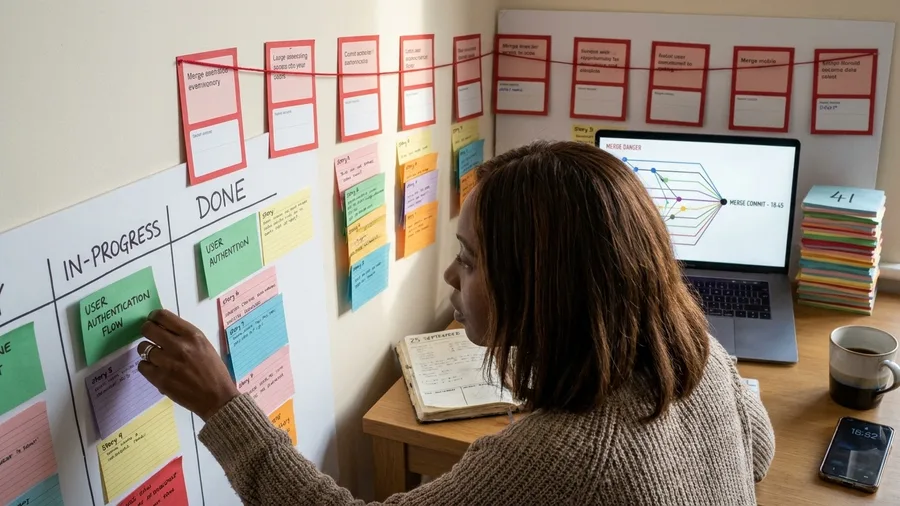
On September 25th, in the app Matt uses to make his courses, a 41-user-story spec was published. Four minutes later, 10 tickets existed, joined by dependencies. A single ticket began the chain, five depended on it, and the final one was deliberately left open as research.
Everything merged onto a single branch: 28 commits and close to 14,000 lines, integrated barely more than two hours after the spec was authored. Five days on, the following feature's pull request carried a Merge Danger section of its own.
A coffee app is a toy, so before you take those numbers as proof that anything can be shipped this fast, look at what actually made the run quick. The decisions were settled before a line of code existed. That is the speed.
What this proves is speed with clear decisions, not that every feature is safe. The decisions still came from a human, and the review still happened at a different desk.
A decent-sized feature on a familiar codebase, with a clear spec at the front. The scale comes from the spec, not from the model. Nobody is claiming the tool judges product risk for you, and the one-way doors still get their MERGE label from a person.
The overhead is low until you invoke it

Most of that structure costs you nothing until you ask for it, so the slowdown objection mostly falls apart on inspection. In the plugin, 16 of the 27 skills only load when you type their name, which means the agent never sees them sitting there taking up room. The whole installed set measured 660 tokens in the tutorial. That's a rounding error next to the 150,000-token smart zone the tickets are sized against.
The skills also shrink as models get better. Version 1.3 deleted the merge-conflict skill outright because the harness handles that job now, and keeping a command for something the model already does is just clutter you pay attention tax on.
Not everyone agrees, and that's useful to sit with. One builder moved to a lighter competing stack because these skills felt too defensive for how good today's models are. Fair argument, and the honest answer is that defensiveness is a dial, not a default.
So audit your own loaded context. Ask what actually gets injected when a session starts, then delete every skill whose job the model or harness now handles alone. Keep the ones that still catch real mistakes, like the grill that caught a paused bag shipping on the 1st. Cut the rest and you keep the safety net without the weight.
The grill is tiny; the questions are the value

What you'd copy is almost embarrassingly small, which is the whole point. grill-me is one line: invoke the grilling skill through the skill tool. The grilling skill behind it is 28 lines. The original was called the most influential four sentences the author ever wrote, and the installer counts it at over a million installs. All that reach from something you could retype from memory.
That tells you the text was never the product. The value sits in the questions the grill asks and the answers you give it, the ones only you can give: does pausing kill the bill, does it cancel the bag already packed, what does skip actually mean. Copy the prompt exactly and hand it someone else's feature and it grills them about their decisions, not yours.
So copy the loop and the question shape, not somebody else's settled answers. Your pause, your skip, your packed bag on the 1st. The four sentences are a mold. The shape it produces depends entirely on what you pour in.
Your job is the decisions

Everything the agent writes is still your call, because every judgment baked into the code was a decision someone had to make and the agent will happily make it for you if you let it. Go back to the coffee app. The customer pauses on the 29th, the bag is already packed, and nothing gets charged until the resume date. That rule came out of round two of the grill, on a coffee break. The agent didn't invent it. You did.
Now stretch that across the whole feature. The agent can write every line of pause, yet every call inside it still belongs to you: whether the bill stops, whether the bag ships, what the word skip is allowed to mean. Hand those over silently and you get clean code doing the wrong thing, confidently.
A brilliant tactical programmer still needs a strategic one above them. The agent is the sergeant, sharp and fast and eager to execute. You are the general, and generals don't write lines, they set the terms.
So keep a decision log and never let the agent settle a product rule in silence. If it isn't written down, it was guessed. The guessed rule is the one that ships the bag.
Frequently Asked Questions
Do I need all 27 skills to start?
No. Start with grill-me and to-spec. Add to-tickets and the review agents once your first feature is settled. The rest load only when you type their names anyway.
What if the agent asks more questions than I can answer right now?
Cap the round. Ask it to return only the decisions that block code from starting, batch the rest, and schedule a second round. The frontier will still be there tomorrow.
Can I skip the glossary if my project is small?
Only if your project has no overlapping terms. The moment pause and skip both exist, you need one line for each. A glossary is cheaper than a wrong billing rule.
Does this work with any AI coding agent?
The loop is tool-agnostic: interview, spec, tickets, test-first build, fresh review, retro. The specific skill names are from Matt's plugin, but you can run the same steps by hand in any agent.
How do I know when the spec is ready?
When the frontier is empty and you agree on the seams. If you cannot name the one place the tests will poke the feature, keep grilling.
Write one standards rule, then grill one small feature
Start with a single standards rule that includes one good example and one bad example, and add it to your repo before the next review. Do not write a forty-page document; add one rule you actually care about.
Then run one small feature through grill-me from start to finish. Watch what the questions surface, and keep the answers in a decision log. If the loop feels heavy, that is information, not failure.
Keep the full loop only where wrong decisions are expensive. For a throwaway script, prompt and move on. For the billing module, the bag, and the word skip, the round of questions is the cheapest insurance you will ever buy.
Pick one decision you would have guessed
Open your last feature request and list every rule it did not settle. That list is your first grilling round.