
You have seen the screenshot: a ChatGPT dashboard next to a five-figure Stripe balance. You open your own laptop, type a prompt, get something generic, and close the tab.
The gap between what those screenshots promise and what you can actually sell in a free evening is the whole story here.
This article follows one realistic ledger over 90 days. No audience, no email list, 10 hours a week. Four services: transcription cleanup, resumes, product listings, and one local social retainer. Total gross $1,860. Tool cost $60. Net $1,800.
You will see what each service paid, how many minutes of review sat behind every deliverable, and where the plan broke. The point is not to promise you millions. It is to give you a first invoice this week and a second client next month.
| Service | By hand (min) | AI working time | Review and edits (min) | Month-3 earnings | Best-suited tool |
|---|---|---|---|---|---|
| Social posts (5 per week) | 125 | 3 | 52 | $450/mo | ChatGPT + Canva |
| Transcript cleanup (1 interview) | 90 | 2 (after Whisper) | 45 | $240/mo | ChatGPT + Whisper |
| Resume + cover letter | 120 | 3 | 90 | $225/mo | ChatGPT |
| Product listing copy | 35 | 1 | 20 | $60/mo | ChatGPT |
| Low-content book | 120 | 4 | n/a | $0 | ChatGPT + Canva |
Where the money actually comes from
The money comes from five specific services, each with a different speed to first dollar. One is fast (transcription), one needs a conversation (the retainer), and one sounds exciting but earned nothing.
Read this section with your own network in mind. The service you can sell first depends on whether you know one local business owner. If you do, the retainer line is the biggest. If you do not, transcription is the fastest.
1. A single local client paid half the three-month total

Prompt to copy
Here are three recent posts from [bakery name] and what they sell: [paste the posts and list the products]. Write three new social posts in the same voice, one for each product, under 40 words each, no hashtags, no exclamation points, and nothing about health benefits or prices I have not given you.
That is the whole pitch, and the model is not the hard part. Write the three posts, then send them to one local business owner with a flat $450 a month for five posts a week. Only a person gives that yes.
Keep the scope to one line and hand over real posts before you name a price. Expect the first payment in month two, not week one.
💡 Tip: Deliver the three samples as a single PDF with the posts mocked up on phone screens. The mockup closes more deals than the copy.
At a Glance
2. The quickest first dollar is cleaning up someone else's words
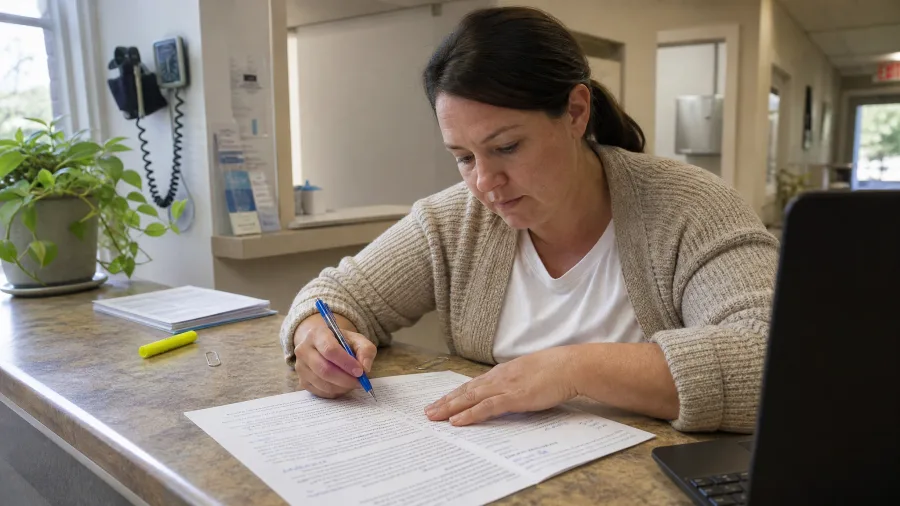
Two minutes of ChatGPT can turn one 45-minute interview into a clean, formatted transcript.
Whisper handles the audio first, then a short cleanup prompt does the names, speaker labels and paragraph breaks.
The invoice is $15, paid inside week one, long before any retainer money lands.
By hand, a 45-minute interview takes about 90 minutes to type out and format. The model needs 2 minutes. Then 45 minutes of checking names, doses and quotes rest on you, and that hour is the job, not the model's.
Pitch one sample page and a per-interview price to a podcast or a clinic with a document due this week. Neither asks for an audience or a portfolio.
Time, side by side: 90 minutes by hand against 2 minutes of model time plus 45 minutes of checking.
3. Resumes pay per document, and the client supplies the facts

$75 for one resume and cover letter, and $300 across months two and three. Every achievement comes out of a 30-minute intake call, because the client supplies the facts and the model only arranges them.
Older way: a writer drafts from scratch, asks the client to confirm each line, and rewrites twice. New way: the resume is on the page in 3 minutes, then 90 minutes go to rewriting and reading each line back to the client.
An invented job title or metric is a lie on a real application. Turn the intake questions into a reusable script and the next resume lands under two hours, so the $75 repeats.
💡 Tip: Charge half up front for resumes. It filters out clients who will ask for six free revisions.
⚠️ COMMON MISTAKE
Do not skip the intake call
Without a 30-minute intake, the model invents achievements to fill space. Every resume needs the client's own numbers before the prompt runs.
4. The product route — low-content books — earned nothing in six weeks

The dull part of a product route is everything after the file: a title, a description, a cover that has to look like it belongs, then the upload. It looks like a way to earn without a client. Six weeks here says otherwise.
The attempt was low-content books, the kind with prompts or lined pages. It ran at about two hours a week for six weeks. The covers came out of the same $20 ChatGPT plan, so nothing extra was bought. Week six closed the file at $0.
The comparison that killed it came from another seller, who was chasing the ten-books-a-week cap Amazon allows. That is a publishing schedule plus an audience already waiting. One careful book does not get there, and the shelf is crowded.
The two hours went back into resume rewrites and product listing copy. That swap paid $360 across months two and three. Cash spent on the detour: nothing. Hours spent: about twelve, worth roughly $180 at this ledger's $15 an hour.
So the product route loses to service work for one plain reason. A client asks, pays and comes back, while a book waits on strangers to find it. Selling time first funds the slower bet later, if the reader still wants one.
What the work costs you
The subscription is the small number. The review hours are the real cost, and they set the price you can charge. Skip them and the client sees the error before you do.
This section covers the $20 plan, the checking that keeps an account alive, and the privacy rule that protects a client's files.
5. Where the money actually goes each month
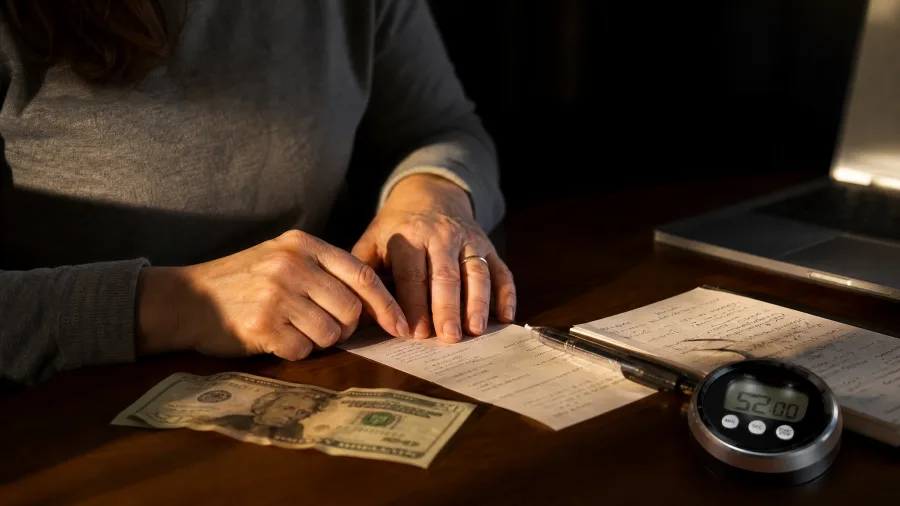
ChatGPT Plus is $20 a month, as of October 2026, and three months of it is $60. A free Canva account covers the rest. That is the whole tool bill for the work in this ledger, and it is not where the money goes.
The money goes into the gap between the draft and the version a client accepts. Five posts take about three minutes for ChatGPT to produce. Wiping the chatbot voice off them, picking images, and loading the scheduler takes 52 minutes more.
Scale that to the ten-hour week. Eight of those hours are spent reading, correcting and formatting model output, which leaves little room for anything else.
There is a second bill when the free tier is doing the work. One writer hit a 30-message-per-5-hour cap on Claude's free plan on day four, mid-way through a 12-page report. A paid plan removes the cap, not the editing.
By the numbers: $60 in tools, 120 hours of work, 96 of them review. Price each job from the editing hours it will eat. A resume that takes 90 minutes of rewriting cannot sell for $15.
6. A confident wrong answer is what loses the client
Assume nothing the assistant writes is true until something outside the chat confirms it. Figures, quotes, links and job titles all need a second pair of eyes, and yours is the only one available.
Prompt to copy
You are checking a finished document before it goes to a paying client. I will paste the draft below. List every number, date, quote, link, name and job title in it as a table. For each one, mark it as either supplied by the client or generated by you. Do not correct anything, do not rewrite a line, and do not add facts of your own. If a line contains a claim that neither the client notes nor a named source supports, flag it and quote it exactly.
Paste the client's draft and their own notes underneath, then send. The table comes back in under a minute.
The check is what pays. Reading each flag back costs 45 to 90 minutes per deliverable, and that hour is why the client keeps sending work. Add one source line under each figure so they can see where it came from.
💡 Tip: Ask the assistant to flag its own uncertain claims. It will still miss some, but the flagged ones are a good starting list for the review pass.
7. Client files and passwords never go into the chat window

Quick check: Before any client material goes into a chat window, get their written permission. A checked document still starts as someone else's file, and the moment you upload it the risk moves from accuracy to consent.
Never put passwords, client files holding personal data, or medical and financial records into ChatGPT or any other assistant. So the transcript or resume arrives as a clean copy with names and dates removed, or not at all. Ask before the first upload, not after.
On free and personal plans, chats may be used to improve the company's models unless that is switched off in settings. Turn it off once, in the privacy settings, and it stays off for every job after.
That setup costs about ten minutes. Add your two-line privacy note to every proposal – what goes in, what stays out, who approved it – and cautious small businesses read it as competence rather than fuss.
Avoid These Mistakes
What the big numbers leave out
The screenshots show the top of a distribution, not the middle. The survey below is the closest thing to a real picture, and it is smaller than the posts suggest.
Tool choice matters less than the service wrapped around it. This section explains why the numbers look the way they do and how to pick the assistant that fits the job.
8. The millions come from selling the method, not doing the work
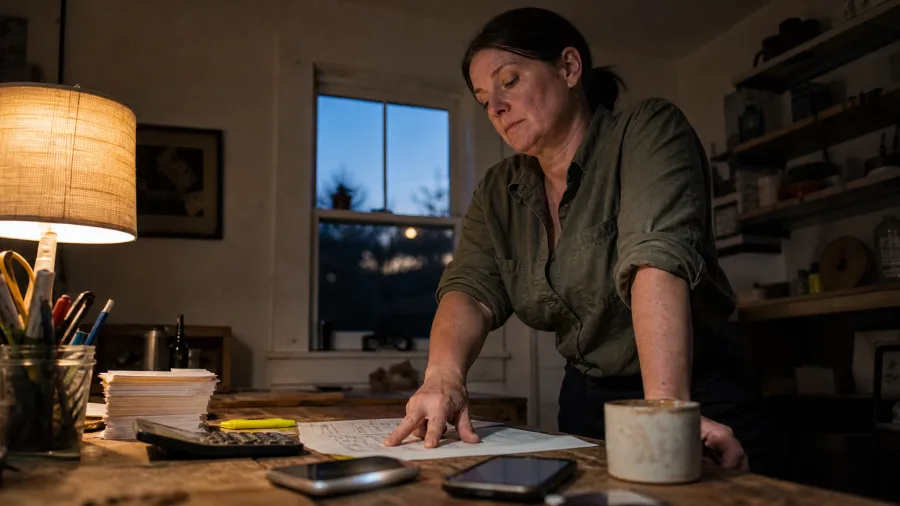
A survey of 831 U.S. workers aged 22 to 28, with data collected in April 2026, asked active AI side hustlers what they actually earned. Half of them, 51%, made $1 to $499 a month. Another 19% made $500 to $999.
The survey covers side income for full-time employed young workers. It says nothing about anyone outside that group, and nothing about millions.
The loudest screenshots come from people paid to teach the method. Check whether the seller earns from the work or from the course. The $120 first month sits in the big bucket; $765 and $975 reach the smaller one.
Green light, amber, red for your first 90 days
- Transcript cleanup at $15 per interview — Invoice this week if you can find one podcast or clinic.
- Resumes at $75 each — Repeatable once the intake script is written.
- Local social retainer at $450/mo — The largest single line, but only with a real conversation.
- Product listing copy at $12 each — Slow to build volume. Test one client before scaling.
- Low-content books — Six weeks and $0 in this ledger. Skip unless you already have an audience.
- Chasing the million-dollar screenshots — The money in those posts comes from selling the method, not doing the work.
9. The assistant matters less than the service wrapped around it

The tedious part of this work is not typing into a box. It is rewriting the same draft three times, checking names against a source, or hunting for a citation a client can open. That grind decides whether a tool earns its $20.
ChatGPT took 87% of active side hustlers in that survey, Gemini 51% and Perplexity 12%. The numbers track the job, not the brand. Codie Sanchez splits it the same way: ChatGPT for first drafts, Perplexity for cited research.
Step 1: For a transcript, feed Whisper the audio, then paste the text into ChatGPT with "Format this transcript into paragraphs, speaker labels, and timestamps every two minutes, keeping every name exactly as written." A formatted draft comes back in about two minutes.
Step 2: For a client who wants sources, open Perplexity and ask for the figures with links. You get cited research in under a minute, instead of a confident guess with no trail behind it.
Step 3: For a long report, load it into Claude and ask it to think through the argument and find the weak section. That is synthesis work, not drafting. Claude users clearing $500 a month hit 45%, against 30% on ChatGPT.
The catch: those figures come from young full-time workers, not proof that switching brands lifts anyone's pay. Start on free tiers and pay the $20 only after a client pays once. Pick by the job in front of you.
💡 Tip: The free tiers change often. Check the usage limits on the pricing page the week you plan to rely on one for a client deadline.
📈 Twelve weeks from $120 to $975 a month
Week 1–2: Choose one service
Pick transcription cleanup if you have no local contacts, or the retainer if you know one business owner.
Week 3–4: Build the sample
Clean one transcript or write three social posts as a free sample for the pitch.
Week 5–6: Send the first pitch
One email or one call, with the sample attached and a flat price named.
Week 7–8: Invoice the first job
Deliver, get paid, and keep a template version of the deliverable for the next client.
Week 9–10: Add the resume line
Write the intake script from the first resume and offer it to the same client or their network.
Week 11–12: Pitch a second retainer
Do not wait for the first to end. The second client is what makes month four beat month three.
10. Twelve weeks at ten hours a week comes out near $15 an hour

Three months of stacked services came to $1,860 gross and $1,800 net over 120 hours, about $15 an hour. The monthly curve is the part worth studying: $120, then $765, then $975. The tool bill behind it was $60.
Ten hours a week is the setup that produces those numbers. Before clients existed, it was simply the time reserved for pitching and delivering. That block is cheap to arrange once.
The payback builds with every job run inside it, and only $120 of the total landed before clients renewed.
The catch is that none of it compounds on its own. Skip the pitching hours for two weeks and the ledger stops growing, however fast the model types.
Month one sits below plenty of local part-time jobs, so the hourly rate only looks respectable by month three.
A second retainer at $450 a month would push month four past $1,400. That is the right way to read the first 90 days: a base to add one client onto, not finished income.
The ten-hour block is the setup, and the stacking is what makes it pay.
Frequently Asked Questions
Do I need to pay for ChatGPT to start?
No. The free tier handles transcription cleanup, resume drafts and short social posts. Pay the $20 a month once a client has paid you at least once, not before.
How long before I make my first $100?
In this ledger, the first $120 came in month one from eight cleaned transcripts. If you send the first pitch in week one, a first invoice in two to four weeks is realistic. The work is finding the client, not doing the task.
Is it safe to put a client's file into ChatGPT?
Only with the client's written permission. Never paste passwords, medical records or financial documents. On free and personal plans, chats may be used to train the company's models unless you switch that off in settings.
Which single service should I pick first?
If you know one local business owner, pitch a $450 monthly retainer for five posts a week with three free sample posts. If you know nobody, start with transcript cleanup at $15 per 45-minute interview because it invoices the fastest.
Do I need to know how to code?
No. All four services in this ledger run in a browser chat window plus Canva. You never touch an API key or write a line of code.
Why did the low-content book earn nothing?
One good book does not sell without an audience or a high-volume production line. It earned $0 in six weeks in this ledger. The two weekly hours were moved to resume and listing work, which paid $360.
The first invoice clears faster than the first product
For a reader with no clients, start transcription cleanup this week at $15 per interview. It invoices fastest and needs no audience.
If you are willing to talk to a business owner, write three sample posts and pitch one local retainer at $450 a month. That is where the money is, not in a product.
The one thing to do first: send one pitch before you pay for a subscription. The $20 can wait until the invoice clears.