
The bill for this was 12 unpaid hours and 14 messages before a dollar showed up, so the headline flatters the work.
In fall 2025 I was 34, a design hobbyist in Dayton, Ohio, with no client list and no website. I sent those 14 messages to food-truck owners from one local Facebook group.
The first $45 landed on day 19.
What did not block me was the missing audience, portfolio and budget. No one asked about any of it. I sold a $45 one-page menu and wrote every message by hand, and a $12 template pack I built sold nothing at all.
So a first online dollar can be one small, flat-priced service one local buyer judges in a page. Not a catalogue. Not an audience.
Decide whether you will send the messages, and copy the $45 offer, the ChatGPT prompt and the three DMs from here this week.
The figures in this article are one illustrative example, not typical results.
| Task | Best tool | Minutes by hand | Tool's own time | Minutes of review and edits |
|---|---|---|---|---|
| Clean up menu copy | ChatGPT free plan | 35 minutes | About 25 seconds | 15 minutes |
| Lay out the page and export the PDF | Canva free plan | 75 minutes | 40-minute build | 35 minutes proofing plus two edit rounds |
| Write the buyer message | ChatGPT free plan | 12 minutes | About 20 seconds | 4 minutes |
The offer was one $45 menu, nothing bigger
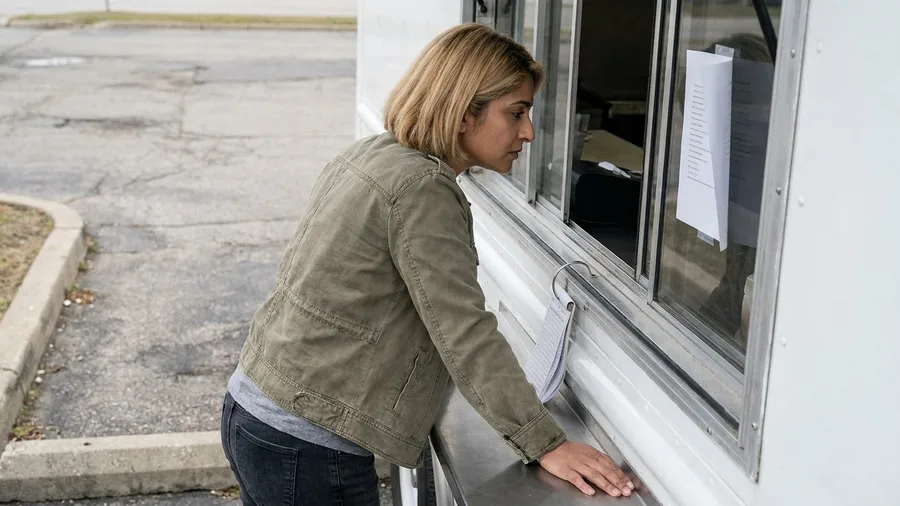
I sold one page to one person: a single food-truck menu, at $45, to the owner of one truck in the Dayton metro. Not a restaurant group, not an agency, not a chain with a marketing person to impress.
The deliverable was three files from the same page. A print PDF sized for the window, an Instagram-size version for their feed, and the editable Canva link so they could fix a price themselves at 9pm.
Two rounds of edits came with the $45. That number matters, because it tells the buyer exactly where the job ends and stops a small menu from turning into an unpaid month of tweaks.
My first pitch bundled a logo, a menu and social posts for $150. Week 1 produced no replies at all. A stranger cannot judge three deliverables from one message, and $150 reads as a risk.
At $45 there is no committee. One owner reads it, decides in a minute and pays. My first sale landed before I had a portfolio, because the offer was small enough to say yes to.
First number that counts: one yes from one owner. That is the reply to watch for, not a follower count.
ChatGPT wrote the words, Canva laid out the page
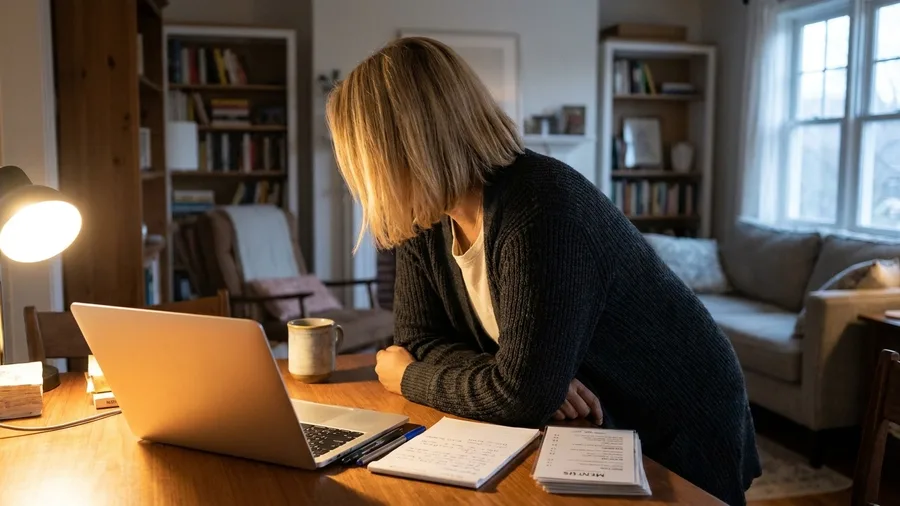
Two tools, two jobs, and the line between them never moves. ChatGPT writes every word; Canva only places it on the page. That split is why a $45 menu takes one pass, not a rewrite each time.
In ChatGPT I did three things: tightened menu lines, drafted the buyer message, and wrote the design brief I pasted into Canva. The menu copy started with one prompt I still use, pasted with the truck's details filled in.
Prompt to copy
Role: You write short, plain menu copy for a single food truck. My material: [truck name], [city], [list of 8-12 items with prices], [tone in three words]. Steps: 1) Rewrite each item name in 6 words or fewer. 2) Add a one-line description, 12 words max, with no health claims and no words like 'fresh' or 'authentic' unless I supply them. 3) Group the items under two-word section headers. 4) List anything you were not given under 'Missing'. Output: a plain list I can paste into Canva, then a three-line note on what to confirm with the owner. Rules: never invent an ingredient, a price, an allergy claim or a source, and keep every price exactly as I typed it.
Canva handled only layout. I built one column, item name left and price right, and drew one accent color from the truck's own wrap photo. Then I exported a print PDF and pasted the ChatGPT lines in.
The catch showed up on my first menu. ChatGPT slipped in a "gluten-free" line the truck never claimed. Now I read every health word it writes and cut it before the file leaves my laptop.
Words stay with ChatGPT, layout stays with Canva, and each menu goes out in a single pass. Fewer hours per yes is what keeps a $45 offer worth repeating.
First $45 on day 19, after 12 unpaid hours
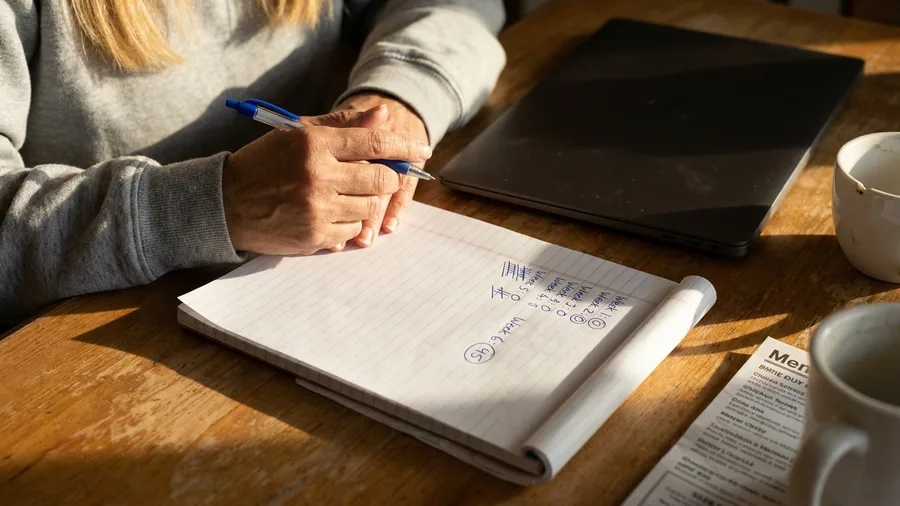
The first $45 arrived on day 19. Weeks 1 and 2 paid nothing, and I worked 12 hours across them, 6 a week, with 4 on menus and 2 on a template pack I was still building.
Week 6 brought a second $45, so six weeks came to $90. By month three I was finishing 3 menus a month at $45, which is $135 a month.
I did not stop in any quiet week. Fourteen messages went out before the first yes. The second sale came from an owner who had said maybe later, and I followed up once.
Check your own clock: if week 2 shows no money, that is the plan running, not the plan failing. Twelve unpaid hours is the entry price.
The clock is repeatable because the work behind it is. One menu now takes 2 hours 20 minutes of my time, so the hours that bought that first $45 are the same hours that make the next ones faster.
My six-week ledger — At a Glance
💵 Messages sent
14 in weeks 1 to 3
📅 Reply rate
1 yes, 2 maybes
⏱️ Hours per week
6 — 4 menu, 2 template
💸 First menu time
3 hours 40 minutes
📉 What $45 buys
PDF, IG size, Canva link
📈 Second yes source
One follow-up to a maybe
Read it this way
Skip the template pack. Points of failure: a 12-page pack earned zero, while the one offer that repeats is a $45 menu with two edit rounds.
Month one cost $0 on both free plans
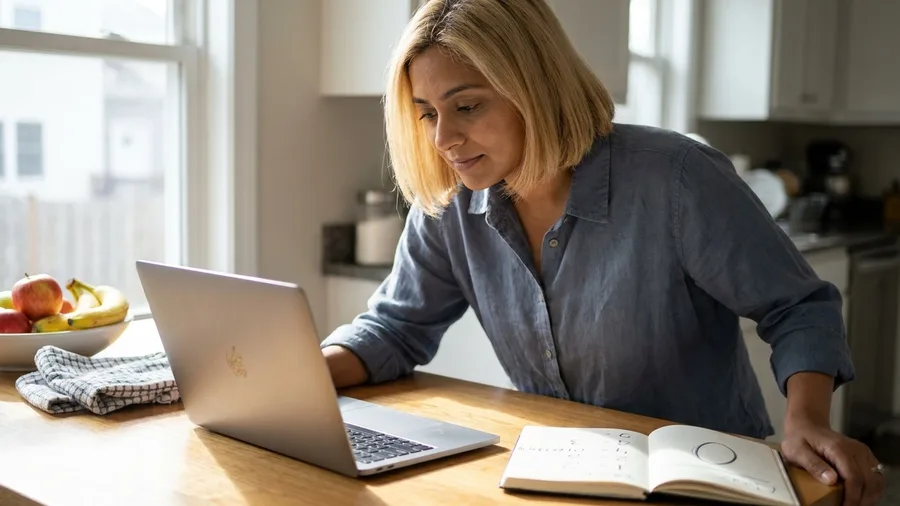
Trying this cost me nothing out of pocket: ChatGPT's free plan wrote the copy and the messages, and Canva's free plan did the layout.
According to OpenAI's pricing page, text chats there are unlimited, subject to anti-abuse limits, while uploads, image generation and deep research are capped.
Check that page yourself before counting on any of it, since limits change. For paid Canva, what it adds and its price come from Canva's own pricing page, not from me.
Delivery was free too: a PDF attached to an email plus a Canva share link, with no site, storefront or listing fee.
Free chats can be used to improve the company's models unless you switch that off in settings, and my menus held a client's unreleased prices. I turned training off before pasting a single menu line.
Total spend in month one: $0. The whole $45 was profit, and the hours were the only thing at risk.
💡 PRO TIP
Keep client prices out of the chat
Paste only the menu lines the page needs, never the whole document, and switch off model training in settings before the first client job. A client's unreleased prices are not yours to feed a model.
One Facebook group beat every marketplace I tried
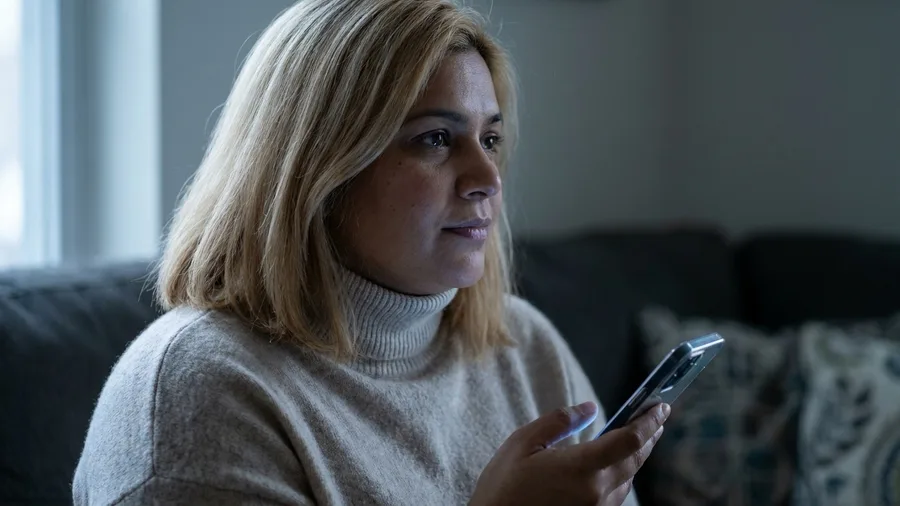
Every reply I got came out of one local food-truck Facebook group for my metro, not a marketplace.
I joined that group and said nothing for seven days. I scrolled the posts, learned which trucks were active and watched what owners complained about. When I finally typed, I already knew the room.
I picked my targets by eye. A truck whose menu was a photographed sheet taped inside its window was perfect, because I could point at one thing I would fix.
The marketplace went the other way. I paid nothing to list, but two weeks brought exactly zero buyers. A listing sits and waits for someone to find it. A group post starts a conversation with a name attached.
That group produced 14 messages, 1 yes and 2 maybes. One maybe wrote back six weeks later.
The DM that worked named their truck, then asked once
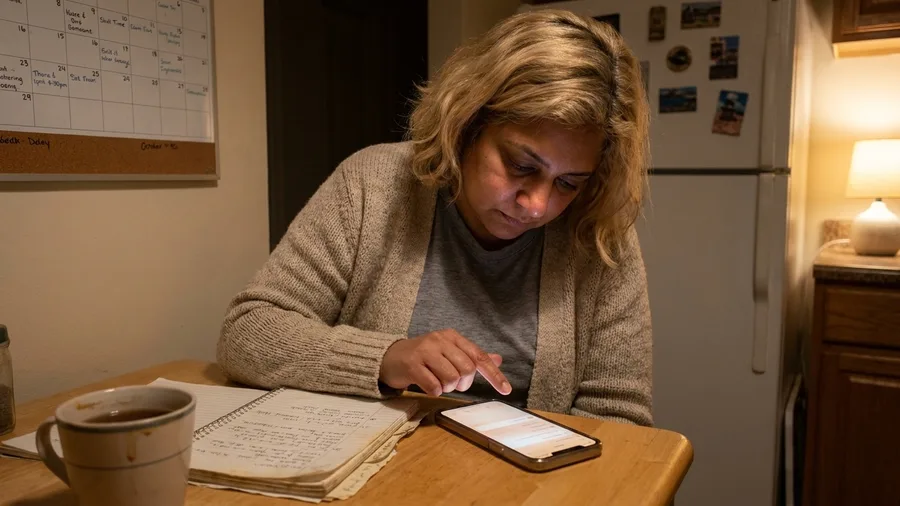
The message that got a yes was written for that truck alone. I named the truck, named the group, and pointed at one real flaw in the photo.
What I sent:
"Hi [Name] — I saw the photo of your [truck name] window menu in the [group name] thread. The brisket line is hard to read at night and the specials have no price. I lay out one-page menus for food trucks: a print PDF and an Instagram-size version for $45, two rounds of edits. Want me to send a one-page sample using your current items, free and no obligation? — [first name]"
Four days passed with no answer, and I sent the nudge below once, not twice: "Hi [Name] — one bump in case this got buried. The free sample offer stands until [day], then I'm booking the following week. No worries either way."
The delivery email carried the files and the price: "Subject: [Truck name] menu — print PDF + editable link. Hi [Name], attached are the print PDF at 8.5×11, the Instagram-size version, and a Canva link you can edit yourself. Two things to check before printing: the price on [item] and the spelling of [item]. Two rounds of edits are included — send a marked-up photo or a list and I'll turn it around in a day. If it's right, the total is $45 and my payment handle is [handle]. Thanks — [name]."
My first batch of messages was identical word for word, and they were ignored. Mass copy reads as spam in a small group. Swap in the truck name and the one visible flaw for every send and it reads as a person.
Count replies, not followers or portfolio pieces. The first message can go out today.
The four words I had to learn before I could charge anyone
Canva took 40 minutes; my own mistakes took 70
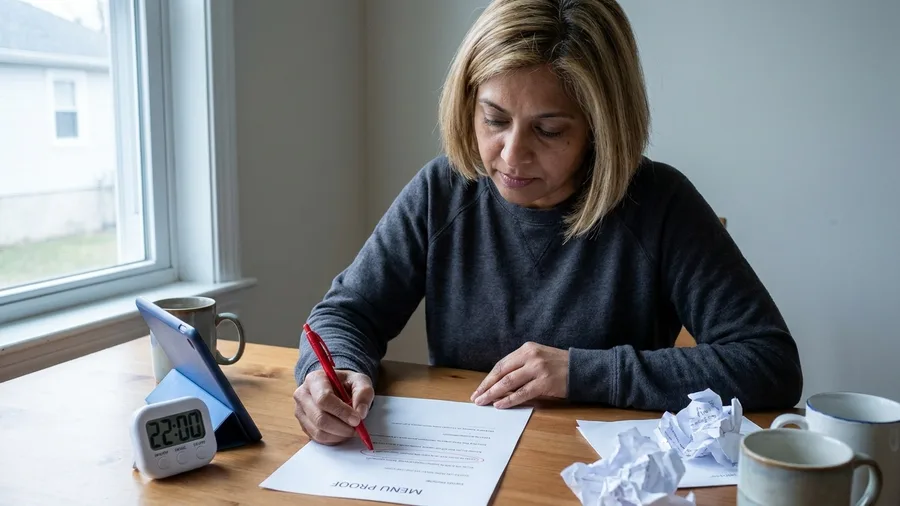
A yes in the inbox means the clock starts. My first menu ate 3 hours 40 minutes of my own evening, mostly because I was still finding my way around the layout. By the fourth, the same job took me 2 hours 20 minutes.
Copy cleanup in ChatGPT took 35 minutes when I did it by hand. The tool returned a cleaned list in about 25 seconds, and I spent 15 minutes reading it against the owner's photo of the old paper menu.
The Canva page was the slow part, and not because of Canva. Building it ran 40 minutes. Proofing and the two edit rounds ran another 35, against 75 minutes if I had laid the whole page out myself.
The buyer message took 12 minutes to write by hand, about 20 seconds for ChatGPT, and 4 minutes of my own editing before I hit send.
The fast stretch is where a bad price survives. On one menu I caught a $9 special typed as $6 only because I printed a home proof and read the paper copy, so every menu gets that proof now.
Those hours are the real price of a $45 menu, and they come before any dollar. If 2 hours 20 minutes is more than $45 is worth to you, that is worth knowing before you send a message.
What moved the money, and what only felt like progress
Kept
- One $45 menu offer, nothing bundled
- 14 personalized messages in three weeks
- One follow-up after four days, then move on
- A printed home proof before every send
Dropped
- The $150 bundle that got no replies
- A 12-page template pack that sold nothing in 8 hours
- A marketplace listing that sat for two weeks
- Copy-paste identical DMs
The $12 template pack sold nothing and got dropped
The template pack was the attempt that went nowhere. I made 12 Canva pages a food truck could fill with its own menu and social posts, priced at $12, and it sold zero copies in four weeks.
Building it took 8 hours across those four weeks, two hours at a time, usually on Sunday nights. Listing it was the easy part. Getting anyone to look at it was not, because I had no traffic and one group post.
I listed it two weeks too long hoping one post would move it. The group I was in buys finished menus, not files to finish themselves. Dropped in week 5, it never earned a cent.
Killing it gave me back 2 hours every week, and I put them into messages instead of files. That was the time that produced the second $45.
A finished menu carries prices someone checked, and a buyer can see that work in the file. A $12 pack asks the buyer to do the checking alone, which is the part they were paying to avoid.
What I'd do again, ranked by dollars per hour
Figures are from my own six weeks and describe one example, not typical results.
The okay you need comes from the truck owner
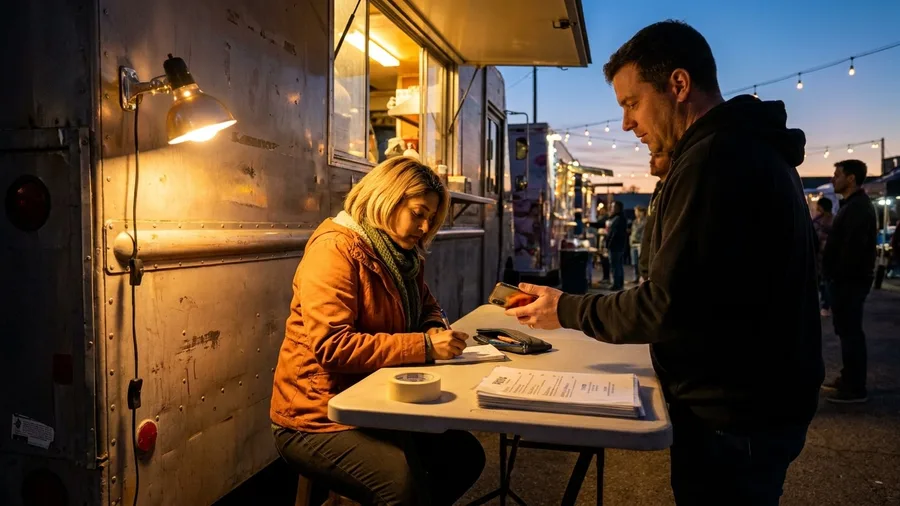
The permission you need is one line from the truck owner, not a license from ChatGPT or Canva. Most leading AI tools let users sell or use what they make, but the user is responsible for not copying someone else's work, brand or likeness.
That means asking each owner for their logo file rather than redrawing a lookalike, and it takes one message: "can I use your truck's name and photo in a sample?"
Never paste passwords, a client's ID or bank details, or unreleased pricing into a chatbot. I kept prices in a plain document and pasted only the lines the menu needed.
I also switched off model training on the free plan. On claims, since October 2024 an FTC rule bans fake reviews and testimonials, including AI-written ones. No invented "our customers love it" line goes in.
Affiliate link means a tracked link that pays you a commission, and any affiliate link or sponsored recommendation needs a clear disclosure next to it. The rules cost minutes, not dollars.
⚠️ COMMON MISTAKE
Two weeks is long enough to know
If a product gets no replies or sales in two weeks of steady hours, drop it and put those hours into messages. My template pack sat eight hours and earned $0; the second menu came from the hours I freed.
One offer and 14 messages beat a shop of templates
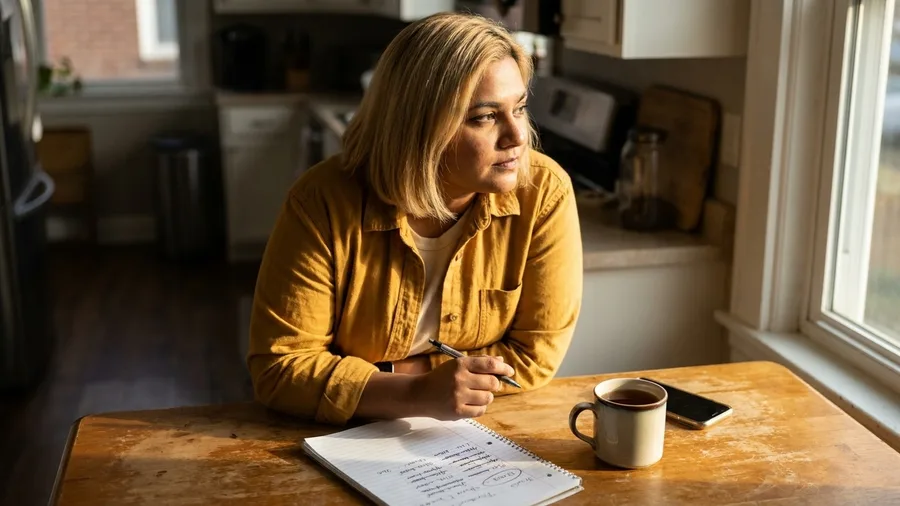
Start with one local trade where you can see what is wrong. For me that was food trucks, because a taped paper menu is right there in the window.
Write the $45 offer, then send ten personalized messages in seven days with the DM I gave you. Do not build a catalogue first.
Some readers should skip this. If you will not message strangers, this will not work, because a business needs replies from real buyers. If you want income without outreach, my template pack needed no messages at all and made exactly $0 in 8 hours.
Six hours a week is the pace I kept. At $45 a menu that took me to $90 in six weeks and $135 a month by month three.
Tonight, do this: one offer, one group, one week. Then count the replies. That $90 in six weeks is the clock to compare your own first month against, and it starts with the messages, not the shop.
💬 From cold message to paid menu, in four moves
Weeks 1-3: 14 sends
14 messages went out in three weeks. One yes, two maybes, eleven silent. Twelve hours in, $0 earned.
Day 19: first yes pays
The yes came from a message that named one flaw. Print PDF, Instagram version and Canva link shipped, $45 received.
Two maybes: nothing yet
Neither maybe ordered in week 6. The sample is what I resend, not a new message, once a month at most.
First menu: 3 hours 40
My own work on menu one, edits counted. By the fourth menu that dropped to 2 hours 20. Second $45 landed in week 6.
Frequently Asked Questions
Do I need a design portfolio or a website before I message food trucks?
No. The $45 menu sells itself because the buyer can see the finished page before paying, and you send a free sample first. A portfolio would have helped me look experienced, but the first yes came before I had one.
What if the owner asks for a logo too?
Say the menu is the offer and a logo is a separate job at a separate price, then ask what they have in mind. Bundling a logo into the $45 is how a two-hour job becomes a five-hour one and stops being worth the money.
Is it legal to sell what ChatGPT and Canva produce?
Most leading AI tools let users sell or use what they make, but you are responsible for not copying someone else's work, brand or likeness. Ask for the owner's own logo file rather than redrawing a lookalike, and keep the credit clean.
How do I get paid without a business account or invoicing software?
I used a payment handle written into the delivery email and nothing else. State the total, the handle and the two included edit rounds in the same email, so the buyer knows exactly what the $45 covers before they send it.
How long should I wait before giving up on a product like the template pack?
Two weeks of steady hours is long enough. Mine got eight hours and zero sales in four weeks, and the extra two weeks I kept it up earned nothing. Drop it and put the hours into messages that get replies.
Send ten messages this week, or admit you want the money without the messages
Pick one local trade where the flaws are visible in public. Write the single $45 menu offer. Send ten personalized messages this week using the DM written above.
Skip all of it if you will not message strangers, or if you want money that arrives without outreach.
The first message is in your outbox, not in a shop of templates. My own template pack needed no messages and made $0 across 8 hours.
Six weeks in Dayton, 14 messages from one group, 12 unpaid hours in weeks 1 and 2, then $45 on day 19 and another $45 in week 6. Send the ten, then count the replies before you count the dollars.