
I spent one weekend in October 2026 running the same 11 storytelling prompts through ChatGPT Plus and Google AI Pro. Eleven prompts, one fresh chat each, default settings, no follow-ups.
By hand, drafting and self-editing three of these pieces would take me about four hours. Both tools returned usable drafts in under a minute per prompt.
I scored every pair blind, one to five, on voice, story logic, surprise and edit burden. Heavier editing lost every tie. That last rule decided most of the test.
ChatGPT won 8 of 11 prompts. Gemini won exactly three: the image-led opening, the historical accuracy pass, and the long-notes series bible. By the end, the split was clear enough that I would pay for both.
| # | Storytelling prompt | ChatGPT outcome | Gemini outcome | Winner | Why the difference matters |
|---|---|---|---|---|---|
| 1 | Opening lines | Ten distinct lines with usable keeper notes | Competent but one opened on weather, notes restated the line | ChatGPT | Keeper notes give you an editing position |
| 2 | Character flaw | Flaw tied to habit and three pressure scenes | Cleaner psychological summary, fewer usable details | ChatGPT | A flaw you can dramatize beats a diagnosis |
| 3 | 200-word flash scene | 560 words, indirect refusal, power shift ending | Over limit, named the emotion, extra dialogue line | ChatGPT | Word discipline is part of the craft |
| 4 | Subtext dialogue | 12 lines, surface task stayed real, subtext leaked | One character too knowing, subtext flattened | ChatGPT | Cryptic is not the same as subtext |
| 5 | Midpoint twist | Five twists, each with setup cost stated | Two twists needed a new character | ChatGPT | A twist that breaks act one is a rewrite |
| 6 | Worldbuilding detail | Sensory detail and social rules ready for a scene | Richer place, slipped into explaining the technology | ChatGPT | Lore dumps cost you red pen time |
| 7 | Image-to-story | Strong prose but described the uploaded image directly | Three visual details used, image changed the action | Gemini | Image-led openings need the image to work, not be described |
| 8 | Historical accuracy | Read cleanly but invented an object and a citation | More period detail, better verification questions | Gemini | A plausible fake citation is the dangerous output |
| 9 | Bedtime story | Kept repeating phrase, no villain, child solved it | Added a talking animal and a louder ending | ChatGPT | A bedtime story has to settle, not wind up |
| 10 | Back-cover blurb | All three lengths ended on one hook, stakes concrete | 50-word version dropped the flaw, 120-word spoiled midpoint | ChatGPT | A blurb that spoils loses its reader |
| 11 | Series bible | Strong on voice, missed a contradiction, merged two characters | Held 800 words, flagged two risks, clean timeline | Gemini | Continuity errors surface in book two |
1. The Opening-Line Prompt
Ten opening lines came back from ChatGPT, then three notes saying which to keep and why. I ran it first because the opening is usually where my draft stalls.
Before either tool saw the prompt, I filled every bracket the same way: genre, place, character, goal. One fresh chat each, defaults, no follow-ups, so the assistant was the only variable left.
Prompt to copy
You are a short-story editor. Give me 10 opening lines for a [genre] story set in [place] about [character] who wants [goal]. Each line must be under 25 words, avoid weather and waking up, and imply a problem in the first clause. After the list, mark the three you would keep and say why in one sentence each.
ChatGPT's ten lines had ten different rhythms, and its keeper notes gave me something to argue with, which is an editing position. If the replies you get back feel bland and hedged instead, these prompt tricks for better answers show how to fix them.
Gemini's set was fine until I read line four, which opened on rain, and its notes only echoed each line back.
Watch for ten variations on one rhythm, and for Gemini explaining the genre inside the line itself.
💡 Tip: Run this one first in ChatGPT when the opening is your bottleneck. Try Gemini only once you have a line to test against a search-heavy setting.
The 11-Prompt Test at a Glance
2. The Character-Flaw Profile Prompt
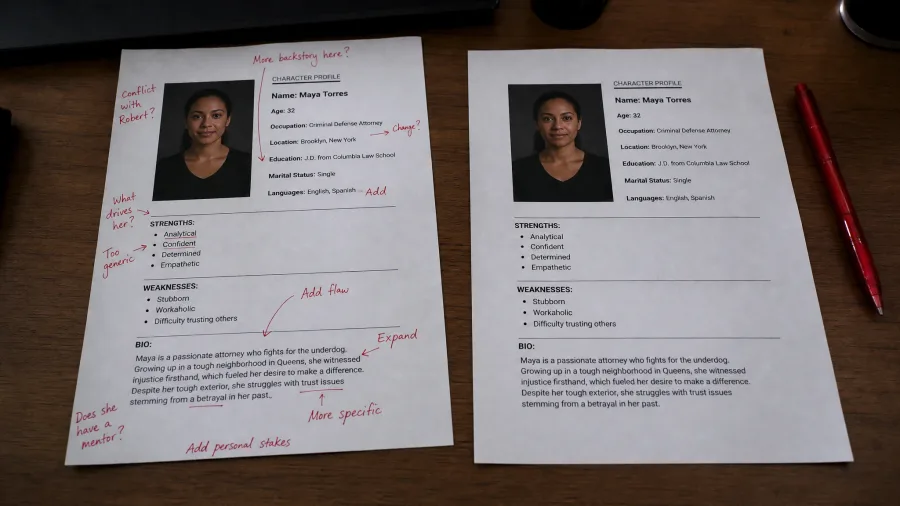
A flaw profile is easy to accept and hard to use, because both tools default to diagnosis. Ask for a flaw and you get a tidy label with no scene attached, so the prompt has to force a cost.
I pasted in a character already in my drafts, with her name, age, job and setting, then ran the same text through each tool.
Prompt to copy
You are a character psychologist. Build a one-page profile for [character name], a [age]-year-old [job] in [setting]. Give me: the flaw they would admit, the flaw others see, the lie they believe, one habit that betrays it, and three scenes that would expose it under pressure. Keep it in bullet points under 350 words. Do not use the words 'quirky' or 'trauma'.
ChatGPT tied the flaw to a single habit and to three pressure points, and each point was already a scene I could draft that afternoon.
Gemini's summary read cleaner as psychology, yet almost none of it could go on the page. Reject any profile that names no cost at work and in love, because the reader cannot see a label.
ChatGPT: Start here for a character you are about to write. Gemini: Keep the tidier summary beside the draft as a second opinion, never as the draft.
3. The 200-Word Flash Scene Prompt
Prompt to copy
Write a 200-word flash-fiction scene in which [character A] wants [goal] and [character B] blocks it without saying no directly. Set it in [place] during [time]. Use concrete sensory detail, no more than three dialogue lines, and end on an action that changes the power balance. Do not name the emotion.
That ceiling is the whole test: a flaw only exists under pressure, so I gave both tools 200 words and counted by hand afterward, words and dialogue lines and the closing action.
ChatGPT came in near the limit, held the refusal indirect and finished on a shift in power. Gemini ran long, named the feeling outright and gave me a fourth line that explained the tension away: three edits.
Both tools drifted over the limit, and the extra dialogue line is the one I always cut first.
Cost for the pair: about 20 seconds of AI writing each and roughly 15 minutes of my counting and cutting, on a $20 plan and a $19.99 plan, as of October 2026.
💡 Tip: Both tools drift over the word limit. Gemini's extra dialogue line is usually the one that explains the tension away, so count dialogue lines before you judge either draft.
⚠️ COMMON MISTAKE
Don't paste your manuscript into a free chat
I ran these prompts in fresh chats with model training switched off in both accounts first. Skip that step and your unpublished notes may be used to improve the models. Client manuscripts, contracts, passwords and medical records stay out of the paste entirely.
4. The Subtext Dialogue Prompt

The test: A dozen lines where two people argue about something ordinary while the real fight stays underneath, with an action beat or a silence after each line.
Prompt to copy
Write a 12-line dialogue between [character A] and [character B] who are [relationship]. They are discussing [ordinary task], but the real subject is [hidden conflict]. Neither may name the hidden conflict. Give each line a beat of action or silence. End with one line that could be read two ways.
ChatGPT won on the borrowed car. The task stayed a task, keys on the counter, an offer of a lift, and the buried conflict leaked through hands and pauses rather than speeches.
Gemini had one character too knowing. Its pair announced the problem at line four.
The catch: Cryptic is not subtext. Check that the surface task still reads as a task someone could finish, and that each beat does work. Delete the beats and a strong draft should fall apart.
The payoff: Take ChatGPT's first pass, read the lines aloud, then cut the single line that explains the tension. Whatever the story still raises at that point is your midpoint problem.
What Each Tool Did Well on Story Work
ChatGPT
- Tied flaws and twists to scenes you can plant early
- Kept word and dialogue limits when asked firmly
- Gave keeper notes you could argue with
- Handled voice, subtext and blurb structure cleanly
Gemini
- Used image details without describing the image
- Built a period-detail and verification checklist
- Held 800 words of series notes and flagged contradictions
- Exported research reports to Google Docs in one click
5. The Midpoint Twist Prompt
Midpoint twists are where a draft with unfinished business either sharpens or collapses.
Prompt to copy
You are a story editor. My story is about [one-sentence premise]. The protagonist wants [goal], and the antagonist is [force]. Suggest five midpoint twists that would force the protagonist to choose between [value A] and [value B]. For each, give the twist in one sentence, the new question it opens, and the risk that it feels unearned. Rank them and explain the top pick in 100 words.
ChatGPT won. All five twists changed the story question, and each carried a setup cost I could plan for. Gemini's top two were bolder, but two of the five needed a new character to work at all. That is a first-act rewrite, not a twist.
Read the risk sentence before you fall for the idea. Surprise that needs a reset costs more than it pays.
The payoff: ChatGPT for a twist you can plant early. Take Gemini's bolder option only if act one has room to set it up.
Story-Craft Terms the Scores Turned On
6. The Worldbuilding Detail Prompt

Six details, three rules and one overpriced item is a bigger order than it looks: one ordinary place in a made-up world, under 300 words, and my one hard ban was any explanation of the magic or the technology.
Prompt to copy
Build one ordinary place in a [genre] world: a [place type] where [community] gathers. Give me six sensory details, three social rules, one thing that costs too much, and one object a child would notice. Do not explain the magic or technology. Keep it under 300 words.
ChatGPT won. Its details fit straight into a scene, and the rules were shown in behavior, not explained. Gemini's market felt richer, but it spent a paragraph telling me how the trade magic worked. That paragraph is the first thing I cut.
💡 Tip: Use Gemini later, once the scene works, to widen the background if you need more texture behind it.
🧪 How I Ran the 11-Prompt Test
Fill the slots
Write one set of bracketed details per prompt and use it for both tools.
Open fresh chats
Start a new chat per prompt per tool so no earlier answer colors the next.
Keep defaults
Leave settings alone and send no follow-up prompts.
Score blind
Read each pair without checking which tool produced which answer.
Count the red pen
Rate voice, logic, surprise and edit burden from one to five.
Break ties on edits
When two drafts were close, the one needing fewer edits won.
7. The Image-to-Story Prompt
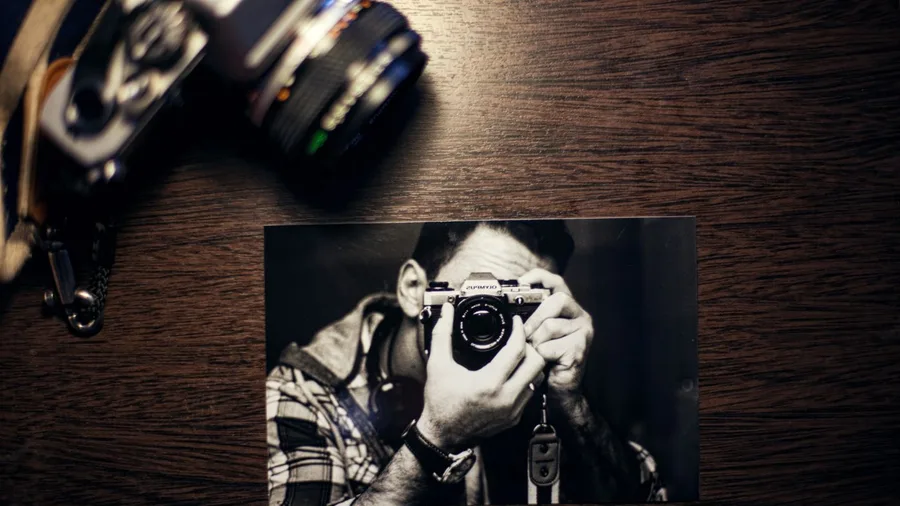
Building a place in words still leaves you holding one picture nobody else can see. So for the seventh test I uploaded one photograph to both tools.
The brief: a 300-word opening where that photo is the last thing the narrator sees before [turning point]. Three visual details from it, no more.
Prompt to copy
Read the uploaded image. Write a 300-word story opening in which the image is the last thing the narrator sees before [turning point]. Use three visual details from the image, no more. Do not describe the image directly; make it matter to the character. End with a line of dialogue.
Gemini won. It spent its three details inside the action and left the photo itself off the page.
Its narrator's grip shifted on the doorframe because of what was in the frame. ChatGPT wrote better sentences, then stopped to describe the picture back to me.
Beautiful writing doing the wrong task.
Both tools reach for description first. The check: read the sentence after each visual detail. If the character does the same thing as before, the detail is furniture. Start image-led openings in Gemini, then take its best lines back to ChatGPT.
Storytelling Myths, Tested
Scores from one weekend of testing, not a general ranking of either tool.
8. The Historical Accuracy Prompt
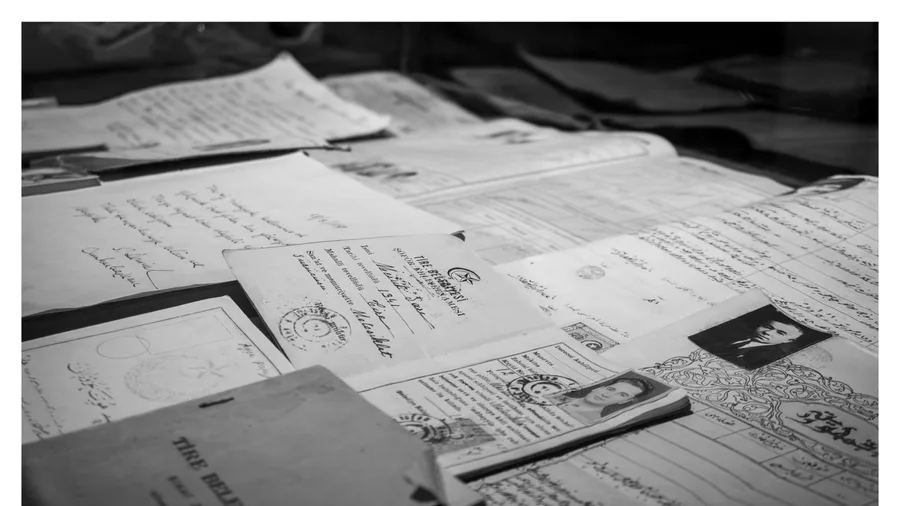
Gemini, on this test. I gave the same city, year, action and time of day to both tools, and Gemini returned sharper period detail. Better, its three verification questions told me what to look up.
Prompt to copy
You are a historical consultant for fiction. My scene is set in [city] in [year]. It involves [character] doing [action] at [time of day]. List five period details I can use, five likely anachronisms to avoid, and three questions I should verify with a primary source. Do not invent citations; mark anything uncertain as check.
ChatGPT's page was smoother to read, then handed me a plausible object and a citation I nearly pasted. The real cost: about 2 minutes to generate, 20 minutes to verify each detail against a primary source, and both plans on my card.
Total: $39.99 a month for the pair, and every date checked before it reaches the page.
The 11-Prompt Test — How It Was Scored
📅 When
One weekend, Oct 2026
💬 Chats
One fresh chat per prompt per tool
⚙️ Settings
Default, no follow-ups
📊 Scoring
1-5 on voice, logic, surprise, edit burden
⚖️ Tiebreaker
Heavier editing lost
Cost of the test
Two subscriptions, $20 and $19.99 a month, already paid for other work.
9. The Bedtime Story Prompt
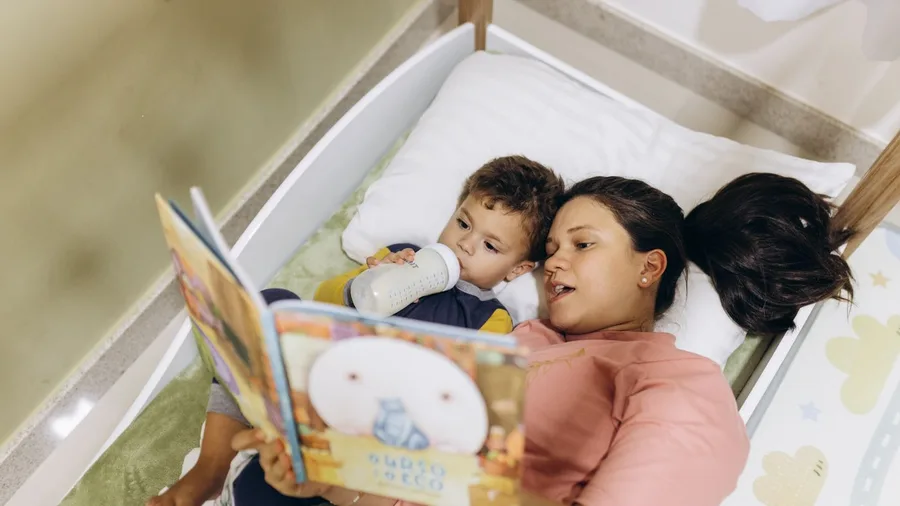
The hard part of a bedtime story is not charm. It is landing a 350-word piece that ends calm enough to close a small set of eyes.
For the ninth test both tools got the same brief: a repetitive soothing phrase, a problem a child could outgrow, and a quiet finish.
Prompt to copy
Write a bedtime story for a [age]-year-old about [child character] who is afraid of [ordinary thing]. The story must be 350 words, have a calm repeating phrase, no villain, and a solution the child invents. Do not rhyme. End with the child asleep or nearly asleep.
ChatGPT won. It held the gentle refrain, gave no antagonist, and let the small hero fix things.
Gemini's version was sweeter on the ear, but it trotted in a talking animal and built a louder finish. Two fixes that erase the whole reason for the story.
That is the trap here. Both tools want to add energy so the tale feels fun. Read the closing paragraph for calm and count every new face who was not already in the child's room. Keep ChatGPT's draft, and cut anyone who wandered in.
10. The Back-Cover Blurb Prompt
Prompt to copy
Write a back-cover blurb for my [genre] novel. Premise: [two sentences]. Main character: [name, want, flaw]. Stakes: [what happens if they fail]. Give me three versions: 80 words, 120 words, and 50 words. Each must end on a question or a threat, not both. Avoid comparing it to other books.
Shrinking a whole novel to three lengths is the same discipline as compressing a bedtime story into one calm line, just at book scale. I pasted the same premise, want, flaw and stakes into both tools for the three versions, and default settings.
ChatGPT kept the stakes concrete at 50, 80 and 120 words, and each ending carried one hook and no second one. Gemini's 50-word take left the flaw out. Its 120-word take gave away the midpoint.
Those are the two ways a blurb loses a browsing reader, at either length. Check that the flaw and the stakes survive all three versions, and that the shortest still names both.
Keep ChatGPT's versions for the agent letter. Then hand the final one to someone who has not read the manuscript, and watch their face on the last line.
11. The Series Bible Prompt
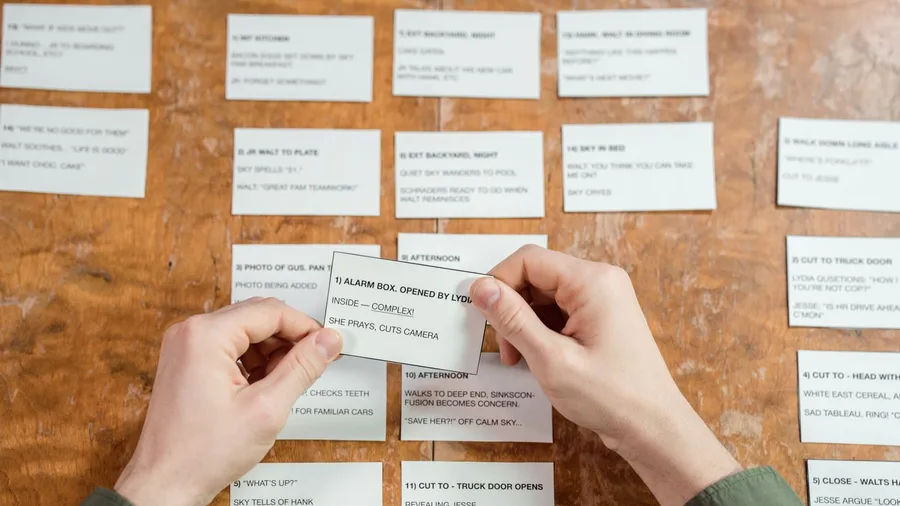
Prompt to copy
Create a one-page series bible from the material I paste below: [paste 800 words of character notes and plot]. Return: the series promise in one sentence, five recurring motifs, a timeline of known events, three continuity risks, and one unresolved question per main character. Flag anything in my notes that contradicts itself. Keep it under 500 words.
At 800 words of pasted notes, Gemini held the whole pile, named two continuity risks and kept the timeline straight.
ChatGPT sounded stronger on voice, but it let one contradiction stand and folded two minor characters into one. That error does not surface until book two.
The paste is the limit. Mine held unpublished notes only, with training off in both accounts beforehand. Client manuscripts and financial or medical records stay out of the chat, and a human read of names and dates still comes before the next draft.
Frequently Asked Questions
Do I need to pay for both ChatGPT Plus and Google AI Pro?
No. Start with ChatGPT Plus if drafting and revising is your main job, because it won 8 of 11 prompts here. Add Google AI Pro only if you regularly work from uploaded images, write historical fiction, or keep long series notes.
How long does one storytelling prompt take?
The AI answer takes about 10 to 60 seconds. My review and edits took 2 to 9 minutes per prompt, and that review time is where the real difference between the two tools showed up.
Will either tool invent facts or quotes in my story?
Yes. ChatGPT invented a plausible historical object and a citation during this test. Check every name, date, quote and link before you use it, and treat a confident-looking citation as suspect.
Can I paste my unpublished manuscript into these chats?
Only after switching off model training in the account settings. Keep client manuscripts, contracts, passwords and medical or financial records out of any chat entirely.
Do the free tiers work for these storytelling prompts?
Free tiers have usage limits that change, so check each tool's own pages before you rely on one for a long session. The test here ran on paid plans, ChatGPT Plus and Google AI Pro, with default settings.
Draft in ChatGPT, Research and Image Work in Gemini
The split held all weekend. ChatGPT for iterative story drafting and revision, Gemini for image-led openings, historical research and long-notes continuity. I would pay both bills before I gave up either job.
Keeping only the tools that earn their place is a habit worth copying, and this year of testing AI tools shows how to cut the rest.
Start with the opening-line prompt in ChatGPT. Then check every name, date, quote and link any tool hands you before it reaches the page, because a confident fake is the one mistake that survives the red pen.