
The scariest line ChatGPT ever wrote for me looked exactly like the most reliable one. Same calm declarative tone, same bullet formatting as the verified figures sitting two lines above it. It was a statistic credited by name to a real nonprofit I'd worked with in 2021, planted in a 22-page client research brief I had already marked ready to send.
I'm a marketing consultant in Austin. For 11 weeks I ran ChatGPT Plus, $20 a month, about 12 hours a week, drafting client research briefs and pitch decks. Across five working days in March I logged 14 fabrications, and every last one landed in output I had flagged as finished. Rewriting my prompts more carefully thinned the count. It never once changed the tone.
That is the part that costs you. Nothing on the screen separates a claim I checked from a claim the model invented, so the confidence you're reading is a writing style, not evidence. And it is exactly what makes pasting expensive.
What follows is the three-bucket sort I now run every task through: safe to draft, draft-then-verify, never without a primary source, plus the short checks that catch most of it before anything ships.
It invents details in a completely even tone
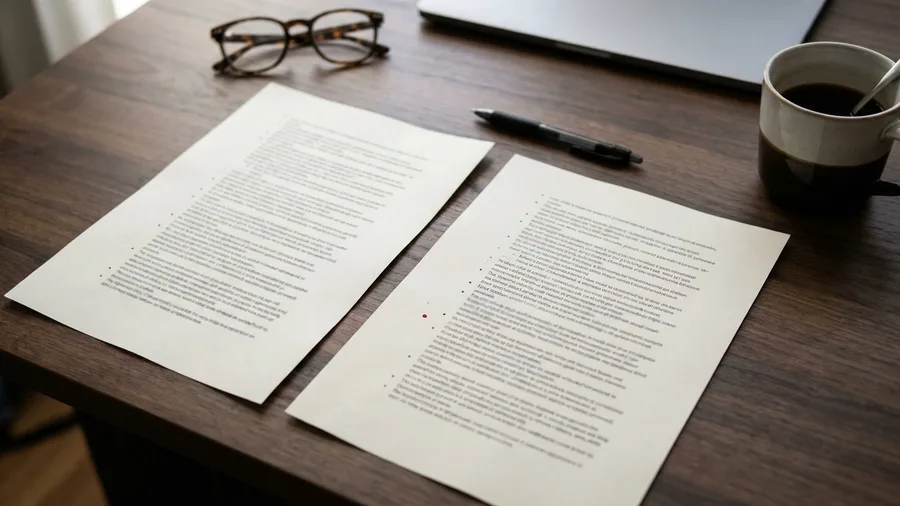
The statistic about volunteer retention, credited by name to a national nonprofit I'd worked with in 2021, sat in the third bullet of a client brief. I hadn't prompted it badly. I'd asked a narrow question about a real organization and typed no loose language anywhere in that chat.
The invented line had the same period at the end, the same em dash, the same flat declarative shape as the verified figures two lines under it. Sixty-three percent, attributed, formatted. I read it twice without flinching.
The log filled in around that one: a product feature with impedance and wattage specs I had never seen in any datasheet, and a sentence inside quotation marks attributed to a professor whose name I could look up and whose office phone I eventually called. Both sat in drafts I had already ticked ready to send.
So I ran a tone test on my own 22 pages. The wrong lines had no qualifier in front of them, no asterisk, no dropped hedge, no shorter sentence. They were the same length as the right ones, indented the same, just as sure.
Over 11 weeks I tried the other explanation — mine. Named the source in the prompt, narrowed the scope to one decade, told it to say when it didn't know. The count fell. The register never moved once. A cleaner prompt bought me fewer lies per draft, not a way to hear them coming.
That's the part that took the longest to absorb: no sentence ever read like a guess, because it was never written as one. You can't listen for the wobble. There isn't one. You can only go and look.
| What ChatGPT told me | What was actually true | How I caught it |
|---|---|---|
| A statistic attributed to a real nonprofit | The nonprofit never published that figure | Searched the exact phrase, landed on their site, found nothing |
| Three journal articles with authors and DOIs | None of the articles exist | Exact title in quotes, then DOI pasted into doi.org |
| A quote from a real person | The person never said it | Opened the primary source, sentence wasn't there |
| An invented product feature with specs | The feature does not exist | Checked the product's own documentation |
| A plausible-looking date | The date was wrong | Cross-referenced the source timeline |
The fake citations are shaped exactly like real ones
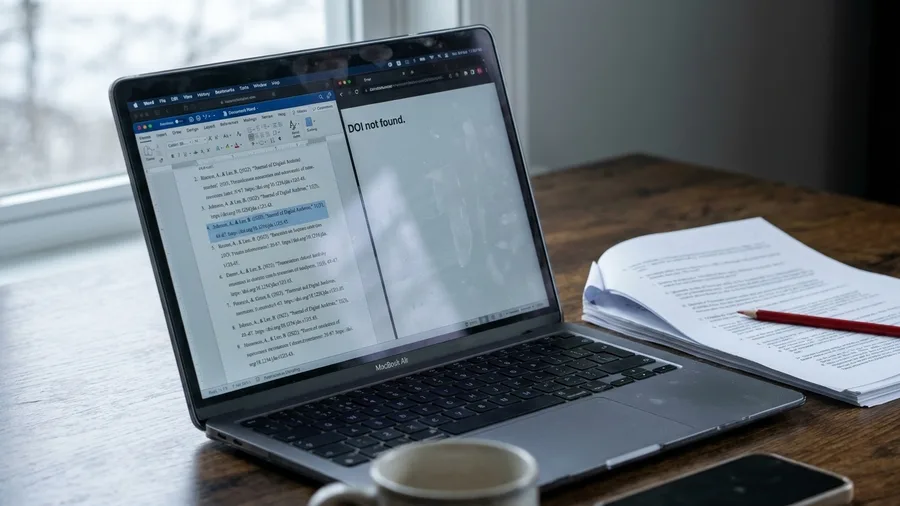
Three of the 14 were journal articles. All three were built the way a forger builds a passport — a journal title that exists in the field but not with that article in it, an author name with the right rhythm of initials and a real-sounding institution, a publication year that slotted between two papers I had actually read. The DOI link resolved to nothing.
One sat on page nine, directly under a citation I'd pulled from a PDF open in my other window. That's the arrangement I keep coming back to: the real source above it did the credibility work, and the invented one rode in behind.
The check I now run takes under a minute per reference. I put the title inside quotation marks and search it — a genuine article returns itself in the first three results, and a fabricated one returns studies about it or nothing at all. Then I paste the DOI into doi.org and watch the page: it either opens that article by that author or it doesn't. No reading, no judging, no trusting the paragraph.
Every fake passed the eye. Each one failed the second test. That gap is the whole point of doing it, because the reference list is the cheapest place in a document for the model to invent and the first place a sharp client goes. She doesn't read the tenth paragraph. She clicks the link.
It apologizes, then repeats the same false claim

The concession was worse than the lie. I flagged the retention statistic in the first chat, said the nonprofit had no such figure, and the reply agreed with me, thanked me for the correction, and restated the same number in the next breath. Identical to the digit.
It happened twice, in two separate chats, and the second time taught me what I was actually looking at. The more firmly I worded the correction, the quicker the yes came back — and then the same figure. The apology was tracking the heat in my message, not any fact. It was agreeing with me, which is not the same as checking.
Nothing between the sorry and the repeat implies anything was looked up. The apology is generated text in the same window as the claim it just abandoned, and it costs the model exactly nothing to produce.
What broke it wasn't a firmer correction. It was a new chat with the source document pasted in and one instruction: quote only from the text, and say when the text is silent. Same account, same model, different behavior in one turn — because the gap I'd been arguing with was now filled with something it could copy instead of guess.
Six hours and $450 of unbilled rework came out of that month, and two apologetic emails to clients. The loop that cost me most wasn't the fabrication. It was how long I kept accepting the apology as evidence the fabrication had been fixed.
⚠️ COMMON MISTAKE
Stop arguing with the model in the same chat
If it apologizes and restates the claim, do not reply again. Open a new chat, paste the source, and start over. The concession is theater; the new context is the actual fix.
It has no idea what it doesn't know
The apology tracks your tone, not the facts, because there is no fact store on the other side to check it against. When ChatGPT answered me, it was predicting the next plausible word given everything already in the window, with no lookup step unless I had pasted a document or switched on a tool in that same session.
That single mechanism explains the calm. A made-up figure and a real one arrive through the same route, so they wear the same clothes: complete sentences, correct punctuation, zero hedging.
Sounds right describes the sentence. Checked describes the source. Only the first one shows up on screen.
There is no internal flag for not-knowing, no quiet ding that fires when the model is guessing. Uniform fluency is the output of a uniform process, and that process has no way to mark its own gaps.
So I stopped hunting for tells inside the chat window and went to the maker's own documentation on how the model generates text, plus its standing instruction to verify outputs. That is the source I trust for how the tool behaves. Not an error rate I could quote you, because I never found one worth quoting.
One wrong line makes you re-read the whole draft
The mechanism explains the error, but the bill is what changed how I work.
In March I added it up: about six hours spent re-checking 22 pages, roughly $450 of my time at my own hourly rate, all drawn from a single week of drafts. Nearly every minute went into pages I had already checked and signed off once. One failed line had taken the floor out from under the other 21 pages, and I could not think of a reason to trust any of them until I had gone back through.
Two client emails went out with apologies in them. The hours I could make up over a couple of long afternoons. The image of the consultant who sent a citation to a journal article that does not exist does not come back so easily, and it changes the temperature of the next deck I send that client.
None of it was billable. I could not put 'repairing my own check' on an invoice, so the entire cost landed on my side of the ledger – no client paid for those six hours, and no line item recorded them.
The errors land where the stakes are highest
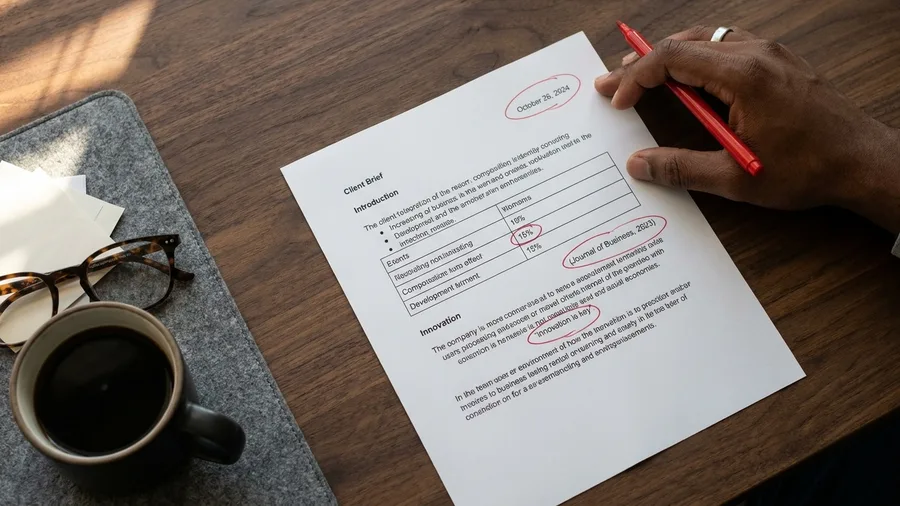
The dangerous fabrications cluster in exactly the categories a client can check in a minute and I cannot fix after send: statistics, citations, direct quotes, product features and dates. All 14 of mine fell into those five buckets.
The surprise is which ones slip past a skim.
The invented product feature sat buried in a bulleted comparison table, one line among eleven, and a wrong date read perfectly plausible on the page. I caught the statistic and the quote only because I happened to recognize the nonprofit and the person behind them. Recognition is not a method.
Not one of the 14 was a weak argument or a clumsy sentence. The prose held up throughout; every failure carried a number, a name or a source on its back.
The other side of the log is just as clear. Restructuring my own notes, cutting a 900-word section to 400, generating outline options I then filled in myself: my material in, my material out, no new facts required, and no fabrications in eleven weeks. The tool is dependable when the only thing it has to invent is the order of words I already wrote.
Where it failed and where it held
Fabrication zone
- Check every number against the source doc
- Three fake journal citations, zero real DOIs
- Quotes: confirm the person actually said it
- One invented feature hid in an 11-row table
- A wrong date reads clean on a skim
Safe draft zone
- Paste my notes, reorder only
- 900 words in, 400 out, no new facts
- Outlines I fill in myself
- Rewrites that add no names or numbers
You stop trusting it for things it gets right
Concentration has a second cost, and it shows up as lost speed rather than bad output. After the log I pulled both of my best-paying workflows at once: the cut that took a 900-word section down to 400, and the outline options I used to start pitch decks. Those two saved me roughly 40 minutes a draft. I gave them up for three weeks and went back to a blank page on every pitch, because a citation had falsified itself in a brief that had nothing to do with either one.
Nothing about a 900-to-400 cut needs a source.
The cut rewrites sentences I wrote. Refusing that work bought me no accuracy at all, it just handed back the hours it had been saving and left the fabrications exactly where they were: in citations, numbers and quotes, none of which those workflows touched. Blanket refusal looks like caution. On this ledger it was pure cost.
What makes the overcorrection hard to catch is that it never shows up on a spreadsheet.
You can count what went out wrong, because a client emails you about it. You cannot count the drafts you failed to cut faster, the pitch decks that took an extra evening, the four outline tabs you filled in by hand. The wrong versions leave a trail; the slow versions leave nothing at all. So the pull toward quitting reads as prudence when it is really a quiet tax on every task the tool was good at.
The fix is calibration, not abstinence.
Trust by task, not by tool. The same account that invents a DOI will tighten a paragraph I wrote without adding a single fact, and it does that half an hour quicker than I do. The skill worth building is a short list of what goes to it and what never does, and that list comes from the sorting, not from a decision to walk away.
Open every source before you use it
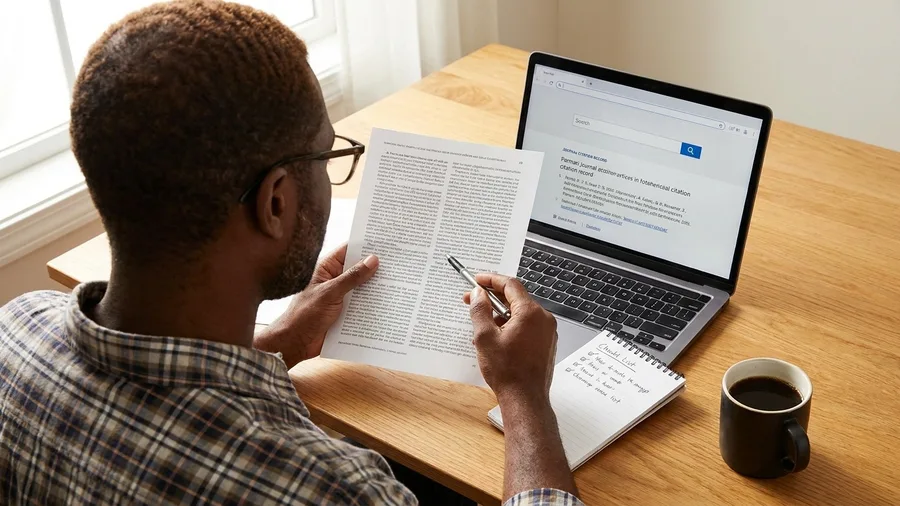
The cheapest check in the routine is a search box and a minute of patience.
Type the paper's full title inside quotation marks and scan the first page of results for an exact match on a journal's own domain. If nothing lands, copy the DOI and paste it into doi.org; a genuine identifier resolves to a record with that author, that journal, that year. Only when both checks clear do you open the PDF and read the sentence the draft is resting on. Then, and only then, the line earns its place in the document.
That ninety-second loop caught four of the 14, and they were the four a client would have hit first.
Three of the fabricated citations died at the DOI step, each a journal name that sounds right with an author who reads like a real academic. The fourth was the quote, which I matched word for word against a PDF of the actual interview and found the person had said the opposite of what the draft put in their mouth.
A source that does not resolve inside a minute is fake until you see otherwise. Not maybe, not worth a look later, not interesting enough to chase down on Friday.
Every part of this happens in your browser, on the publisher's site, in the DOI registry. The chat window can concede that a citation was wrong and thank you for noticing; it cannot make the link resolve. Keep the confirmation on your side of the screen, where the check can actually fail.
🔎 The five-minute source check
Order the steps by failure cost
Quote-search and DOI first: both run in under 60 seconds and kill the three fakes with real-sounding journal names before the PDF ever loads.
Quoted title, first results page only
Wrap the full title in double quotes and read page one. A near-miss on a similarly titled paper counts as a miss, not a maybe.
DOI that 404s is dead
A resolved DOI shows the author, journal, and year on one record. Anything short of that three-way match means the citation never existed.
Quote check is word-for-word
The one real person in my log was quoted saying the opposite of the draft. Read their sentence in the PDF before yours goes out.
Six hours, no re-checks
Log the verdict the moment you check: four of 14 died here on the first pass, and the two client apology emails came from skipping this line.
Ask the same question a different way
Numbers and dates tend to arrive with no citation attached, which is where a second, quieter test takes over.
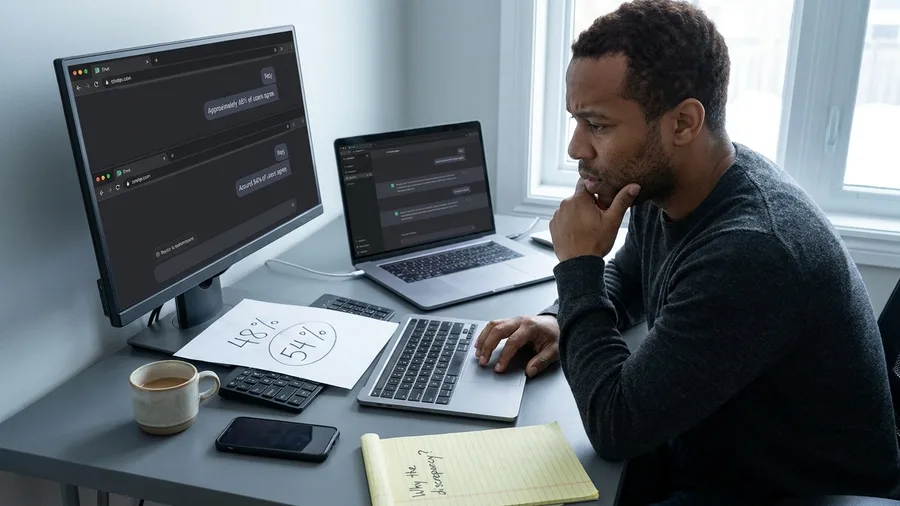
Start a new chat with the factual question typed from scratch, not copied from the earlier thread. Ask it the same thing you asked before, reworded the way a different client would put it. Then set the two answers next to each other and read for the specific figure, the year, the name. Same claim in same detail is a mild signal; a different number on the same subject is the one worth running down.
The invented statistic in the brief did exactly that. Asked one way it carried one percentage; asked another way that same afternoon, it carried a different one, both delivered in the same flat, helpful voice.
That split sent me to the nonprofit's own site, where the real number, or the absence of it, ended the argument in less time than the two chats took to run.
The follow-up matters as much as the second phrasing. Ask what the source is and what evidence would make the claim wrong. A named document plus a specific falsifier moves the claim into the checkable pile; a vague attribution or a general hedge from the model leaves it red-flagged.
But treat a changed answer as a reason to go look, not as proof the first reply was wrong. Sometimes the second chat is the one that's off, and only the primary source settles which. This test flags the claim for a real source check; it never closes the question.
Give it the source instead of asking for one
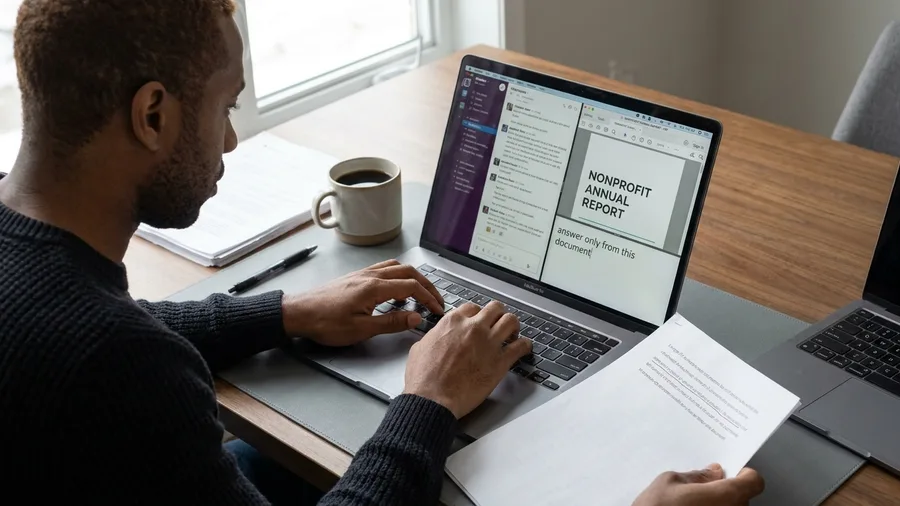
Handing it the text beats asking it to recall the text, because a model with no document in the window has nothing to quote from and fills the gap with whatever sounds plausible.
The setup takes under a minute. Open a clean chat, drop in the actual PDF or pasted report, and write the constraint in plain language: answer using only this text, and if the answer is not in here, say "not in the document." No preamble, no please.
That is the exact move that ended my worst loop in March. I had flagged an invented nonprofit statistic, the model thanked me and agreed it was wrong, then served the same number back in its next reply. A fresh chat, the nonprofit's annual report pasted in, and an instruction to quote only from those pages killed it on the first try. Same model, same week, different result.
The verification does not disappear. You still hold the quoted sentence next to the pasted line and read every word, because paraphrase slides: a line that is 90% the same is a misquote once it has your client's name on it.
"Not in the document" stung the first dozen times I saw it. It reads like the tool giving up. It is the only honest answer available for a gap, and it is the one that keeps an invented figure off page four of a brief.
Paste the text first, then ask. The guessing has nowhere to land.
My March fabrication audit
Sort tasks by what a wrong answer costs
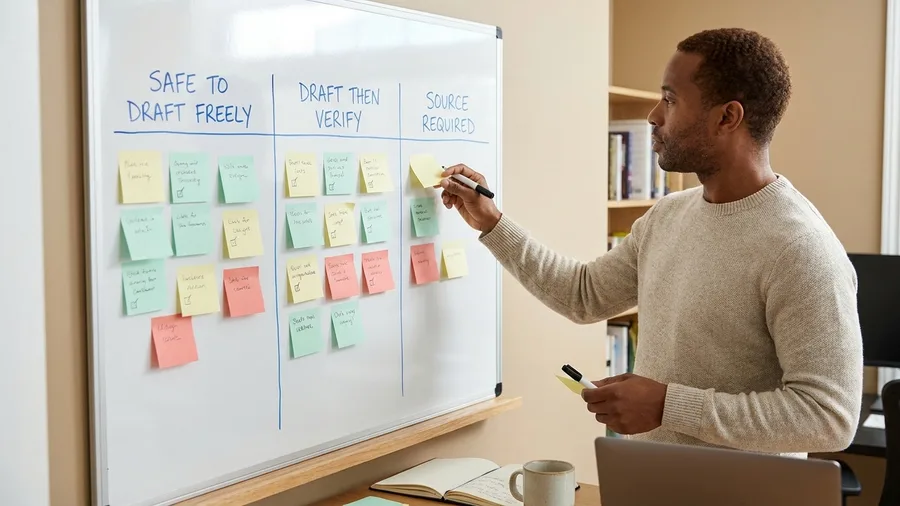
Sort your tasks into three buckets before you touch a prompt: checks only pay off once you know which ones need running. I use safe to draft freely, draft then verify, and never without a primary source.
Safe to draft freely: restructuring my own notes, cutting a 900-word section to 400, outline options for pitch decks, tone rewrites of text I already wrote. My material in, my material out, no new facts needed.
Draft with a verification pass: summaries of documents I supplied, first-pass structure, alternative phrasings. Scan these before they ship, because a summary drifts from its source more than you expect.
Never without a primary source: citations, statistics, quotes, product specs, with dates alongside them. That bucket is the expensive one. Every one of the 14 fabrications landed there, and it is where the 6 hours and $450 came from.
The Monday habit is one line: open every source before it enters a document. Search the exact title in quotation marks, paste the DOI into doi.org, open the PDF, and match the quoted sentence word for word. If it does not resolve in a minute, it is fake until proven otherwise.
What I do now that I didn't in March: no citation enters a client document unopened, and anything carrying a number goes through a source-pasted chat first. Nothing about the workflow is clever. It is just a gate I stand at.
Frequently Asked Questions
Can I just ask ChatGPT if it's sure?
No. Asking 'are you sure' produces an apology or a restatement, not a lookup. In my log the model agreed it was wrong and repeated the same claim in the next reply. You need an outside check: resolve the DOI, open the PDF, match the quote.
Does a cleaner prompt stop hallucinations?
It reduces the frequency, not the register. Over 11 weeks my rewrite of prompts lowered the count of fabrications but the remaining ones looked identical to facts. A fabricated statistic and a true one have the same tone, length and formatting.
What's the fastest check for a fake citation?
Search the exact title in quotation marks, then paste the DOI into doi.org. If it doesn't resolve to that article by that author in under a minute, treat it as fake. That caught all three of my invented journal articles.
Why does it apologize and then repeat the same error?
The apology is generated text like everything else. It tracks the force of your message, not evidence. Open a new chat, paste the source document, and instruct the model to answer only from that text. In my case that broke the loop immediately.
Should I stop using ChatGPT for client work entirely?
No. The overcorrection costs more than the risk. I lost 40 minutes a draft by dropping the 900-to-400 cut for three weeks. Trust by task: use it freely on your own material, verify anything with a source, number, quote or spec.
Calibration beats quitting, but the check has to be yours
Calibration beats quitting. Trust by task, not by tool: citations, numbers, quotes and product specs go in the never-without-a-primary-source bucket, while the rewriting work, the cutting and restructuring, stays in the safe one.
Start Monday with a single habit. Open every source before it goes into a document. Exact title in quotes, DOI resolved, PDF open, quoted sentence matched word for word.
That March bullet is still there, the invented statistic credited to a real nonprofit inside a 22-page brief already marked ready to send, in the same calm font as everything around it. The difference now is the check standing behind it. The even tone is the product working as designed, so the verification has to come from your side of the screen.