
You will leave this page with one idea chosen, a client or view or order count that reaches $10,000 a month, and a clear picture of which evenings the work still eats.
Every idea here answers the same two questions: what keeps earning after you close the laptop, and what stops the moment you do. The guesswork is what this page removes.
Plan on 8 to 10 hours a week of your own time. Every idea runs on tools cheap enough to put on a card, and the first payment lands in month three at the earliest. Ideas built on content take longer to pay.
Prices below are as of October 2026. Anything not quoted sits on the tool's own pricing page, since plans move and an old figure wastes your evening.
| Idea | What runs without you | What still needs you | Best for |
|---|---|---|---|
| Faceless YouTube channel | Uploaded videos keep earning from the back catalog | Topic choice, thumbnails, the edit | People who can fund 5 months of writing |
| Solo automation agency | The workflow fires on its own | Process mapping and silent-break fixes | Anyone with two warm business contacts |
| Long-document retainer on Claude | Nothing until the next file | Sharpening the question, checking citations | Ex-analysts who read fast |
| Sponsored AI newsletter | Delivery, signup, the archive | Curation and sponsor relationships | Writers with a trade audience |
| Answer-engine audits | Nothing — answers shift monthly | Tracking and making the fixes | SEO people who can read sources |
| NotebookLM onboarding libraries | Answers only from the client's own files | Cleaning sources and re-uploading | Trainers and ops consultants |
| Meeting-notes-to-CRM cleanup | The nightly sync | Field mapping and a weekly spot check | Privacy-minded operators |
| Podcast repurposing | Template holds between episodes | Weekly deadline and first two episodes | Audio editors with a schedule |
| Local market research reports | Nothing between reports | Opening every source before it ships | Researchers who verify |
| Template shop | Delivery and updates | Rebuilding when tools change | Prompt testers with receipts |
| Niche industry directory | Submissions, renewals, vendor pages | Verifying listings and chasing renewals | Directory builders in a trade |
| Software affiliate site | Ranked pages keep earning | Re-testing when plans change | Writers who can wait six months |
| Audio branding shop | One read goes to three placements | The mix, the pacing, the approval | Voice and audio people |
| AI policy retainer | The client's own seats and logins | The quarterly review | Consultants in regulated firms |
| Print-on-demand store | Per-order production and delivery | Marketing — the design is the easy half | People with nothing at risk |
1. Faceless YouTube Channel in a Software Niche

Quick answer: 400,000 long-form views a month at $25 per 1,000 views pays $10,000. The same views at $2 per 1,000 pay $800. Niche choice is the whole business.
The gate: 1,000 subscribers plus 4,000 public watch hours in 12 months. The tool bill: ChatGPT Plus at $20 a month writes scripts; ElevenLabs reads them, but its free tier is non-commercial, so a monetized channel needs a paid plan.
What stays yours: topic choice, thumbnails and the edit. No tool picks what to make or fixes a weak first minute. What runs without you: an old upload keeps earning, so month eighteen gets paid by work done in month three.
💡 Tip: Short-form views pay $0.05 to $0.20 per thousand — roughly 60x less than long-form. Use Shorts to find subscribers, not revenue.
2. Solo Automation Agency Built on Lindy

The catch comes before the build. Lindy has no free plan, only a 7-day trial, then $29.99, $99.99 or $199.99 per user a month. Every trial that ends without a signed client is money out. Two clients at $5,000 a month is $10,000.
Do not hand over the client's process mapping. You write down who approves, what starts the workflow and where exceptions land. Automation built on a guessed process breaks silently, and the retainer is also your monitoring fee.
A signed retainer is the opposite payment clock from an audience. The reported solo range is $500 to $5,000 per client, so year one at $2,000 to $6,000 a month is realistic.
Once the workflow fires on its own, a third client adds revenue without a third of the work.
💡 Tip: Charge a one-time build fee plus a smaller monthly monitoring retainer — the build pays your setup weeks, the retainer pays the evenings.
⚠️ COMMON MISTAKE
The mistake that kills all fifteen
Buying the tool subscription before landing the client, the sale or the first subscriber. Every paid plan on this list starts on day one of the first invoice, not on day one of the idea.
3. Reading a Week of Documents in a Day

A week of analyst reading, done in a day, is what the client pays for. Five retainers at $2,000 a month make $10,000.
Claude Pro at $20 a month takes short files; Max at $100 to $200 a month takes long documents. The first retainer lands in month three at the earliest.
The old way: a client hands over a 300-page contract set and an analyst spends five days marking it up.
The new way: the file goes into Claude, the reader writes a sharp question across the top, and the first summary of key terms comes back in a minute or two.
Privacy, once for this whole list: no customer records, credentials, HR files or health and financial data go into a consumer chatbot. Work from client-approved extracts and read the tool's own data terms.
Then check every citation before it ships. Claude is excellent across long documents and is not right unverified. Sharpening the question is also yours; a vague one returns a confident summary of the wrong sections.
Same file, same week
4. Sponsored AI Newsletter for One Trade

Prompt to copy
You are the editor of a weekly newsletter for independent insurance brokers. It pays for itself with sponsors. From the notes in [paste your notes], draft this week's issue: a 60-word opening on the week's news, three items of 80 words each with the practical takeaway stated, and one closing question readers can reply to. Plain tone, no hype, no exclamation marks. Flag any claim you cannot support with a link in my notes by marking it CHECK.
That prompt turns a folder of links into a draftable issue in about a minute. The path to $10,000 is sponsored slots, and the number is 50,000 subscribers at $25 per thousand per send, which is $1,250 a send. Eight slots a month hits $10,000.
Rates follow list size, so year one sells classifieds and one-off placements, not $1,250 slots. Expect the first sponsorship payment well past month three.
ChatGPT Plus at $20 a month drafts and edits. Your email platform's send limits and price sit on its own pricing page.
Curation and the sponsor relationship stay yours, because one wrong item costs subscribers. Delivery, signup and the archive run on their own and keep pulling search traffic and ad inquiries while you sleep.
Tool bill: $20 a month, plus the email platform.
5. Answer-Engine Visibility Audits with Perplexity

A brand asks Perplexity what it does, and the answer comes back with a clickable link on every sentence.
Three of those links go to a competitor's page and one goes to a review site from 2023.
That page is the audit, and it sells itself in a fifteen-minute screen share.
Pricing splits in two. Ten one-off audits at $1,000 reach $10,000, or four tracking retainers at $2,500 a month do the same.
In the first case the first check arrives in month three at the earliest. The fee pays for the tracking, the reading and the fix list, not for the ranking itself.
Perplexity's plan limits and price sit on its own pricing page. The evidence standard does the selling: each finding carries the page the model actually used that day, not a screenshot guess.
A brand that reads its own name in a wrong answer stops arguing about whether AI search matters.
The catch sits after the invoice. The pages, reviews and listings the model pulls from belong to the client, and someone at the client has to change them.
Ship a audit without a named owner and the second month shows the same wrong answers. Re-run the same twelve questions and charge the fix list as a separate job.
That same re-run is why the work renews. Answers shift month to month and a new competitor page can move overnight. A one-off audit slides into a monthly check on the two or three questions that matter most to that brand.
💡 Tip: Screenshot the answer and the source link side by side. A client who sees both understands the invoice in ten seconds.
6. Fixing a Messy Shared Drive Before Anyone Asks It Questions

The tedious part is the shared drive: six versions of the leave policy, a handbook from 2023, and nobody sure which file is current.
NotebookLM answers only from the documents you feed it and cites them, so a messy drive produces confident answers citing the wrong page. Cleaning the sources is the job, and the $2,500 build fee pays for it.
Four builds a month of that work is $10,000, and the first payment lands month three at the earliest.
NotebookLM's plan limits and price sit on its own pricing page. Structure and test questions are the rest of the build.
You still re-upload when a policy changes, and that update work is the smaller monthly retainer that keeps the library the place staff check first.
One build: $2,500, plus a monthly line for keeping it current.
💡 Tip: Write five test questions with the client on the call and run them before you invoice. If the citations land on the wrong page, the drive is not ready.
NotebookLM library build — at a glance
🧾 Build fee
Quote per source pile, not per hour
🔁 Monthly retainer
Covers re-uploads and spot checks only
⏱️ First payment
Deposit up front, balance on sign-off
📄 Sources
One current version per policy, dated
🔗 Answers
If a citation looks wrong, the source is wrong
🧪 Check before invoice
Ask what staff actually phone in about
Renewal engine
Price the retainer as a set number of source updates a month. Extra changes bill per file.
7. Meeting-Notes-to-CRM Cleanup Retainer

A document library answers staff questions from files. The next service cleans what sales teams already generate: call recordings and CRM records. Ten clients paying $1,000 a month each gets you to $10,000.
If you would rather sell AI services with little competition, compare offers that come with a named buyer and a starter price.
Every retainer covers a set number of calls. Do not expect your first check before month three; onboarding and trust take that long.
The value sits in data clients guard closely, so your first meeting is a security talk, not a sales demo. You need their call recordings, their pipeline stages, and who may read what.
Settle that before you touch a single record. The recorder and the CRM belong to the client, and any transcription or automation layer in between carries its own price on its own page.
Prompt to copy
You are cleaning up a sales team's CRM records from meeting notes. Below are notes from one week of calls with a mid-sized machinery distributor. Name the company, the contact and the deal stage at the top of each note. Produce a table with columns: contact, company, deal stage, next action, date due. Flag any note where the stage is unclear or the next action is missing. Keep it under one page and leave out anything that reads as opinion rather than fact.
Paste it into ChatGPT with the notes attached. A week of calls comes back as a clean table in under a minute.
Then comes your evening: mapping the client's field names and checking weekly that nothing landed in the wrong stage. A pipeline can look clean while it is quietly wrong.
Once that check runs, the nightly sync keeps Monday's review right without typing.
8. Podcast Repurposing Service for Weekly Shows
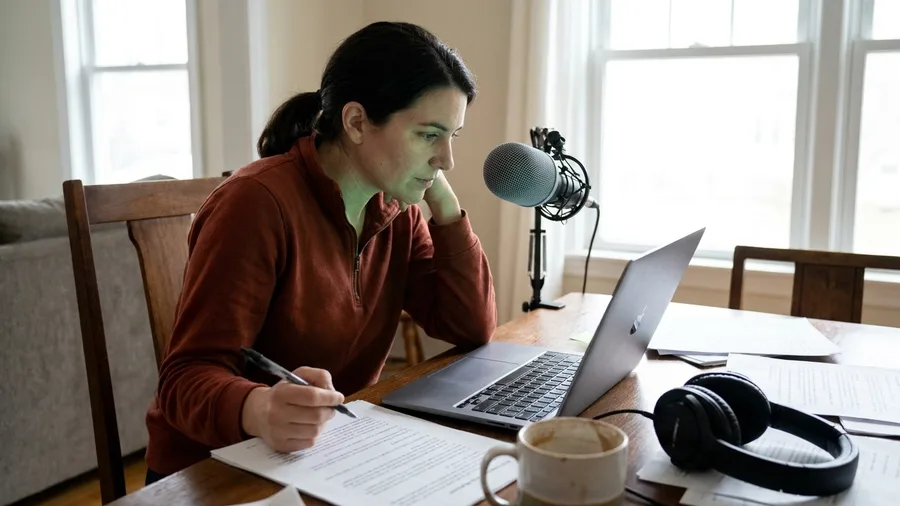
Prompt to copy
From this episode transcript, write 150 words of show notes in the host's plain voice, five clip titles under eight words, and one pull-quote. Leave out sponsor reads and any guest's personal contact details. Do not invent timestamps; use only moments named in the text.
That covers show notes and clip titles for a weekly show, at ChatGPT Plus's $20 a month. Twenty shows at $500 monthly, each on a fixed episode count, makes $10,000, and the first show lands month three at the earliest.
Two times: by hand, notes and titles run about 40 minutes an episode; with the prompt, 20 seconds to draft and 10 minutes to check. The weekly Monday deadline is the hard part, and the first two episodes of each show still come from you.
💡 Tip: Deliver the Monday file on Sunday night. A client who wakes up to finished notes does not shop around.
9. Local Market Research Reports for Agencies

A local market research report. An agency hands a junior a week to read competitors, pricing and reviews for a new market.
You hand back the same brief in a day for a set fee. Twenty reports at $500 gets you to $10,000. Ten at $1,000 gets you there too, with a walkthrough call attached.
First, you need a real market to write about. Pick a category the agency is pitching, such as dental clinics or farm equipment dealers in one metro area.
That is the report a client would otherwise assign to a junior for a week. The result is a brief that names players, prices and gaps, not a page of links. Your payout lands in month three at the earliest.
Prompt to copy
Research the independent coffee shop market in a mid-sized US city for an agency pitching a regional chain. Find competitor names, average prices, and the three gaps customers mention most in reviews. Give each claim a source link. Write it as a one-page brief for a client, in plain English, with no more than five bullets per section.
Perplexity finds and links the sources; Claude writes the long report. Each is bad at what the other does, which is why you use both. Claude Pro is $20 a month, Max $100 to $200, and Perplexity's plan sits on its own pricing page.
Then comes the catch. A citation is not a verification, so open every source before the file ships. Your checks take an evening; the tools finish in minutes.
When the same agency enters a new category next quarter, the second report in that market takes half the time.
💡 PRO TIP
The two-page rule for research clients
Never send a report longer than the client will read. A two-page summary with linked appendix beats a 30-page document and buys the follow-up call that sells the next report.
10. Prompt and Workflow Template Shop

Testing the same five prompts in ChatGPT and then in Claude is the tedious hour nobody bills for.
A pack that skips that step sells once and refunds twice, because a prompt tuned for one chatbot often wobbles in the other and the buyer blames the file, not the tool.
The money is simple when the testing holds. Five hundred sales at $20 reaches $10,000, or a thousand at $10, with no per-unit cost after the first build.
One ChatGPT Plus or Claude Pro seat at $20 a month tests the pack, and the first sale lands month three at the earliest.
So every template names the chatbot it was tested on and shows the output it produced, screenshots and all. Here the hand work matters more than the automation: when a model updates, the pack needs rebuilding, or refunds arrive faster than sales.
What runs without the reader is the back end. One file sells repeatedly, delivery and updates included, with no shipping and no stock to count. Skip the testing and the shop becomes a support queue instead.
A template pack that sells, or one that refunds
Sells
- Names the exact model and version it was tested on
- Shows the real output screenshot
- One job per template, not a mega-prompt
- Free update when the model changes
Refunds
- A generic list of requests with no proof
- Tested on nothing, or on an unnamed model
- Ten jobs crammed into one prompt
- No plan for the day the model changes
11. Niche Industry Directory with Paid Listings

A hundred vendor listings at $100 a month is $10,000, or forty featured placements at $250. Getting there is the hard part, because the directory has no traffic on day one, and a vendor will not pay for placement on a page nobody visits.
The old way: call forty suppliers, pitch a trade site they never heard of, and take the rejections.
The new way: list them free for a year, build the category pages by hand, and let the vendor pages rank for every company name in the trade.
Search sends the traffic, and vendors call you.
The early cost is the reader's hours, not a sales team. Hosting and directory software price their own plans, so months one to twelve are free listings and hand-built pages. Check the vendor details against their own site, or the directory fills with dead links.
What still eats evenings is verifying listings and chasing renewals, one vendor at a time. What runs without the reader is the rest: new submissions land, renewals bill, and the vendor-name pages keep ranking while the laptop is shut.
The words the platform uses
12. Software Affiliate Review Site

A review page that ranks for one software question can pay $6 a month per active referral, and roughly 1,667 of them reaches $10,000.
That page earns commission with no sales call, while a paid directory charges vendors for placement and still needs a human to verify and chase every listing.
Prompt to copy
You are helping me write an honest software review page for a specific buyer. The tool is [name], and the reader's job is [task, e.g. invoicing for a two-person design studio]. Using only the notes I paste below, write a page with four sections: who this suits, who it does not suit, what it costs today, and the two alternatives worth checking. Quote only prices from my notes, and add a line saying the price was checked in [month, year]. If a fact is missing from my notes, write 'not confirmed' instead of guessing. Keep it under 700 words and plain in tone.
What comes back is a usable draft in about a minute, and the fixes are smaller than the work it saves.
The catch: nothing pays until pages rank, so six months of writing bring no income, and a tool that changes its plans leaves stale pricing that kills conversion.
Re-test and re-write when that happens.
The payoff comes later. One ranked page keeps earning, and the commission recurs for as long as the reader stays subscribed. Hosting, keyword data and writing tools price their own plans, and the commission is the only revenue line until the pages rank.
13. Audio Branding and Voiceover Shop

An audio branding shop sells finished voice recordings: phone menus, ads, video narration. Unlike an affiliate page that waits months for a ranking, each job is paid on delivery, but the license cost starts the day a paying client hears the file.
ElevenLabs bills for a commercial plan the moment client work begins, and the price sits on its own pricing page.
One hundred $100 jobs reach $10,000, or twenty at $500, and the first payment usually arrives around the third month. The model's raw read still sounds flat, so the client pays for a real person's pacing, phrasing and mix, which is editing, not recording.
What repeats is the reuse: one approved 30-second read moves to the phone menu, the ad and the video, and each placement is billed separately. That is the evenings the shop costs: taking the same file through three clients' approval loops.
14. Writing the AI Rules and Prompts Clients Hand to Staff

Never touch the legal side. A policy retainer covers a client's written AI rules and prompt library, not its legal or regulatory obligations, which stay with the client's compliance source and the tool's own terms.
Break that line and the work turns into advice you are not covered to give.
The safe version is simple to set up: ask which prompts staff already use daily, write them into one reviewable library, and check each keeps working.
Ten clients at $1,000 a month reach $10,000, with the first retainer around the third month and a quarterly review built in.
Your own bill is small, since ChatGPT Plus or Claude Pro at $20 a month tests the prompts, while the client's seats stay on the client's account.
The recurring work is that quarterly review, because a model update can quietly break last quarter's prompts. Every new hire adds a seat to onboard, so the job keeps returning.
💡 Tip: Date every prompt in the library. When a prompt stops working, the date tells the client which model changed between reviews.
15. Print-on-Demand Store with AI-Assisted Designs

The tedious part is everything after the design: a listing, a sized mockup and a price, repeated for every shirt.
A store that launches and waits sits near $0 a month, and most beginners make $10 to $100 monthly in their first 60 to 90 days.
Building to $3,000 to $5,000 takes 12 to 18 months.
The math is thin: a $28 shirt costs about $12 to produce plus about $2 in fees, leaving about $14, so $10,000 needs 715 orders. Store and design tools bill their own plans.
No design sells itself, and since nothing is due until a stranger buys, this runs beside a service, not instead of one.
By hand vs. tool: mocking up one design across five products takes about 40 minutes by hand and 10 with a design tool, plus 15 minutes checking the print files.
🗓️ The first 90 days, whichever idea you pick
Week 1 — pick one
Choose a single idea and write its unit math on paper: clients x retainer, views x rate, or orders x margin.
Week 2-3 — build the sample
Make one client-ready example, script or listing before you sell anything, using the free tier where one exists.
Week 4-6 — pitch cold
Send ten to twenty real messages or publish the first three pieces; track replies, not the number sent.
Week 7-8 — close one
Turn one reply into a paid pilot and start the paid tool plan on the day the invoice clears.
Month 3 — first money
Expect the first payment here at the earliest; content-led ideas land later.
Month 4-6 — repeat
Deliver again, raise the retainer for the second client and only then add another tool subscription.
Frequently Asked Questions
Do I need to code to run any of these?
No for most. The Claude retainer, newsletter, research reports, template shop and print-on-demand need writing and checking, not code. The automation agency is easier with a basic grasp of triggers and steps, but the client's process is the hard part, not the syntax.
What is the cheapest idea to start this month?
Print on demand, because there is nothing upfront and no inventory, but marketing still eats your evenings. The template shop is second, with a $20-a-month chat subscription and one file to build.
How realistic is $10,000 in the first month?
Not realistic on any of them. Every plan here puts the first payment at month three at the earliest, and content-led ideas like YouTube and affiliate pages take longer to ramp.
Which ideas pay monthly instead of once?
The automation agency, Claude retainer, newsletter sponsors, tracking retainers, CRM cleanup, podcast repurposing, NotebookLM libraries and the AI policy retainer. Those are the ones where a client stays on the books.
What do I need to check before putting client data into an AI tool?
Whether the tool trains on your inputs, where the data is stored, and what the client's own policy allows. Work from approved extracts, never credentials or customer records, and check the tool's data terms on its own page.
When do I start paying for tools?
The day the first invoice clears, not before. Lindy has only a 7-day trial and ElevenLabs' free tier is non-commercial, so both start on the first paying job.
Pick by what you can fund, not by what sounds passive
If you need money inside 90 days, take an ongoing service: the automation agency, the Claude retainer, the CRM cleanup or the podcast repurposing. Clients pay by the month and the first invoice clears fastest.
For a wider menu of AI-powered businesses to launch with almost no startup cash, see the ones built on free-tier tools and a named first client.
If you can fund a year of writing before it pays, take a content asset: the faceless channel, the newsletter, the affiliate site or the directory. They compound, but not on your timeline.
If you want nothing at risk while you test, start print on demand beside your day job. Then do one thing this week: land one paying client or publish one piece before you buy another subscription.