
The pitch says 100% automated: a plugin writes the posts, the site ranks itself, and the money arrives while you sleep. That is not what happened in month 30.
My three WordPress sites made $28,000 last month. I earned it across 25 hours a week, with a human edit on every page, and nine weeks at the start where the total was zero.
Here is the whole ledger: what the software does alone, what it earns, what it costs, what broke, and the rules Google now puts on AI-assisted content. You can copy it, adapt it, or dismiss it before a dollar goes out.
| Income stream | Monthly gross | Monthly cost | Hours a week | First payment |
|---|---|---|---|---|
| Display ads | $11,400 | $85 hosting + CDN | included in 14 | week 14, $212 |
| Affiliate commissions | $9,300 | $0 | 6 | week 10, $84 |
| $39 build-plan pack | $4,600 | $95 email platform | 3 | week 22, $117 |
| Newsletter sponsorships | $2,700 | $0 | 2 | week 31, $400 |
| AI subscriptions and API keys | – | $210 | included in 14 | – |
| Contract editor (10 hrs at $45) | – | $450 | included in 14 | – |
| Photography and stock images | – | $60 | included in 14 | – |
| Total | $28,000 | $900 | 25 | net $27,100 |
The automation is publishing plumbing, not writing
Four steps run without me and three do not, so the phrase describes the pipeline, not the writing. Here is what the machine handles. It mines questions from search results and forums, and outlines in ChatGPT or Claude on the free tier.
The XealBrax plugin drafts the post and makes its images on my own DeepSeek and Fal.ai keys. That key is the access code that lets a service bill me directly, and the plugin just spends it. Then it schedules the publish.
The other three steps are mine, and they are the ones that make a page worth reading. I write a one-line brief carrying my own angle, so the draft has a direction instead of a topic.
I fact-check every claim and link it produces. I add a photo or a test I did myself, because no model has been in my basement.
The ratio decides everything. A 700-word draft lands in 10 to 60 seconds. Reviewing, correcting and rewriting it takes me 20 to 40 minutes, measured across the three sites. Plan the minutes, not the subscription.
🗓️ The first month, week by week
Week 1
Pick one narrow topic you can photograph or test yourself, and register the domain.
Week 2
Install WordPress, the XealBrax plugin, and paste your DeepSeek and Fal.ai API keys.
Week 3
Collect 20 real questions from search results and forums and write a brief for each.
Week 4
Publish three reviewed posts, each with a first-hand photo and a real byline.
Week 5 and on
Hold the three-a-week pace with 20 minutes of review per post blocked in your calendar.
Four streams add up to $28,000 a month
Each stream pays from a different starting condition. Display advertising paid $11,400 last month, and it only moves once traffic volume is there.
Affiliate commissions, $9,300, need pages where a reader is already deciding what to buy. The $39 build-plan pack brought $4,600 and needs a returning audience.
Newsletter sponsorships, $2,700, need an open rate a sponsor will pay for.
That order is the reverse of the sales page, which sells the passive ad money as your starting point. Ads arrived last for me, in week 14. Affiliate money arrived first, in week 10, an $84 payout.
I keep all four on a spreadsheet and read each line alone. A stream that stalls shows up in its own number months before it moves the $28,000 total.
So each stream is a separate decision, and you begin with the prerequisite you can meet this month. Mine was buying-intent pages, and I wrote them myself.
The $900 of costs is the easy part

The whole thing runs on $900 a month, and the largest line in it is not software. It is a person.
$900, leaving $27,100 net.
Generation is not the bill. The plugin uses my own DeepSeek and Fal.ai keys, and one complete article's worth of usage costs about a penny to two cents.
That $450 editor line is the one I could delete on paper without anything breaking. Deleting it does not delete the work. The fact-check Google's October 2026 guidance requires on every AI-written page simply moves back into my week.
So $900 sits under 4% of $28,000 gross. Costs drifting by $100 is noise; my hours drifting by five is the real risk. Budget the $900 without agonizing. Spend the worry on whether you do the 10 editor hours or pay someone to be them.
Twenty-five hours a week, mostly editing

Spending the money is easy because money is the small number. The week is the real bill: content pipeline and ad placement 14 hours, affiliate review and comparison tables 6, digital product support 3, sponsorship and newsletter 2.
That is 25 hours, and it sits on top of a day job.
Those 14 content hours are not drafting. They are writing briefs, reading every draft end to end, finding a photo I can stand behind, typing title and description by hand, and clicking every link because the model invents them.
The plugin generates in seconds. I edit for the rest of it.
The week used to run 30 hours. The extra 5 went to the faceless channel, and it paid nothing, so I stopped paying it in hours. That is where 25 comes from.
Treat it as one focused part-time job that fits around employment. It is not a background process. The 25 hours have to exist on the calendar before the site does.
Nine weeks of zero before the first $84

Those 25 hours are worth defending only because they pay, and the payment dates are fixed enough to circle on a calendar before you start. The first money came the week I hit publish number ten: an affiliate check for $84.
Week 14 brought my first ad network payout, $212. Week 22 a reader bought three $39 build-plan packs, $117. Week 31 the first sponsorship landed, $400. That was it for the first seven months.
The catch sits behind the first nine weeks, when nothing came in. Hosting and my API keys billed anyway, month after month, against a total of zero. My spreadsheet had a negative column and no positive one.
The climb: month 6 $410, month 12 $3,100, month 18 $9,400, month 24 $17,600, month 30 $28,000. If month 6 is your quitting point, you quit at $410 and never see the stretch that earns.
💡 PRO TIP
Judge the system at month 12
Quitting at month 6 means quitting at $410, the point where the curve has barely started. Budget two years of part-time weeks before you judge the return, and put the month-12 target on paper where you can see it.
Month four: 300 thin pages that never ranked

Month four almost ended the sites, and the mistake behind it is the one every automated setup repeats: I published a lot and reviewed a little. I set the plugin on three posts a day across my three sites and let it run.
About 300 drafts went out with light edits and no photos of mine. My goal was volume, and volume is what I got. Search Console showed almost no impressions, week after week.
Google's spam policy bans scaled content abuse: many pages built mainly to move rankings rather than help people. Generative AI pages are the policy's first named example.
I cut to three reviewed posts a week per site, each with a first-hand test or photo, and deleted the thin pages instead of rewriting them. The woodworking site, which got that slow treatment, carries the $9,300 affiliate line today.
The pre-publish check I run on every AI-assisted page
Google's rules put a human on every page

Google now asks for a person's eyes on every page before it goes live. Its generative AI guidance, revised October 1, 2026, says to fact-check and approve all AI-written content by hand first. That check reaches further than the body text.
I read the guidance twice in the week it changed. It applies the same manual review to titles and meta descriptions. It covers structured data and image alt text too, which is why mine are now typed by hand, one page at a time.
The byline has to be a person. Fabricated author profiles, an AI headshot, a made-up name, borrowed credentials, count as deception under Google's rules. Mine carries my name and my face, and I answer for what sits under it.
The four-item check: one first-hand detail on the page, every number traced to a source, a real byline, metadata typed by hand. Nothing publishes until all four pass.
The words the sales page uses, in plain English
The method that paid nothing: 55 hours for $0

A faceless YouTube channel was the one experiment I killed, and it returned nothing for the effort. I ran it for 11 weeks at 5 hours a week, 55 hours total, and it never earned a cent.
The mistake was simple and expensive. The channel needed to clear YouTube's own eligibility threshold before monetization could start, and those rules sit on YouTube's help pages. I looked them up in week 11, not week one.
It has paid nothing since I stopped it, so no line in the $28,000 touches it. It stays in the ledger because keeping a dead entry there costs me nothing. What it cost was the 55 hours.
Those 55 hours went into the newsletter, which now brings in $2,700 of sponsorship money each month. A bet killed early can be re-spent. The same bet left running for a year cannot.
What actually earns and what just burns hours
Kept and growing
- Buying-intent affiliate pages with a first-hand test
- Three reviewed posts a week per site
- Newsletter that repays dead hours
- A second merchant link beside every affiliate link
Killed
- 300 thin plugin posts in month four
- Faceless YouTube channel at $0 in 55 hours
- Ad income rushed before audience volume existed
- Rewriting dead URLs instead of deleting them
Three things that could cut this in half
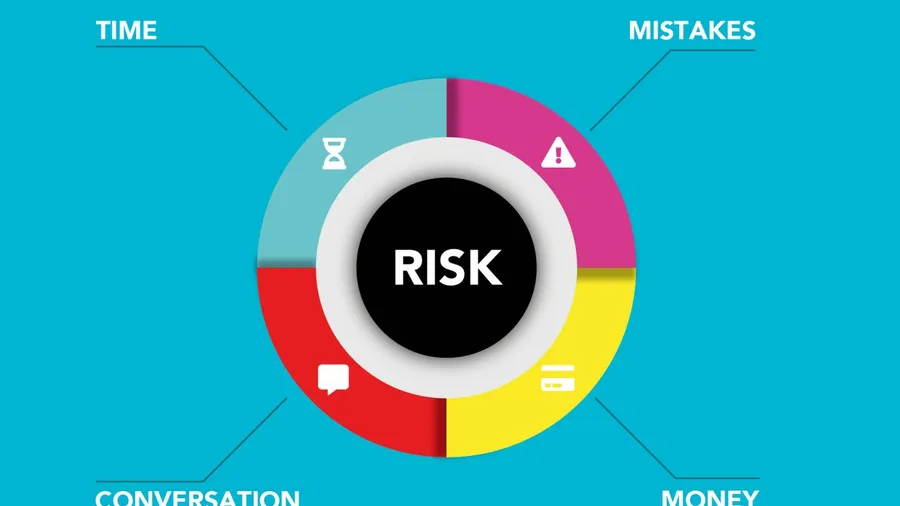
Three risks could halve this business, and none of them can be fixed by putting in more hours. I can out-work a slow month. I cannot out-work a program that changes its terms.
The first is concentration. One home-improvement retailer's affiliate program feeds most of the $9,300 commission line. If that retailer rewrote its terms tomorrow, most of the line would be gone within a month.
The second is search real estate. Google says AI Overviews, forums and video now take more of the result page, so ranking a page and getting traffic from it are two different jobs.
The third is repair. Google does not promise that fixing old content restores traffic. It says fixes take time and may show no noticeable change at all.
My two rules: no stream above half of gross, and a second merchant's link sits beside the first on every affiliate page.
Which tool does which job, and what it takes

I work each step of a post on one tool, and the tool's own seconds are never the slow part. The calendar block around each tool is what I actually schedule.
An outline takes me about 25 minutes at the kitchen table. ChatGPT on the free tier returns one in under a minute, and I spend 6 minutes in Search Console asking whether that angle already ranks – its suggestions tend to be the obvious one.
Drafting and images take 90 minutes by hand. The XealBrax plugin, keyed to my own DeepSeek and Fal.ai accounts, puts a 700-word draft with two images in front of me in about 20 seconds.
Then 22 minutes: I check every figure and rewrite the flat sentences in my own words.
Internal links and alt text cost 15 minutes by hand. The same chat gives me a list in 10 seconds, and I click every link, because it invents destinations that look right.
Privacy, once: no client files, passwords or financial records in a chat, and turn off model training on free and personal plans before anything goes up.
The three real numbers are 6, 22 and 4 minutes of review. Put those on the calendar, not the subscriptions.
Start with one narrow site, not four

The first decision is a topic I can feed with my own photos and tests, because the plugin cannot supply those. Home repair, backyard chickens and woodworking worked for me – three sites, so each sits at 3 reviewed posts a week. Pick one.
Then find 20 questions people actually ask. I scroll forum threads and autocomplete until I have 20, and turn each into a one-line brief with my angle in it – "what I measured when I did it" beats any rewrite.
Point the XealBrax plugin at my DeepSeek and Fal.ai keys, set it to run three posts a week, and book 20 minutes of editing per post before the first publishes.
Week 10 is my realistic first payout: $84. Judge the site at month 12, not month 2.
Frequently Asked Questions
Can I really run this without knowing how to write code?
Yes. The XealBrax plugin installs inside WordPress like any other plugin, and you paste your DeepSeek and Fal.ai API keys into its settings. The work you cannot skip is editorial: reviewing drafts, checking facts and taking your own photos. That is judgment, not programming.
How much does the AI generation itself cost per post?
On a bring-your-own-key setup, the DeepSeek and Fal.ai API usage behind one complete article runs about $0.01 to $0.02. The real cost is the human review time, 20 to 40 minutes per post, and the editor hours if you pay someone else.
Is AI-generated blog content against Google's rules?
No, but publishing it unread is. Google's October 2026 guidance requires manual fact-checking and review of all AI-generated content before publishing, including metadata and image alt text. Scaled pages made mainly to manipulate rankings are banned as scaled content abuse.
Do I need an ad network before I start making money?
No, and ads were the last stream to arrive for me. Affiliate commissions need buying-intent pages and less audience volume, so they usually pay first. Display ads paid $212 in week 14, while the first affiliate payment came in week 10.
What is the honest timeline before this pays anything?
Nine weeks before the first $84 affiliate payout, and roughly two years of part-time weeks to reach a headline figure. My month 6 total was $410 and month 30 was $28,000.
What should I do if my site already has hundreds of thin AI pages?
Delete the pages that carry no first-hand detail rather than rewriting them. Then publish three reviewed posts a week with your own photos and tests. Rewriting dead URLs is a year of work for nothing.
What the $28,000 is really made of
Start with affiliate-led posts on one narrow site you can photograph and test yourself. Hold display ads until traffic earns them, skip the channels that paid nothing, and budget for nine weeks at zero before the first $84.
The $28,000 is a month-30 figure built on 25 hours a week and a human edit on every page. "100% automated" describes the plumbing and nothing else.
Back to that pitch email: my spreadsheet reads $28,000 in, $900 out, $27,100 net, 25 hours a week, one editor, one dead channel at $0. Copy the schedule, not a shortcut.