
The claim is that AI created a new species of job. The reality, the first time you read a real posting, is duller and better paid.
These eleven roles are not new disciplines. They are existing skills relocated, into a client's office or onto a factory floor.
Every entry below gives the same three things: the role, its 2026 pay signal, and the catch that decides whether it is open to you. The order runs from the jobs closest to ordinary engineering outward to the ones furthest from a desk.
Nothing here needs a model version memorized. It needs a skill you already have, moved somewhere you have not tried. Read the catch first. If it describes a week you would hate, skip the role for you, not as a flaw in the job.
| Role | Pay signal in 2026 | What the day actually is | Who it suits |
|---|---|---|---|
| Forward deployed engineer | $115K–$200K+ starting at OpenAI, Anthropic, Google, AWS, Palantir | Writing and shipping tailored AI code at the customer's site | Engineers who ship production code and can talk to a client |
| AI business automation engineer | From $146,500 at Box | Wiring AI agents into internal processes, with permissions and audit trails | Developers and ops people already inside a company |
| Agentic AI developer | ₹12–20 lakh junior, ₹40 lakh senior (India) | Building agents that call tools, plus the evaluation around them | Developers who have shipped one working agent |
| MLOps engineer | 10–25% above DevOps pay; ₹20–40 lakh mid-career (India) | Monitoring data and model versions, and quality drops | Existing DevOps and platform engineers |
| AI evangelist | $240,000 at Anthropic | Demos, sample code and talks to developers | Founders and senior engineers with a public build record |
| AI communications manager | Above $200,000 at Anthropic and OpenAI | Explaining AI failures and products to press and regulators | Comms people who can read an evals report |
| AI filmmaking craft roles | AI added to existing craft titles in 57% of postings | Generating, rejecting and cutting shots under a deadline | Editors, animators and filmmakers |
| AI red teamer | $80K–$130K entry, $200K–$300K+ senior; $100–$200 an hour contract | Breaking models on purpose and documenting a fix | Security testers and QA engineers |
| AI ethics and safety manager | $212,000–$231,000 at Google DeepMind | Writing policy engineers follow and reviewing launches | Philosophy, law or social-science backgrounds with technical fluency |
| Embodied AI robot technician | One of 11 new professions in China, September 2026 | Commissioning and fault-finding on real machines | Technicians and integrators |
| Digital twin engineer | One of 11 new professions in China, September 2026 | Building the rehearsal model before the robot ships | Robotics, controls and simulation engineers |
Engineers Who Work Inside Someone Else's Business
The first four roles all move the same skill out of the product team and into the room where the work happens. One sits in the customer's office, one inside your own employer, and two sit between the code and the people who run it.
They are grouped first because they are the most reachable. Each one pays for engineering you can already do, applied in a place most engineers never volunteer to go.
1. Forward Deployed Engineers Earn $115K–$200K Inside the Client's Office

The job is ordinary software engineering done at the customer's site instead of your own. Palantir popularized it in the 2010s by placing one engineer inside a client to build tailored AI, not install off-the-shelf software.
Starting pay now runs $115,000 to $200,000+ at OpenAI, Anthropic, Google, AWS and Palantir, as of November 2026.
Postings were up about 19 times year over year by January 2026 in Indeed data, and 700 to 800 percent in a separate count. Stripe's embedded version starts at $132,000.
The cost is the calendar. You ship code against the customer's workflow, not a product roadmap, and some weeks go on the road.
A typical stretch: scope a messy workflow on Monday, deploy the integration by Thursday, then train the customer's own team to run it without you.
The trade: higher pay and faster seniority, bought with travel and client meetings instead of a fixed desk. If you already ship production code and can talk to a non-technical client, volunteer for one customer-facing project this quarter.
💡 PRO TIP
Write the handover before the build
Forward deployed work is judged on whether the customer can run it without you. Draft the one-page handover first. It forces you to scope only what their team can actually own.
2. Box Pays AI Business Automation Engineers From $146,500

Prompt to copy
You are a business process analyst. Our accounts team spends about six hours a week copying invoice details from email attachments into our cloud file system and flagging mismatches. Map this process step by step, name every place a person makes a judgment call, and list the permissions and audit records an automated agent would need before we let it touch live invoices. Output two parts: the process map, and the permissions checklist. Keep it under 400 words and do not suggest skipping the audit trail.
Paste that into ChatGPT or Claude with the real process pasted underneath, and you get back the map plus the permissions list in under a minute.
An AI agent is software that carries out those steps and calls other tools on its own. Most first drafts skimp on audit trails, so add them before anyone sees the demo.
That plumbing is the job Box pays from $146,500 to do across its cloud platform. Set it on the employer's sanctioned tool, never a personal chat, and keep passwords and client files out of it.
Watching what the agent gets wrong for a month, then tightening it, is the part that survives review.
💡 Tip: Run the automation on your employer's sanctioned tool. Personal-plan chats may use the conversation to improve the company's models.
Agentic AI Developer — At a Glance
📈 Demand signal
300%+ rise in postings mentioning LangChain or CrewAI on LinkedIn India
💰 India pay
₹12–20 lakh junior, ₹40 lakh senior
🧰 Core tools
LangChain, CrewAI, plus plain code and tests
⏱️ Where the hours go
Evaluation, guardrails and retries
✅ Portfolio piece
One agent that calls a tool and checks its own output
The real job
Demand shows up as a keyword before it shows up as a job title.
3. Agentic AI Postings Rose 300% Before the Title Existed

The tedious part arrives after launch: the agent that worked in testing starts retrying a failed tool call in a loop, and nobody can see why.
Chain several automated steps together and call outside tools, and you have an agent. LangChain and CrewAI are the frameworks that hold those chains together.
Demand came before the title. Postings mentioning either framework rose more than 300 percent on LinkedIn India in a little over a year, India-market figures only. Junior agentic developers earn ₹12-20 lakh there, senior specialists ₹40 lakh. Do not hand the loop-watching to AI.
Most hours go on evaluation and guardrails, the checks that catch a bad answer before a customer does. A working developer who has shipped one agent that calls a tool and checks its own output has the portfolio.
💡 Tip: Build one agent that calls a real tool, logs every retry, and refuses to answer when its own check fails. That single project is the portfolio.
4. MLOps Engineers Earn 10–25% More Than DevOps Peers

MLOps is DevOps for models instead of servers. Same pipelines, plus one new problem: the data and the model versions under them change weekly, and a quality score tells you something broke before an uptime alarm ever fires.
That extra failure mode is why it pays 10-25% more than standard DevOps at comparable experience, with mid-career engineers at ₹20-40 lakh, paid for operations rather than model research.
Here is one realistic week done both ways. A prompt template feeding a customer-support bot starts answering off-topic after a vendor model update.
Catching it by hand takes about two hours: reread samples, spot the drift, edit the template, recheck. A monitoring-and-eval loop answers in about 40 seconds. Building that loop once takes roughly a day and covers every future service you point at it.
Readers weighing which paid tools to add to that loop can compare real prices and saved minutes in secret AI tools the rich use.
The catch arrives as a quality drop with no stack trace pointing at a cause. Drift monitoring, versioned prompts and datasets, and pager duty only fix it if the dashboard exists before the drop.
The two times: about 2 hours by hand, about 40 seconds once the loop is built; the build itself is the day.
Drift Drilldown: Log-Only vs Versioned Pipeline
Without versioning
- A drop with no error message and no stack trace
- Prompt v1 and v2 look identical in the console
- Which dataset fed the bad batch? Unknown
- Fix the template, then hope the score recovers
With versioning
- Every prompt and dataset carries a version tag
- Compare the two batches side by side
- Roll back to the last passing score in minutes
- Monitor pings you before a user complains
The People Who Explain, Sell and Shoot It
This group is furthest from the codebase and closest to the customer. An evangelist, a comms lead and a filmmaker are all paid to make a technical product legible to people who will never read a changelog.
The pay here is higher than you would guess for roles that look like marketing. That is the point: the labs are buying people who can both build and explain.
The Words in These Postings, Decoded
5. Seven Years Selling Developers Before The Evangelist Salary

Seven years. That is the minimum founder-builder startup experience Anthropic's Claude Evangelist posting asks for, alongside developer-facing credibility, against a $240,000 salary and a $106,000 US average for a director of communications, according to Indeed figures cited with the listing.
The money buys trust with developers, not stage presence. The job is proof of building, performed in public: demos, sample code, documentation and conference talks, while turning developer complaints into feedback engineers will act on.
Some of these roles face outside the company, which makes the same setup pay off twice.
The setup that keeps paying is a public build record. Publish one honest walkthrough of something working and include what broke.
That single post is the audition tape for founders and senior engineers who already have one; the writing takes an evening, the check is rereading what you published.
Do it with AI assistance and the article's privacy rule still holds. Draft the walkthrough with the assistant, not the code secrets, and read every line as a senior engineer will.
You want one artifact a hiring manager can open, read in five minutes and forward.
6. AI Communications Managers Now Start Above $200K

Never let a drafted statement go out unread. AI communications managers start above $200,000 at both Anthropic and OpenAI, and Anthropic has tripled its communications team, but the price buys someone who can explain a model's real limits to reporters, regulators and customers.
The flat PR skill of saying something reassuring is not enough here. A typical afternoon might mean a safety incident statement, three reporter briefings and prep for a researcher's first hard interview, all within hours.
Read the evals report first, then write only what it supports.
The catch is the part that keeps you employable. You cannot ask for a day to check a claim when the news is already moving. Use ChatGPT to draft the plain-language version, then verify every figure against the source document before it ships.
Comms people who can read an evals report already hold the entry ticket. Write one plain-language explainer of a specific model's limits and keep it as a clip; that document is the only portfolio this role asks for.
💡 Tip: Read one public evals report a week and rewrite it for a non-technical reader in 300 words. Do it for a month before you apply.
7. AI Filmmaking Grew by Bolting AI Onto Existing Crafts

Of 531 AI film job postings from 2024 to 2026, 57% tacked AI onto a title that already existed, like AI editor or AI animator. Only a quarter now carry the plain AI Artist label. Studios want the craft, with a new tool on top.
A working day is thirty generated shots rejected for one kept, then cut, graded and matched to a client's brief by Friday. The catch is deciding who stays on the next job.
The tool shortens the wait between attempts. Continuity, shot sense and editing still get you hired, and those take years to build, not a weekend with a generator.
If you edit or animate already, take three shots in a piece on your reel and rebuild them with AI. Same cut, same timing, before and after side by side.
Stress-Testing the Model and Putting It in the Physical World
The last four roles push the same skill further from the desk. Two sit inside the model's failure modes, and two walk onto a factory floor where the software has to move a machine.
These are the least familiar titles on the list and, in two cases, the ones with an official government classification behind them. The catch gets more physical as you read down.
8. AI Red Teamers Earn $80K–$300K on a Scarce Skill

Everything that looked right in the last step assumed someone attacked it first. Only 14% of organizations think they have the AI security talent they need, so many teams have no process for the bug report you hand them.
Find: add one instruction to a prompt that makes the model leak its system prompt. Reproduce: write the exact steps a developer can repeat. Fix: add the instruction that blocks it and test again. Write: send both in one document.
Prompt injection, jailbreaks, leaked data and tools used for the wrong thing are the targets. Pay runs $80,000-$130,000 at entry and past $300,000 for leads. Take one working jailbreak with its fix to your next interview.
⚠️ COMMON MISTAKE
Do not test on a real account
Red teaming on a live customer system can break something you cannot fix. Use a sandbox or a personal account, and never paste client files into it to see what leaks.
9. AI Ethics Roles Reach $212K–$231K With Philosophers on Staff
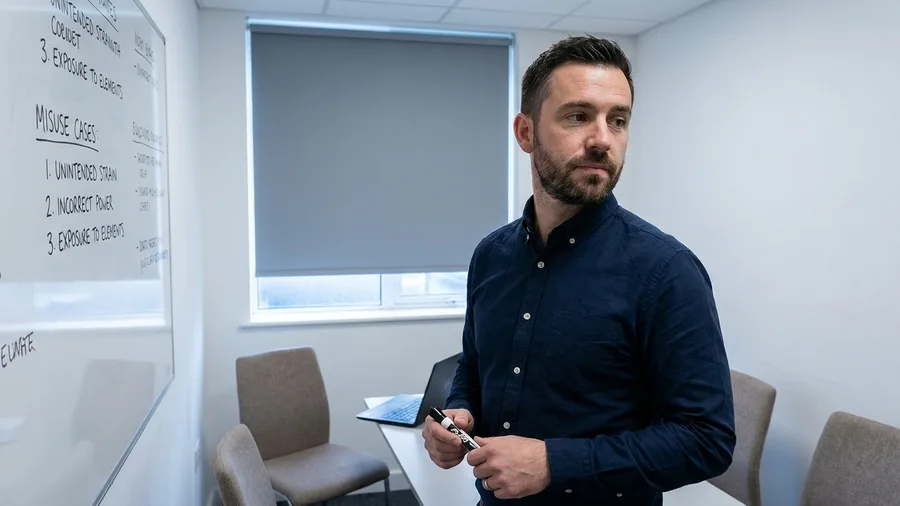
Anthropic and Google DeepMind both keep resident philosophers on staff, and DeepMind sought an emerging impacts manager in AI ethics and safety at $212,000-$231,000. The training is real, and so is the job.
The old way: a red teamer finds the harm and files it, and the feature ships because nobody owns the decision. The new way: that finding lands on a desk inside the product team, and the person there runs the pre-launch review that stops it.
The catch is that the work is applied, not theoretical. Writing policy engineers will actually follow, running reviews before launch, and being the person who says no to a feature someone already built.
The day is reading evals and user research, then arguing a case to a product team with the thing half-finished. Philosophy, law or social science plus technical fluency gets you in. Write one shipped product's misuse case as a memo.
10. China Made Embodied AI Robot Technician an Official Job

The work leaves the screen. In September 2026, China's Ministry of Human Resources and Social Security named a new job: embodied AI robot application technician. It means a person who keeps humanoid robots running on a real floor, not a model on a screen.
The country needed them fast. China had more than 400 humanoid robot models and shipped over 40,000 units in the first half of 2026 alone. Somebody has to unpack, boot, adjust and repair every one of those machines.
Prompt to copy
I am a maintenance technician with five years on industrial arms and no robot-humanoid experience. Write me a 5-day study plan to become an embodied AI robot technician. Day by day: what to practice on a real machine, which safety checks to run before powering up, how to record joint and balance faults, and how to hand a fault report to the controls team. Keep each day to three tasks. Avoid coding unless it is needed to log a fault.
What comes back is a usable plan in under a minute. Day one covers lockout and the emergency stop, day two joint limits and calibration, and the last day a fault log a supervisor can read.
Check that every safety step matches the machine's own manual, because the answer will be generic.
The catch is time. Beijing City University offers five days of intensive study with real robots, and that is short for equipment that can injure someone.
Safety, calibration and site conditions fill the day. Technicians and integrators who already commission and fault-find deployed machines hold the skill that travels.
11. Digital Twin Engineers Cut Robot Setup to Three Days
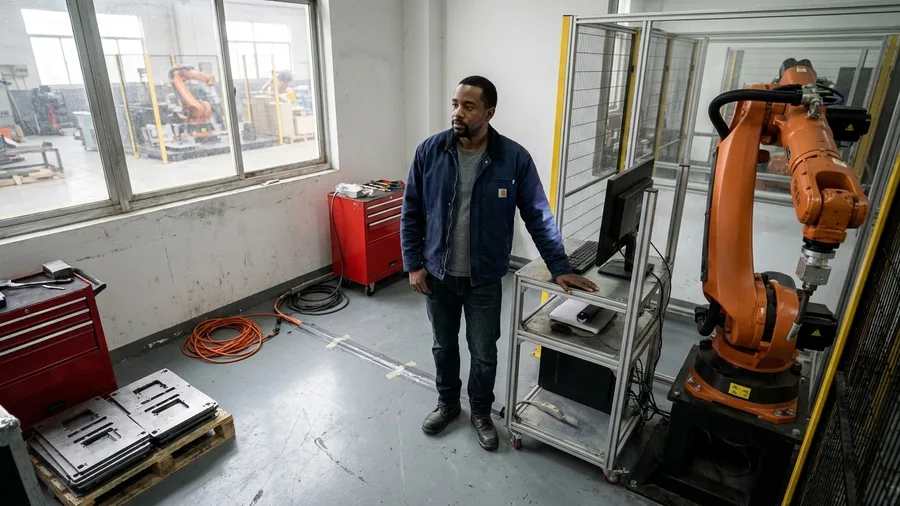
Two or three weeks of on-site commissioning drops to two or three days when the robot cell is rehearsed in simulation before anyone travels.
Digital twin engineer was one of the 11 professions China named in September 2026, in the same announcement as the machinery it models.
The engineer builds the rehearsal: a working model of the cell, its tooling and its cycle timing, tested against real work cycles before the crates ship. Do not hand the model itself to AI.
Await validation against the actual machine, because one wrong dimension sends the whole team back to the floor.
Frequently Asked Questions
Do I need to code for any of these jobs?
For the first four, yes: forward deployed, business automation, agentic AI and MLOps all expect working code. Red teaming and digital twin work also need technical skill. The evangelist, comms and ethics roles need fluency with technical material, not necessarily writing code.
Which of these is the easiest to enter with no AI experience?
AI red teaming, if you already work in security or QA. Entry roles run $80,000 to $130,000 and the skills transfer directly. AI filmmaking is the other realistic door, because studios are hiring editors and animators who added AI to their existing craft.
Are the pay figures salaries or total compensation?
The figures here are base salary ranges and averages from the postings and data cited, as of November 2026. Bonuses and equity are separate and vary by company. Always check the current posting and the company's own careers page.
Is it safe to use a chatbot to prepare for these roles?
For prompts and study plans, yes. Never paste client files, passwords, or medical and financial records into a personal chatbot. On free and personal plans, chats may be used to improve the company's models unless you switch that off in settings.
What if none of these eleven fit my background?
Automate one real process at your current employer using a tool you already have. Measure the hours it saved before and after. Write that up as a one-page case. It is the portfolio piece every hiring manager on this list asks for.
Take The Client Job First, Not The Contract
If you can travel and talk to a client, forward deployed is your door. Security or QA testers go red team. Founders with a public build record go evangelist. Editors and animators add AI to the reel they already have. Policy-minded readers take AI ethics.
Fits none of them? Automate one real process at your current employer, measure what it saved, and write it up. That case is the portfolio piece every one of these eleven hiring managers asks to see.