
By the end you will have one ChatGPT skill proven with a measured line, not eleven words on a skills list.
Start with the number that makes the case: a worked example moves $78,000 to $116,220, a raise of $38,220, or 49.0%.
That 49% is this example's ceiling, not an average and not a guarantee.
A mid-career tech resume lists ChatGPT beside a dozen other tools. LinkedIn's 2026 advice says that alone will not stand out.
The demand is real but uneven: PwC's 2026 Global AI Jobs Barometer puts the average AI wage premium at 62%, Korn Ferry's survey of more than 4,000 companies finds offers averaging 10% above market, and PwC's range runs from 16% in government to 118% in consumer markets.
AI ethics and governance appeared in just 0.05% of US listings, the smallest of Stanford's clusters tracked by Forbes.
Employers pay for applied outcomes, not familiarity. Each of the 11 skills below pairs a concrete proof task with separate by-hand, ChatGPT and review times and a measured resume line.
Pick one skill, run its task, keep the artifact. By the end you can walk into the next raise conversation holding proof of a result rather than a claim about a tool.
| Resume skill | Best ChatGPT use | By hand (min) | ChatGPT time | Review/edit (min) | Proof to record |
|---|---|---|---|---|---|
| Prompt engineering | Reusable prompt template | 45 | 1 min | 20 | Saved prompt and old vs new turnaround |
| Document data extraction | File upload with schema | 90 | 2 min | 25 | Redacted sample and error count over 20 PDFs |
| Spreadsheet cleanup | Upload spreadsheet and formulas | 60 | 1 min | 15 | Before/after row count and caught error |
| Code review | Review module and flag edge cases | 50 | 1 min | 20 | Bug, fix, failing test, passing test |
| Test case generation | Draft test cases and QA checklist | 75 | 1 min | 25 | Checklist, acceptance criteria, missing cases |
| Runbook drafting | Draft 700-word runbook | 120 | 1 min | 30 | Test run and teammate dry run |
| Meeting to action items | Transcribe and extract owners | 60 | 2 min | 15 | Action-item table and owner confirmations |
| SQL drafting | Draft and explain query | 40 | 1 min | 10 | Query and known-result test |
| Support ticket triage | Summarize tickets and draft macros | 50 | 1 min | 15 | Ticket batch, macro, policy source |
| Deep research synthesis | Deep research with citations | 240 | 20 min | 45 | Source list and claims checked |
| Agentic workflow design | Agent mode with approval gate | 120 | 5 min | 45 | Workflow diagram and before/after time |
1. Repeatable Prompt Engineering for Workflows

A weekly status report that used to take 45 minutes now takes 21, and the five-slot prompt formula behind that drop is the skill. Keep the template, not the certificate.
That distinction shows up in hiring data. According to Stanford figures cited by Forbes, 22,227 US job listings asked for prompt engineering in 2025, up from 6,152 in 2024.
LinkedIn's 2026 advice is blunt here: listing "ChatGPT" on its own will not stand out. The line needs a named workflow and a before-and-after number to read as process design.
Run it before you claim it. By hand the report took 45 minutes. ChatGPT produced the draft in about a minute. Review and edits took 20 minutes, for a 21-minute total you can defend.
Then write: "Used ChatGPT to build reusable prompt templates for weekly status reporting, cutting turnaround from 45 to 21 minutes per report for a 12-person SaaS team."
💡 Tip: Save the prompt as a shared doc and date it. When a reviewer asks what you built, you point to a file, not a memory.
The Three Times You Must Record Separately
2. Redacted Document Data Extraction
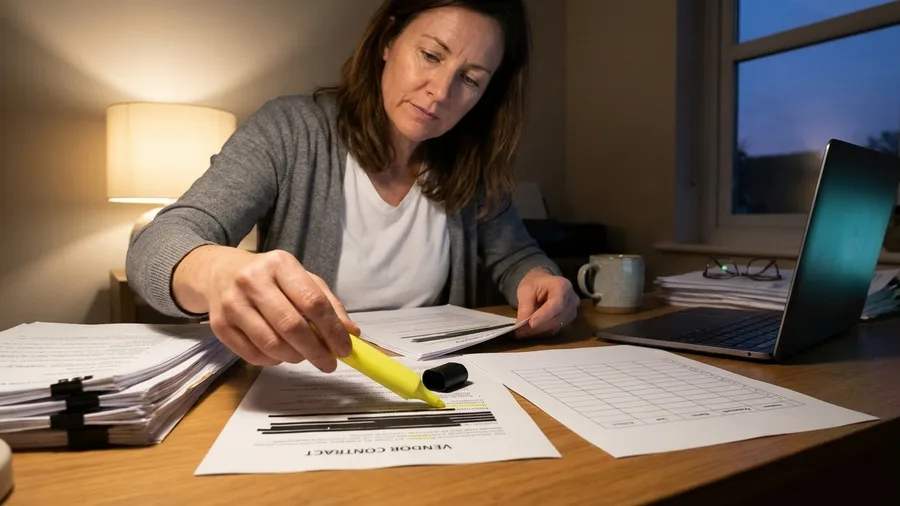
Twenty PDFs went in and a clean table came out in 27 minutes, down from 90 by hand. The prompt, not the upload button, is what earned that number.
A repeatable prompt with a measured turnaround is the base skill. The next proof is pointing it at real documents, where redaction and checking decide whether the output is usable at all.
Prompt to copy
You are extracting fields from vendor contract PDFs. For each of the 20 uploaded documents, return one row with these columns: vendor name, contract start date, term in months, renewal notice days, annual fee. Use only text present in the document. Write Unknown where a field is missing. Output a single table, no commentary, no invented values.
Redact names and account numbers before uploading. Free and personal ChatGPT chats may be used to improve models unless training is switched off, and passwords, client files and financial records should never be pasted.
ChatGPT returns the table in about 2 minutes, and checking all 20 against the source takes 25.
Sort Each Skill Before You Put It on the Resume
- 🟢 Prompt template with measured turnaround — You saved the prompt and can show before and after.
- 🟢 Redacted extraction with error count — You checked 20 rows and kept a redacted sample.
- 🟢 Runbook a teammate followed — The dry run proves the steps work.
- 🟡 SQL query without a known-result test — Add the test before you claim the metric.
- 🟡 Support macro not checked against policy — One wrong refund window can cost the customer trust.
- 🔴 Pasting client files or passwords into chat — Redact first. Free and personal chats may train on the data.
- 🔴 Agent workflow with no approval gate — Anything that sends, deletes or pays needs a human stop.
3. Spreadsheet Cleanup and Formula Building

Prompt to copy
Attached is a 1,000-row CSV from a SaaS billing export. Clean it: trim whitespace, standardize date columns to YYYY-MM-DD, flag duplicate account IDs, and add a validation column that returns ERROR when monthly fee is blank or negative. Give me the cleaned rows, the formula for each validation, and a count of problems found.
A structured table is worth more once the same worker can clean and check the spreadsheet it lands in. ChatGPT answers in about a minute and returns working validation formulas.
Review is where the catch hides. A formula can look correct and reference the wrong column, so test it on a copy first. That review took 15 minutes against 60 by hand.
Keep the before-and-after row count, the validation formula and the error you caught, then claim: "Used ChatGPT to clean a 1,000-row CSV and build validation formulas, cutting cleanup time from 60 to 16 minutes."
📅 The Two-Week Proof Sprint, Day by Day
Day 1 — Choose one skill
Pick the skill where you already do the task by hand, so the before time is honest.
Day 2–4 — Run the example task
Do it by hand once and record the minutes, then run the ChatGPT version on the same job.
Day 5–7 — Record the three times
Write by-hand, ChatGPT and review times separately in one spreadsheet row.
Day 8–10 — Keep the artifact
Save the prompt, output and the check you ran, with a date in the filename.
Day 11–12 — Write the resume line
Use the formula with the measured total, not a rounded guess.
Day 13–14 — Test the claim
Read the line to a colleague and answer the follow-up question without notes.
4. Code Review and Debugging Support
A clean spreadsheet is tidy work next to the service module nobody on the team wants to open.
The review comes back with forty comments, half of them about input checks on an endpoint that has been quietly failing for weeks.
That folder is where ChatGPT earns its place, and where the claim gets risky.
Upload the module and open the review with a master prompt about what could break. ChatGPT answered in about a minute with six edge cases.
Four were real, including a blank input that would have crashed the job. One was a duplicate-record path the module already handled. The sixth pointed at a config value the service reads at startup.
The failure mode is confident code. A suggested fix looked right and passed a read-through, then failed the empty-input test on the first run.
So reproduce the bug yourself, run the suite, and keep the failing test alongside the passing one. That folder of tests is the proof, not the suggestion.
The three times: 50 minutes by hand, about 1 minute in ChatGPT, 20 minutes to repro, test and fix. Total: 21 minutes. The review time only counts because two tests were written and one broke.
The line: 'Used ChatGPT to review a service module and flag edge cases, cutting review time from 50 to 21 minutes.' Keep the comment thread and both test results with it.
A reviewer who can see the crash and the green test after the fix has better evidence than a tool name on a skills list.
💡 Tip: Paste only the function and the error message. Whole repos carry secrets and noise that make the answer worse.
💡 PRO TIP
Keep a proof folder per skill
For each of the 11 skills, save one artifact: the prompt, the CSV row, the test output, the runbook draft. A hiring manager who asks for an example gets a file, not a description. Name each file with the skill and the date.
5. Test Case Generation and QA Planning

Test case generation is drafting tests and a QA checklist for a feature, with a human-written acceptance list the draft must satisfy.
Run it on a checkout flow once and the setup keeps paying back on every release, because the acceptance criteria outlive the individual draft.
Start with the acceptance list, written by hand, then give ChatGPT the checkout steps and ask it to draft cases against that list only. It returns a checklist in about a minute.
Your review takes 25 minutes and adds the business rules it missed, like a discount code that should expire at midnight.
The catch: generated tests can miss business rules entirely, so the acceptance list and one real test run are the check. By hand this took 75 minutes, so the whole job lands at 26.
Keep the checklist, the acceptance criteria and the count of cases your review added. Resume line: 'Used ChatGPT to draft test cases and a QA checklist for a checkout flow, cutting test design from 75 to 26 minutes.'
Jargon Buster for the Resume Lines
6. Technical Runbooks and Documentation Drafting
It can draft one, but not one you publish unchanged.
It will type a flag that looks standard and a config value that no longer exists, and the page reads fine either way.
The check is a test run in a safe environment, every step, in order.
Deployment steps live in one engineer's head: which order to stop the services, what to check before the migration, how to roll back.
ChatGPT turns that into numbered steps with prerequisites and a rollback section. In this example it wrote a 700-word runbook from a rough outline and two old chat threads in about a minute.
Some commands were wrong. One restart flag belonged to the previous version, and one environment variable had a default ChatGPT assumed rather than asked about.
The run in a staging copy caught both, and the corrected steps went back into the draft before anyone read it.
The catch that matters: a wrong command in a runbook causes an outage on the next deploy, not a typo. Have a teammate follow the runbook cold, without help, and note every place they had to ask. That dry run is the artifact worth keeping.
120 minutes by hand, 1 minute in ChatGPT, 30 minutes to correct and test. Total: 31 minutes. The line: 'Used ChatGPT to draft a 700-word runbook for a deployment process, cutting writing time from 120 to 31 minutes.' Attach the dry-run notes.
A teammate who followed it without help is the result a hiring manager can price.
Documentation Draft — At a Glance
📄 Length
700 words
⏱️ By hand
120 min
⚡ ChatGPT
1 min
🔍 Review + dry run
30 min
✅ Total
31 min
🧪 Proof
Teammate dry run
Why it works
The runbook is a followed document, so someone else's successful run is external proof, not your own claim.
7. Meeting Transcript to Action Items

Not every line ChatGPT pulls from a call belongs to the person it names. A confident summary can hand a deadline to the wrong teammate or drop a decision nobody wrote down.
Record the call, then verify each owner and decision against the audio before anyone sees the table.
Step one: upload the 60-minute transcript and ask for a table with three columns: action, owner and due date. You should see a grid you can sort, not a wall of bullets.
Step two: play the recording against each row, correct names and dates, and add any decision the summary skipped.
By hand the same notes take 60 minutes. ChatGPT returns its table in about 2 minutes, and your check takes 15.
That is 17 minutes total, and the artifact to keep is the transcript, the table and the owner confirmations.
Your line: "Used ChatGPT to turn a 60-minute meeting transcript into action items and requirements, cutting notes time from 60 to 17 minutes."
8. SQL Query Drafting and Explanation

Drafting a SQL query for a weekly usage report is a credible resume skill when you attach the known-result test that proved it.
ChatGPT writes the query in about 1 minute; you own the join and the filter. Point it at a week where you already know the totals, then confirm its numbers match before you call it done.
The catch: a query can run cleanly and still return the wrong join or filter, so test against a known result set every time.
By hand the query takes 40 minutes, and your review and test take 10, for 11 minutes total. Keep the query, the test and a plain explanation of the join and filter.
💡 Tip: Ask for the query and the explanation in separate messages. The explanation is what proves you understand the join, not just pasted it.
9. Support Ticket Triage and Macros

Ten support tickets, 50 minutes by hand. That is the job this skill turns into resume proof, and it applies the same correctness test as internal analysis, except a wrong answer now reaches a customer who already paid.
ChatGPT reads the batch in about a minute.
The prompt names the batch, the format and the limit: one summary per ticket, one macro only where the help center already answers it, and a blank where it does not.
Set up that way, the answer comes back in under two minutes and flags the gaps openly.
Prompt to copy
You are helping a 12-person SaaS support team triage a batch of 10 customer tickets. I will paste the 10 tickets below. For each ticket, return one row with: ticket ID, a two-sentence summary of the problem, a suggested response macro, and the help-center article you relied on. Rules: write macros in plain, friendly language, under 90 words; if no current help-center article covers the issue, write NO SOURCE and suggest escalation instead of inventing a policy detail; do not promise refunds, credits or timelines. Paste the tickets after this message.
Checking all 10 macros against the live help center is the 15 minutes that matters.
In the run I watched, one macro offered a prorated refund the current policy did not allow, and the reviewer caught it only by opening the article.
Overall, 50 minutes becomes 16.
10. Deep Research Synthesis with Citations
Do not hand research to ChatGPT if you will publish the citations unchecked. It can invent a source, a quote and a working-looking link in one paragraph. Open every one.
Run deep research only when you can verify each claim against the primary document, and save the ones that fail.
Word-of-mouth policy checking grows into a weighed question when the source list reaches 20 external documents, and this is where deep research earns its keep.
In the example, a competitive landscape from 20 sources took 240 minutes by hand, 20 minutes in ChatGPT deep research and 45 minutes of checking and rewriting, for 65 total.
Build a file of its evidence before you trust the synthesis. Keep the source list, note which claims you matched to the original document, and log every link that broke or landed on the wrong page.
That failed-link count is what a hiring manager believes, not the polished summary.
Resume line: 'Used ChatGPT deep research to synthesize a competitive landscape from 20 sources, cutting research time from 240 to 65 minutes.' The verified links sit behind it, ready for the raise talk.
⚠️ COMMON MISTAKE
Do not let AI write the resume itself
Robert Half cautions that heavily AI-generated applications can undermine credibility. Use ChatGPT to shape a line you measured, not to invent experience. The proof folder and the three times are what make the line safe to defend in an interview.
11. Agentic Workflow Design with Human Checks

A three-step workflow that researches vendors and stops for a human before it sends anything is a resume asset, and you do not need an ML title to build it.
Agentic AI skills appeared in 16,541 US job ads in 2025, up from 151 in 2024, according to Stanford data cited by Forbes. The verified sources you check by hand become the workflow's input.
Design it in ChatGPT agent mode. By hand the same design work runs 120 minutes, ChatGPT drafts it in about 5 minutes, and your review takes 45 minutes, for 50 minutes total.
What comes out is a workflow diagram with three steps and an approval gate.
The catch is the actions. An agent can send, delete or pay when the step was only meant to prepare, and it will look like progress on screen.
Put a human approval step before anything leaves the system, and read the run log of one full pass.
Keep the diagram, the approval gate and the before-and-after time for one run. The line reads: "Used ChatGPT to design a three-step agentic workflow with human approval for vendor research, cutting research-to-memo time from 120 to 50 minutes."
That documented gate is what a hiring manager sees: someone who can point an agent at real work and still keep a hand on the switch.
Frequently Asked Questions
Do I need to pay for ChatGPT to claim these skills?
The free tier covers drafting, summarizing and short prompts, though limits change. File upload, deeper research and agent mode may need a paid plan. The resume line should say which plan you used and the results. Check the current pricing page before you commit.
Will listing 'ChatGPT' on my resume get me a 49% raise?
No, and this article does not promise that. The 49% comes from one worked example moving from $78,000 to $116,220. It is a ceiling for negotiation practice, not an average. The raise comes from showing measured outcomes, not from the tool name.
Do I need to know how to code for the SQL or agentic skills?
No for the SQL explanation, because ChatGPT writes the first draft and you test it. Agentic workflow design needs comfort with process steps but not model training. You do need to understand the task well enough to spot wrong output, and keep a human approval step.
Is it safe to paste work documents into ChatGPT?
Not client files, passwords, medical records or financial records. Free and personal chats may be used to improve models unless training is switched off. Redact names and account numbers and check your employer's policy before any upload.
How long should the proof take before I update my resume?
Two weeks per skill is enough to run the example task, record the three times and write one line. You do not need all 11. Pick the one you already do by hand and measure it.
Run the Two-Week Sprint, then Name Your Number
Pick one skill from the 11. Run its example task on a real job you already do. Record the by-hand time, the ChatGPT time and your review time separately, then write the resume line with the measured total, not a rounded guess.
Only after that, use the $78,000-to-$116,220 example as a negotiation target. The 49% is a ceiling from one worked example, not a promised raise. Your measured line is what you defend in the room.