
Someone screenshots a dashboard showing $15,000 in a month and promises a prompt will do the same for you. The first honest look at the math usually kills that idea inside ten minutes.
$15,000 net at $49 a sale, after payment fees, needs 322 sales in one month. At $29 on a marketplace taking 30%, it needs 739. Neither is a prompt you copy once.
This list walks one prompt pack from idea to invoice. Each entry hands you the exact prompt, what you sell next, and one number to check before you spend the week.
By the end you will know what to build first, where to list it, what one sale actually nets, and the paid sales count that earns the right to chase bigger numbers.
Before You Copy a Single Prompt
1. One-Niche Prompt Pack Builder

A pack written for everyone sells to no one. Name one buyer and one task they repeat every week before you type a prompt. Their search words, their objections and what they will pay all come from that task.
Prompt to copy
You are a product designer for a one-person AI prompt business. My niche is [niche], my buyer is [job title or role], and their most expensive recurring task is [task]. Build a 12-prompt pack that solves that task from intake to final delivery. 1. Name the buyer's five painful moments in that task. 2. For each moment, write one reusable prompt with a role, [bracketed] slots for the buyer's material, numbered steps, an output format, and three rules. 3. Group the 12 prompts into a start-to-finish workflow. 4. Suggest a title, a one-sentence promise, and a $29 price tag. Output: a table of prompt number, moment, prompt title, and full prompt text, followed by the workflow order. Rules: do not invent legal, medical, or financial advice; do not promise income; every prompt must be testable in under 30 minutes; no two prompts may do the same job.
You get back 12 named prompts, the order to run them in, a pack title and one promise a buyer can read in a minute.
Your 20 minutes a prompt plus 40 minutes testing each comes to about 12 hours. The assistant's first answer takes seconds, and that gap is where the value sits.
💡 Tip: Write the buyer's job title and the task in the same sentence. If you cannot, the niche is still too broad.
⚠️ COMMON MISTAKE
Building Before You Ask
A pack that has never met a buyer is a guess with good formatting. Five 20-minute conversations, run through the prompt in entry 2, must come first or the sales page is confident copy on top of nothing.
2. Buyer-Pain Interview Prompt

Five calls, 20 minutes each, come first. A finished pack is only a guess about what buyers need until those buyers describe the problem in their own words.
Prompt to copy
You are a customer researcher. I have notes from [number] conversations with [buyer type] about [task]. Turn them into a validation brief for a prompt pack. 1. Extract the exact phrases they use for the problem, the time lost, and the workaround. 2. Separate what they say from what they actually do. 3. List five must-have outcomes and three things they would not pay for. 4. Write one offer sentence and three questions to ask the next five buyers. Output: a one-page brief with quotes, must-haves, non-buyers, and the offer sentence. Rules: use only my notes; mark anything I did not supply as [missing]; do not generalize beyond the people I interviewed; no invented percentages.
Paste the notes after a call. The brief comes back as verbatim quotes, five outcomes that must be there, three things nobody would pay for, an offer line and three questions for the next round. Ten minutes of your reading, then the next call.
The [missing] tag is why this one matters. The brief can only report what buyers actually said, so it cannot dress up a weak idea as a winner. What survives decides which promises belong on the $29 page and which three get cut.
| Channel | Fee per sale | Who owns the buyer | Best first move | Main catch |
|---|---|---|---|---|
| Marketplace (PromptBase, Etsy, Fiverr) | 20-40% | The marketplace | Prove demand with a listing | $29 nets about $20.30 at 30% |
| Direct store via Dodo Payments | 4% + 40c | You | Build after 20-30 paid sales | You must find every buyer |
| Cold outreach from your own list | $0 in fees | You | Send ten verified emails | Wrong facts kill the relationship |
3. $29 Prompt Pack Sales Page

Under 700 words, five blocks, five backup headlines. A sales page is written only after five buyers have confirmed the problem in their own words. Without that, it is smooth copy sitting on top of a guess.
Prompt to copy
You are a direct-response copywriter for a $29 digital prompt pack. Product: [pack name] for [buyer] that solves [task]. Use the voice of [buyer] and the proof I supply: [test result or buyer quote]. 1. Write a headline that names the task and the time saved. 2. Write three bullets for the before state, the pack contents, and the after state. 3. Add a 60-second demo section showing one prompt and its output. 4. Write a price box with the $29 price, what is included, and a refund line I will honor. 5. Add an FAQ with five objections and honest answers. Output: page copy in sections, under 700 words, plus five headline alternatives. Rules: no income guarantees, no fake scarcity, no testimonials I did not supply, no claims that the prompts replace professional advice.
The blocks run in order: a headline, three bullets for before, contents and after, a demo of one prompt and its real output, the $29 box with a refund line you will honor, and five objections answered.
Leave the proof slots empty until a real quote fills them. Guaranteed income, glossy reviews and pay-today pressure are the three scam tells, and this page is barred from all three.
By hand and with the tool: a careful page runs about four hours of writing by hand, the draft takes about two minutes, and the checks and rewrites take about an hour.
4. Marketplace Listing Prompt
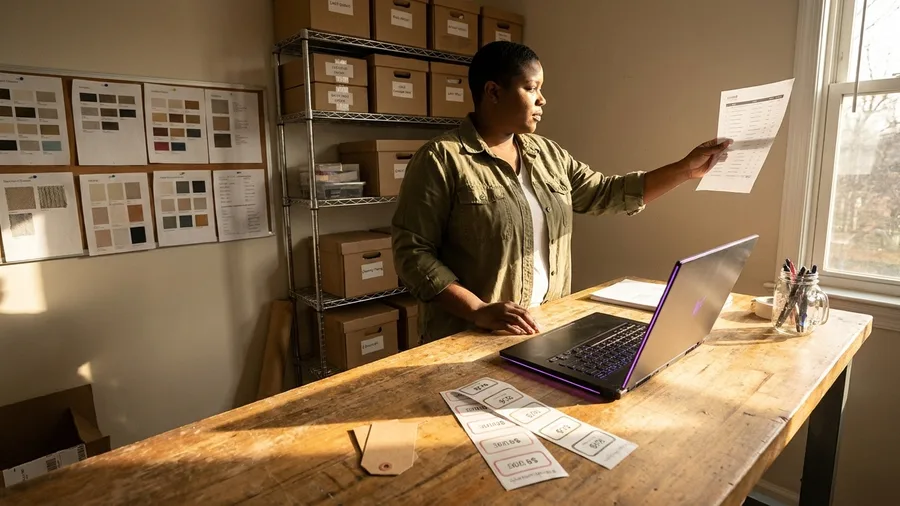
Where a sales page only converts the people who reach it, a marketplace puts the pack in front of buyers already searching – at 20-40% per sale, with the buyer data kept by the platform. A $29 sale on a 30% fee nets $20.30.
Prompt to copy
You are a marketplace listing specialist for digital prompt products. My pack is [pack name] for [buyer], with [number] prompts and [one measurable outcome]. The marketplace is [PromptBase / Etsy / Fiverr / other]. 1. Write a title under the marketplace's character limit using the buyer's search words. 2. Write a 150-word description with the task, the pack contents, and who it is not for. 3. List five tags and three FAQs. 4. Add a short how-to-use section with the first prompt as a sample. 5. Flag any place where the marketplace's rules require me to check the current seller page. Output: title, description, tags, FAQs, and a sample prompt. Rules: do not claim the marketplace's fee or buyer policy; mark those as [check seller page]; no income claims; no copied language from another listing.
Every fee and buyer-policy line comes back marked [check seller page], so nothing about the platform is guessed.
The listing lands in a crowded aisle: PromptBase runs single prompts at $2.99 to $11.99 and a $19/month buyer subscription over 250,000 prompts, so a $29 pack must match a buyer's exact task search.
What the 20-40% buys is demand evidence and a first review; what it costs is the buyer.
💡 Tip: Every fee and buyer-policy line comes back as [check seller page]. Never trust a remembered percentage.
5. Cold Outreach Email Prompt

Ten personal emails beat a thousand name-swapped blasts. Each one holds a detail you found on the recipient's own public page.
Take that detail from a blog post, a job ad, a review. A line anyone could have written gets deleted unread and closes the door on that buyer.
Prompt to copy
You are a B2B outreach writer for a one-person prompt product business. I sell a [price] prompt pack that helps [buyer role] finish [task] in less time. My proof is [specific result or sample]. 1. Write a 90-word email with a subject line that names the task, not the product. 2. Open with one observation about [company or person] that I can verify from their public page. 3. Offer one free prompt from the pack as the call to action. 4. Write two follow-ups: one after three days, one after seven. 5. Add a one-line opt-out. Output: four emails with subject lines, under 100 words each. Rules: no fake familiarity, no invented facts about the recipient, no more than one link, no income promises.
Four emails come back: a 90-word opener, a follow-up on day three, one on day seven, all under 100 words, each with one link and one opt-out line. Checking a claim you cannot verify takes about ten minutes.
The ask is a single free prompt, not the $29 checkout. A reply costs the reader nothing, so the first sale arrives in a second email instead of a cold pitch.
One wrong claim about a stranger's business ends the thread before the pack is seen. A direct sale at $46.64 will not repair that.
What One $29 Pack Costs to Build
Plan prices per published listings, October 2026. Free tiers exist and their limits change.
6. Prompt Product QA Prompt

Prompt to copy
You are a QA tester for reusable AI prompts. Test this prompt: [paste prompt]. 1. Run it on three inputs: a clean case, a messy case with missing details, and an edge case with conflicting instructions. 2. For each run, check whether it invents facts, sources, or numbers. 3. Rewrite the prompt to add missing [bracketed] slots, a refusal rule, and an output format. 4. Write a five-item test checklist a buyer can run. Output: a table of run, input, failure, fix, and the revised prompt. Rules: mark every invented detail; do not add a fact the prompt did not supply; do not claim the prompt is guaranteed; keep the revision under 250 words.
The reply is a table with four columns: run, input, failure, fix. Under it sits a revised prompt, capped at 250 words, carrying a refusal rule and a stated output format. The messy case is where blank slots show up.
Cost: each test answer takes the assistant 10 to 60 seconds. Reading each one for invented numbers and sources takes 40 minutes, so three runs cost about two hours of your time and no money.
Marketplace First, Direct Second
List on a marketplace
- Fee of 20-40% per sale
- Buyer data belongs to the platform
- Demand proof and first reviews arrive
- A $29 sale nets about $20.30
- Right for the first 20-30 paid sales
Sell direct via Dodo Payments
- 4% + 40c per sale, no monthly fee
- You keep the buyer's email
- $49 sale nets $46.64
- You find every buyer yourself
- Build it once 20-30 sales convert
7. Client Data Redaction Prompt

A sample file built from invented data is safe to test and paste. A client's real brief is not.
Chats on free and personal plans can be used to improve the company's models unless that is switched off in settings. So the document gets stripped first and tested second.
Passwords, client files and medical or financial records stay out of any assistant.
Paste the brief and run this, then allow a minute or two for the answer.
Prompt to copy
You are a privacy-first assistant for a prompt seller. I need to turn [client document or brief] into a safe sample for a prompt pack. 1. List every category of sensitive data in the document: names, contact details, account numbers, medical or financial details, and anything that identifies a person. 2. Replace each with a [bracketed] placeholder. 3. Keep the task structure, the constraints, and the format. 4. Write a one-paragraph note telling me what I must remove before pasting anything into a chatbot. Output: the redacted sample, a list of replacements, and the privacy note. Rules: do not guess missing facts; do not keep any real client detail; if a detail is not needed for the task, delete it.
You get a cleaned sample, a record of every swap made, and a short privacy note that travels beside the sample into demos and handoffs. Delete what no prompt needs rather than placeholder it. A slot nobody fills still hints at the client.
The check: read the sample alone, with no memory of the original. If one line could lead anyone back to the client, cut it and run the prompt again. What remains shows the real workflow at work, with zero real client data on the page.
8. Custom Client Prompt Chain
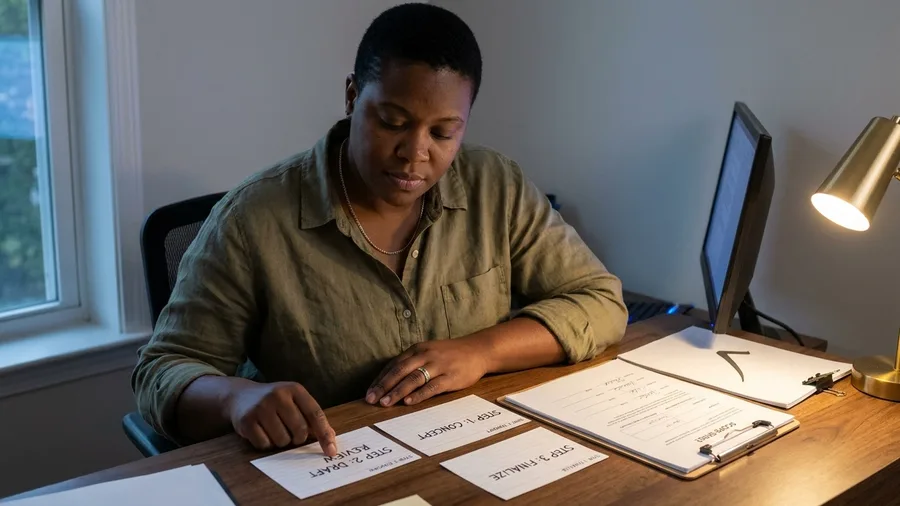
A custom prompt chain is a paid project built around one client's workflow, and it is the step past ChatGPT and Canva offers.
A redacted sample plus a privacy note is exactly what lets the same material become a scoped workflow a business pays a project fee for.
The catch: custom chains sell for more only when the scope is narrow and the client agrees who reviews each step. A vague "AI transformation" brief stalls in the client's own approvals, and the work is done before anyone signs.
Step 1 – scope it. Paste the brief into Claude with this request, then read the three prompts back against the client's own words:
Prompt to copy
You are a solutions designer for a paid custom prompt chain. My client is [business type], their team does [workflow], and they lose time at [bottleneck]. Build a three-step prompt chain that takes the work from intake to final output. 1. Write step one for intake and clarification with [bracketed] slots. 2. Write step two for drafting in the client's voice using [style guide]. 3. Write step three for review, fact-check flags, and a final checklist. 4. Add a handoff page with who runs each step and what to check. 5. Price the build at [fee] and the monthly maintenance at [fee], using ranges from my research, not a guarantee. Output: the three prompts, the handoff page, and a one-page scope. Rules: no invented client facts; every output must be reviewed by a person; do not automate a decision that has legal or financial consequences.
Step 2 – check the handoff. You should see three prompts, a handoff page naming who runs each step and what to check, and a one-page scope. Step 3 – set fees.
Leave [fee] as placeholders: published ranges put developer-focused packs at $20 to $99 and custom corporate chains in the thousands, but the quote is yours.
That is the first channel where no marketplace takes a cut. The $29 sale netted $20.30 through a 30% fee; here the price is on your invoice and the buyer is named on a contract.
💡 Tip: No invented client facts, and no automating a decision with legal or financial consequences. A person reviews every output.
🗓️ From Prompt to Paid Pack in Four Weeks
Week 1 – Buyer interviews
Five 20-minute conversations run through the interview prompt, at $0 earned.
Week 2 – Build the pack
Twelve prompts drafted in 4 hours and tested in 8, still at $0.
Week 3 – List and outreach
Marketplace listing goes live and ten verified emails go out, still $0.
Week 4 – First sales and QA
First paid sales land while every prompt gets re-run through the QA checklist.
Week 5 – The decision
20 to 30 paid sales means build the direct store; fewer means fix the promise.
9. Paid Workshop Outline Prompt
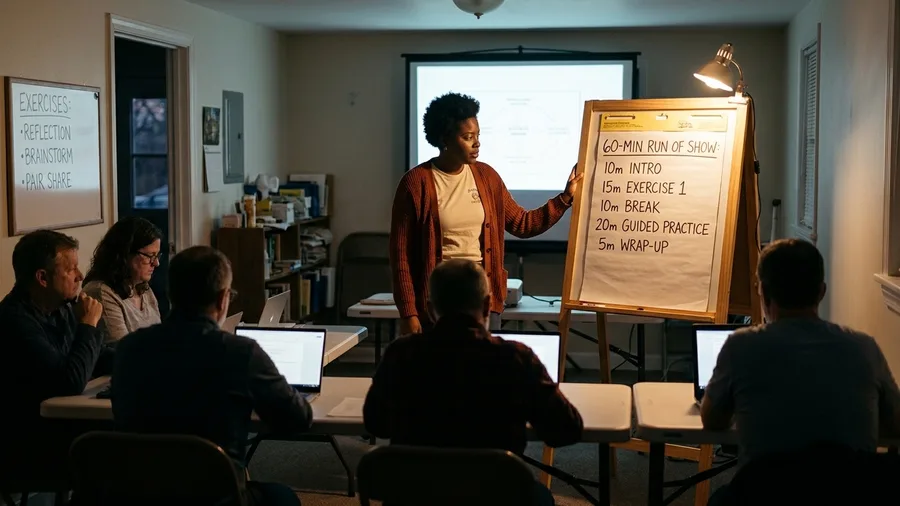
Writing one proposal per client is slow, and a single person can only write so many. A workshop sells the same material to a whole team in one room.
It is a service, not a passive product, and it needs a backup plan for the day the tool is down or a free tier's limits change mid-session.
Draft the outline in ChatGPT, then fix what it gets wrong about the audience:
Prompt to copy
You are a workshop designer for a paid 60-minute AI prompt workshop. The audience is [small-business team], their skill level is [beginner/intermediate], and the tool they will use is [ChatGPT / Claude / Gemini / Copilot]. 1. Write three learning outcomes tied to their real tasks, not AI theory. 2. Build a 60-minute run of show: 10 minutes demo, 25 minutes guided practice, 15 minutes troubleshooting, 10 minutes Q&A. 3. Write two exercises with [bracketed] slots and a sample answer. 4. Add a one-page handout with five prompts and a safety note. 5. Set a price per seat at [price] and a minimum group size of [number]. Output: run of show, exercises, handout, and a supplies checklist. Rules: no income promises; no tool feature claims that are not in the handout; every exercise must be doable in the free tier or name the paid plan needed.
The run of show is fixed at 10 minutes demo, 25 guided practice, 15 troubleshooting and 10 Q&A, with two exercises and a one-page handout.
Every exercise runs on the free tier or names its paid plan: Google AI Plus is $4.99/mo, ChatGPT Plus and Claude Pro are $20/mo, and free-tier limits change often, so check them on the vendor's page first.
You sell seats at [price] with a minimum group size. The fee is per room, not per sale, and no platform takes a percentage of a workshop.
10. Corporate Prompt Chain Proposal

Two weeks is how long a corporate pitch takes to write. It dies in procurement unless two things are on the page. Those are the name of the person who reviews the output and the rule for handling the client's data.
Prompt to copy
You are a proposal writer for a corporate AI prompt project. The client is [company type], the department is [department], and the workflow is [workflow]. 1. Write a one-page problem statement using only facts the client gave me: [facts]. 2. Define three deliverables: a prompt chain, a review checklist, and a one-hour training. 3. Write a timeline with discovery, build, test, and handoff, using [number] weeks. 4. Price the project at [fee] with a 50% deposit and a separate monthly maintenance option at [fee]. 5. Add a risks section covering data privacy, hallucination checks, and who signs off. Output: a proposal under two pages with a scope table. Rules: no invented client facts; no legal or compliance advice; every price is a placeholder for me to confirm; no promise of headcount reduction.
The manager signs when three things land together. A working chain of prompts, a checklist the team runs before using any output, and an hour of training on the same tasks.
The schedule runs discovery, build, test, then handoff over your set number of weeks. Half the fee comes up front.
💡 PRO TIP
The One Number on the Proposal
Who signs off on each output. A corporate buyer approves a prompt document the moment a named person is accountable for checking it, and not a minute before.
11. Subscription Update Pack Prompt
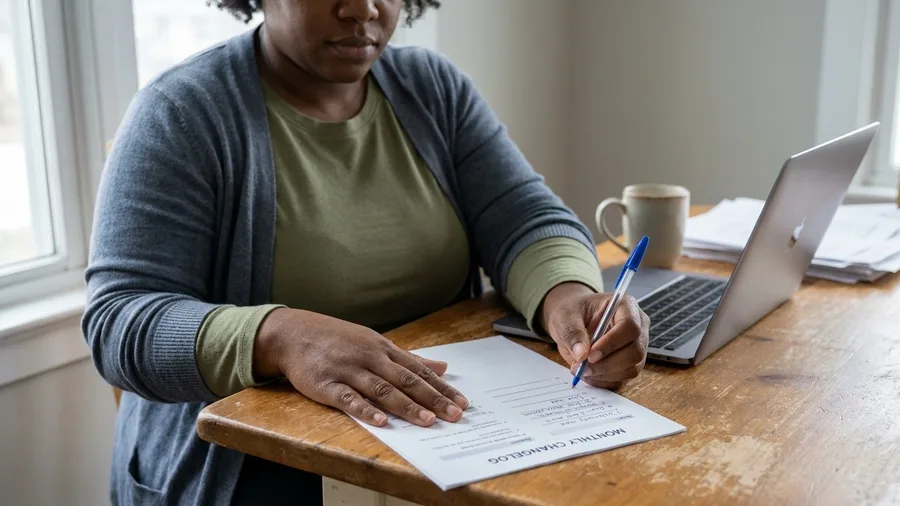
A monthly pack fails when the month has no named change. Buyers spot reworded prompts fast, so pause the plan rather than fill it. Wait until something real moves: a new feature, a new rule, or a new task the buyer now handles.
Prompt to copy
You are a product manager for a monthly prompt update pack. My existing buyers are [buyer type] who use [tool] for [task]. This month's change is [new feature, new rule, or new task]. 1. Write five new prompts that use the change in a real workflow. 2. Update two existing prompts without breaking their [bracketed] slots. 3. Write a one-page changelog with what changed, why it matters, and what to re-test. 4. Draft the renewal email for a $19-$49 monthly plan, using my actual price [price]. 5. Add a cancellation line that tells buyers how to stop. Output: five prompts, two revisions, changelog, and renewal email. Rules: no invented feature claims; mark anything I must check on the tool's own page as [check product page]; never make cancellation hard to find.
The reply is a small batch. Five prompts built around the change, two older ones edited with their blank slots still working, and a single page listing what moved and what to test again.
That one page is why people renew. It gives a subscriber a reason to reopen the pack. Cancel stays one clear line, and every tool feature gets marked to check, because a wrong claim here repeats every month.
12. First-Sale and $15K Reality Ledger

Prompt to copy
You are a skeptical business planner for a prompt seller. My niche is [niche], my pack price is [price], my available hours per week are [hours], and my cash budget is [budget]. 1. Calculate the sales needed to net $15,000 in a month at my price, before and after a 30% marketplace fee. 2. Compare that with a first-month target of 40 sales. 3. Build a four-week plan: week 1 buyer interviews, week 2 pack build, week 3 listing and ten outreach emails, week 4 first sales and QA. 4. Show which weeks earn $0 and what proof is needed before week 5. 5. Name the one channel to start on and the one number that tells me to continue or stop. Output: a one-page ledger with sales math, weekly tasks, and a stop/continue rule. Rules: use my numbers; no income guarantee; mark every marketplace fee as [check current seller page]; do not assume a sale in week 1.
The ledger comes back as one page, and the arithmetic is the catch. At $29, $15,000 gross needs 518 sales. On a 30% fee, netting $15,000 needs 739.
At $49 direct through Dodo Payments at 4% + 40 cent, one sale nets $46.64, so 322 sales a month. Published benchmarks sit far lower early: $500-$1,000 early, $3,000-$8,000 within a year with repeat clients.
The four weeks earn in sequence and not before: buyer interviews at $0, pack build at $0, listing plus ten outreach emails at $0, first sales in week four.
A 40-sale first month is $1,160 gross and $812 net on a marketplace, and that is the number to beat.
Tool cost does not decide it. ChatGPT Plus at $20 a month, Claude Pro at $20 or $17 billed annually, Google AI Plus at $4.99 leave $812 untouched, and free tiers exist with changing limits. The constraint is the sales count.
The stop-or-continue number is the paid sale count, not the revenue. Twenty to thirty paid sales on a marketplace is what Dodo Payments points to before a direct channel is worth building.
Put that line on the ledger before week five starts, and the page tells the reader whether to keep going.
The Terms Behind the Ledger
Frequently Asked Questions
Do I need to know how to code to sell prompt packs?
No. Every prompt on this list runs in ChatGPT, Claude, Gemini or Copilot as typed text. The only technical habits are pasting [bracketed] slots correctly and testing each prompt against three inputs before you list it.
How much does it cost to start?
One paid plan is the practical floor: Google AI Plus at $4.99/mo, ChatGPT Plus or Claude Pro at $20/mo as of October 2026, and free tiers exist with changing limits. A marketplace listing and Dodo Payments charge no monthly fee, so the first month's cost is a plan and your hours.
Is $15,000 a month realistic in the first year?
Not in the first month. At $49 direct it takes 322 sales in one month, and research puts most beginners at $500 to $1,000 a month early, with $3,000 to $8,000 realistic inside a year on repeat clients. Treat $15,000 as a target for a working channel, not a starting point.
Why list on a marketplace if it takes 20-40%?
Because it proves demand and gives you a first review while the platform brings buyers you do not have. Dodo Payments advises starting there and building a direct channel once a product has 20 to 30 sales and converts. Then move, because direct keeps the buyer and nets $46.64 on a $49 sale.
Can I paste client documents into ChatGPT to build a demo?
No. Never paste passwords, client files, or medical or financial records into a chatbot, and switch off model training on free and personal plans. Run the redaction prompt first so the demo shows the task structure with every identifying detail deleted or replaced.
What is the one number that tells me to keep going?
Paid sales, not traffic. Twenty to 30 paid sales on a marketplace means real people paid real money for the pack, which justifies building a direct store. Fewer means the buyer or the promise is still wrong, and a new sales page will not fix that.
Copy the Pack Builder First, Count Sales Before $15,000
Start with entry 1, the One-Niche Prompt Pack Builder. It is the only prompt that produces something sellable in one session, and everything after it tests, prices or lists that same pack.
Then list on a marketplace and let the 20 to 30 paid sales arrive. That count, not the revenue line, is what earns the move to a direct store at $49, where one sale nets $46.64 and the buyer stays yours.
$15,000 is 322 sales in a month at that price. Get the first 30 before you plan around it.