
You can launch one of these 14 businesses this week without spending a dollar before a client pays. Every idea below names the free tool you start on, the first client to approach, and the catch that decides whether it suits you.
The order runs from the shortest path to a deposit — one deliverable, one local owner — out to ideas that need a store, an audience, or a firm that already pays for AI seats.
Stop at the first idea whose catch you can live with.
Each entry answers one question: where does the free tier stop, and whose money pays for the first paid step? Once you find your answer, the rest is one free demo and one named prospect.
ChatGPT Plus and Claude Pro are $20 a month, Google AI Pro is $19.99, and none of those bills start until a client has paid you. Here are the 14, in launch order.
| Business idea | AI tool to start | Startup cash | First client move | Catch to check |
|---|---|---|---|---|
| One-page website setup | Zarla free build | $0 until publish | Show 30-second draft in person | No logins, database, email hosting, or file export |
| AI receptionist setup | Smith.ai free 25 calls | $0 for pilot | Two-week call pilot | Owner must approve what the AI can book |
| Ecommerce support chatbot | Tidio Lyro 50 free chats | $0 to demo | 20-question test script | Lyro answers only from documents you load |
| Listing rewrite for Etsy | Nexvo AI free plan | $0 | Five rewritten listings as paid sample | AI invents materials and sizes |
| Resume and LinkedIn rewrite | ChatGPT or Claude free | $20/mo after first client | One before-and-after sample | Client must defend every claim |
| Meeting-notes service | ChatGPT free or Claude Pro | $20/mo | Free 30-minute transcript | Never paste client secrets on a free plan |
| Local social content batch | ChatGPT or Gemini free | $20/mo after first client | Sample week in person | AI invents local events and prices |
| Menu and Google Profile copy | ChatGPT or Gemini free | $20/mo | Before-and-after menu sheet | Allergens must be owner-approved |
| Digital template shop | Nexvo AI free plan | $0 until first sale | Free lead template | Test every export; images come out garbled |
| Niche research newsletter | Perplexity and ChatGPT free | $20/mo after subscribers | Three issues to ten readers | Every citation must be opened and checked |
| Pitch-deck drafting | Claude Pro or ChatGPT Plus | $20/mo | Rebuild one public deck | Founder supplies every number |
| Course outline and workbook | ChatGPT free | $20/mo | One module from a free call | Expert must correct the framework |
| AI workflow setup for firms | Claude for Small Business | $0 (client pays seats) | One-page workflow map | Keep approval steps on; test on dummy data |
| Short-term rental listing refresh | ChatGPT free | $20/mo after first host | One property refreshed free | Host confirms amenities and distances |
1. One-Page Website Setup for Local Services
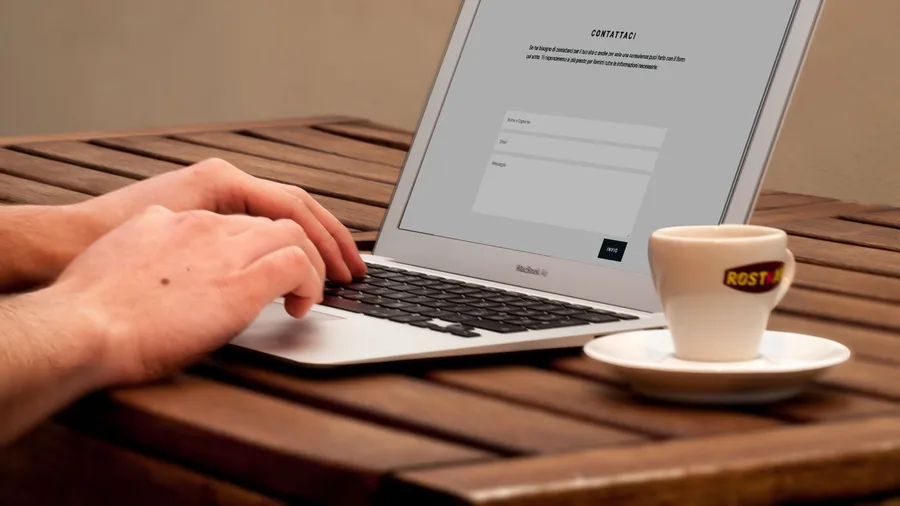
The tedious part is the back and forth. A plumber emails you his hours, you send back a draft, he wants the phone number bigger. Zarla turns a one-sentence business description into a finished site draft in about 30 seconds.
Type "emergency plumber in Tempe, Arizona, 24/7 callouts, family-run since 2009" and the draft builds itself on screen in front of the owner.
You edit, preview and rebuild free, with no card. Publishing is the paid Premium step, quoted to the client first. A custom domain is a separate bill.
Zarla builds no logins, no database and no software product. A database is a stored, searchable set of records the site reads and writes. It also hosts no email and will not export your files to host elsewhere, so the site lives on Zarla's plan.
Show the 30-second draft in the meeting, collect a deposit, then publish and hand over. The free tier ends at the publish button, and the client's money crosses that line before yours does.
💡 Tip: Your free tier ends at the publish button. Collect the deposit first, then publish and hand over.
2. AI Receptionist Setup for Trades and Clinics

Twenty-five calls a month come free on Smith.ai's AI Receptionist, which answers around the clock and books jobs into the calendar. Setup takes an afternoon of writing rules, not code.
Take the plumber whose new site now brings calls. Set the rules so an after-hours emergency rings the on-call mobile, a quote request lands in a Thursday slot, and a question about an existing booking goes to the office manager.
Quote the per-call fee inside the setup price, so the owner sees the bill coming.
The trap is a rule you never tested, so walk every odd call path first and get the owner's written sign-off on who the AI may book and when a person takes over.
Then run the free 25 calls as a two-week pilot. The owner pays Smith.ai, and you charge for setup and the monthly check.
💡 Tip: Quote the per-call cost inside your setup fee so the owner sees the bill before it arrives.
3. Ecommerce Support Chatbot Setup

A small online store answers the same questions every day: where is my order, how do returns work, does this run small, is it back in stock. A support bot loaded with those answers takes an afternoon to build.
Tidio's Lyro draws only on the information you give it. Every Tidio account starts with 50 free Lyro conversations, enough to build and prove the whole demo before the store owner pays for a plan.
For a small apparel shop, load a shipping table, a return window and a size chart, then run a 20-question script at the bot: late parcel, wrong size, worn once, out of stock in medium.
The build itself is roughly 90 minutes. The test script is another hour, and fixing the weak answers takes a third.
Where Lyro has no document, it goes quiet or guesses. Review every answer, and add a handoff to a person for anything the documents do not cover.
A tested 20-question demo sells a setup-and-maintenance package, and the free 50 conversations carry the entire proof.
4. Product-Listing Rewrite Service for Etsy Sellers

Five rewritten listings came back from Nexvo AI's free plan in about four minutes, and the ceramics seller read every one twice before saying yes. The offer is a ten-listing audit for one product category.
Titles, descriptions and image alt text, built on search phrases the seller already ranks for. Five listings are the paid sample, the other five the monthly scope.
The free plan covers AI content and image generation and unlimited stores, so the first portfolio piece and that sample cost nothing.
The catch sits in the facts: the model invents materials, sizes, processing times, even reviews. The seller confirms every product detail, and you read any image with text in it yourself.
Prompt to copy
You are rewriting Etsy listings for a ceramics seller. Here are ten listings with their current titles, descriptions and the search phrases they already rank for: [paste them]. Rewrite the titles under 140 characters and the descriptions under 150 words, using only the materials, sizes and processing times below. List every fact you were not given instead of guessing.
💡 Tip: Five rewritten listings close as a paid sample. Then sell a monthly refresh for every new product.
5. Resume and LinkedIn Rewrite Service
A product listing sells a mug. A resume sells a person, and it decides whether they get the job, which makes it the tightest fixed-fee version of the same rewrite skill.
The package is one 60-minute intake call, a one-page resume, plus a LinkedIn headline and about section aimed at a single job target.
The free tiers of ChatGPT and Claude produce usable first drafts with message limits that reset. ChatGPT Plus and Claude Pro run $20 a month as of October 2026, and the subscription should start only after a client has paid you, never before.
One before-and-after sample made for a friend in the reader's target industry is the entire pitch.
The catch sits in the details. Left alone, the model stretches job titles, shifts dates by a year and writes achievements nobody earned.
On a sample resume it turned "helped with reports" into "led reporting for a team of six." Have the client supply proof for each line, then delete anything they could not defend in an interview.
That sample closes a fixed price, and the first client's payment covers the $20 plan many times over. The work is asking hard questions on the call, not writing.
💡 Tip: One before-and-after sample in the target industry is the entire pitch. Show, don't describe.
6. Meeting-Notes and Follow-Up Service
Prompt to copy
Here is a transcript of a 30-minute client workshop in [paste transcript]. Write a one-page summary, then a numbered action list naming the owner of each task, then a follow-up email under 150 words in a friendly, professional tone. Use only what is in the transcript. Mark anything unclear as NEEDS CONFIRMATION.
A resume is built from what a client says out loud, and recorded sales calls and workshops are that same raw material at volume. Consultants record them and rarely revisit them.
Paste the transcript into ChatGPT's free tier or Claude, and within about a minute or two you have a summary, the decisions, named owners and a follow-up email.
The catch is privacy, and it decides which plan you run. Never put passwords, client files, or medical or financial records into a chatbot, and free and personal chats may train on what you paste unless you switch that off.
Redact names the client flags, then run sensitive work on a business plan before it touches anything confidential.
The arithmetic: ChatGPT Business or Claude Team costs $25 per user a month at two users minimum, so $50. One monthly retainer at $300 covers it six times over.
⚠️ COMMON MISTAKE
Do not paste the client's files into a free chat
Free and personal plans may use your chats to improve the company's models unless you switch that off. Use client-approved redaction, and move to a business plan before you handle anything sensitive.
7. Local Social-Media Content Batch

A chatbot will invent a trivia night that never happened and a price the shop stopped charging in March. So the owner supplies every offer and every photo, and you check every name and spelling before a single post goes out.
The safe build: 12 post captions, 4 short video scripts and a posting calendar for one shop. Start on free ChatGPT or Gemini. Move to ChatGPT Plus at $20 or Google AI Pro at $19.99 only after the first client has paid.
Then the flip from client files to the owner's own goods. Ask for the menu or price list, turn it into a sample week of posts, and pitch it in person with the calendar on your phone screen. One sitting, zero tool cost.
That calendar goes to the owner line by line, so they approve or cut each post before it runs.
💡 Tip: The sample week is the pitch. One sitting of work, zero tool cost, and a calendar the owner can approve line by line.
8. AI Menu and Google Profile Copy

About 15 minutes on free ChatGPT turns a restaurant's dishes and prices into a cleaned-up menu, a Google Business Profile blurb and four seasonal posts. The owner still signs every line.
Type the menu in: Paste the current dish list and prices into a new chat and ask for a tightened menu grouped by course, a 150-character profile description and four specials posts. You should see a full draft back in under a minute.
Test before selling: Hand the owner a before-and-after sheet and ask for one week of live menu use. The model invents dishes, prices and allergens, so the owner confirms each item in writing, allergen text first. That signed week is the renewal hook.
💡 Tip: The before-and-after menu with one week of the owner's own data is the easiest renewal in the list.
AI Menu and Profile Copy — At a Glance
🍽️ Charge
$75–$150 per restaurant menu
💵 Where to find one
Independent spots with a blurry photo of a paper menu
⏱️ Skip until
Owner agrees to sign the allergen lines
✅ Ask for
Phone number and one week to show it live
🧾 Keep out
Owner's recipe docs and supplier invoices
⚠️ Free-tier limits
Changing: check before each menu
Best first move
Charge a flat $100 for menu and profile copy, take the free week as proof before the next restaurant.
9. Digital Template Shop Built by Chat

A three-template wedding bundle written, illustrated and listed in Nexvo AI, with an email capture page and a checkout, comes together in one afternoon on the free plan, which covers drafting, image generation and unlimited stores.
Upgrades start at $39 a month once sales justify one.
By hand, three matching templates plus store copy is roughly six hours of formatting and rewriting. With the tool, drafting takes about 20 minutes, review and cleanup about 90, and the export tests another 30 to catch garbled text or broken cells.
The launch: one free checklist as the lead magnet, emails collected, then the paid bundle sent to that list. Check every template by exporting a clean PDF or spreadsheet, and promise no custom support you cannot answer. The store costs nothing until a stranger pays.
💡 Tip: Publish one free lead template, collect emails, then list the paid bundle to that list.
10. Niche Research Brief Newsletter

AI search invents citations, and free search limits move without notice, so open every source, quote and link yourself before an issue goes out. Perplexity's free tier handles the searching; free ChatGPT drafts the issue in under a minute.
The offer is a five-item weekly brief for one narrow audience, such as independent gym owners or wedding vendors. Send three checked issues to ten named readers, then ask those ten for a paid annual subscription.
Three issues to ten readers is the entire proof, and no tool bill arrives until a subscriber pays. A $20 ChatGPT Plus or $19.99 Google AI Pro plan comes after that, not before.
11. Pitch-Deck Drafting for Local Startups
The tedious part of deck writing is not the design. It is pulling ten slides of story out of a founder who speaks in bullet points, then cutting every claim they cannot back with a number. That is writing work, done in a chat window.
The job: a ten-slide narrative plus a one-page summary for a local startup or grant applicant. The founder supplies every figure.
Paste their notes into Claude or ChatGPT with the prompt: "Turn these founder notes into a 10-slide pitch narrative, one headline per slide with three supporting lines. Use only the numbers I give you, mark any gap as MISSING, and write a one-page summary after."
The free tier returns a draft in under a minute; your read and edit take about an hour per deck.
Cost is the easy part. Claude Pro or ChatGPT Plus is $20 a month, and the free tiers carry the first sample before any founder pays.
Pick one public pitch from a local accelerator and rebuild it as your sample. The catch: AI invents market sizes, traction figures and bios, so the founder approves every number and credential before the deck leaves the room.
Total to first sale: $0 in tool cost on free tiers, then $20 a month once the fixed-fee draft week is booked. The deliverable is story, not styling, so no design background is needed.
12. Course Outline and Workbook Service
Prompt to copy
Here is a transcript and a list of topics from a 60-minute call with a running coach who teaches beginner runners to finish a first half marathon. Build Module 1 of a six-module course: a lesson title, three learning outcomes, a 400-word summary in her voice, and two workbook exercises. Use only her examples. Leave out anything she did not say.
Paste that into free ChatGPT with the coach's notes, and it drafts one module in under a minute. Once a coach has paid, a $20 ChatGPT Plus or Claude Pro plan covers the longer videos and file uploads the full six-module build needs.
The catch is that AI flattens a real method into generic advice. The coach corrects the framework, the examples and every claim before anything is sold. One module built from a free discovery call sells the full six-module build and its 12-page workbook.
💡 Tip: Produce one module from a free discovery call and use it as the sample for the full six-module build.
13. AI Workflow Setup for Small Firms
The job: a small law office or accounting firm already pays for Claude Team seats and has never opened the workflow library inside it. You get paid to pick three, wire up their tools and test the approval steps before anything goes out.
The build: Claude for Small Business ships 15 workflows through Claude Cowork, and each one pauses for a person to approve a send, a post or a payment.
Pick three that match the firm's week. Seats run $25 per user a month for at least two users, billed to the firm, so your own outlay is nothing.
The handover: a one-page map of who approves what, plus a recorded training session. Run every workflow on dummy data first and watch the pause land before a single real send. That test run is what the firm is buying.
The catch: approval steps stay on, and a named person owns each sign-off. A workflow that skips the pause is a workflow that emails a client by accident. After handover, a monthly check-in is an easy renewal, and your tool bill never appears.
When to keep the pause vs when a step can run alone
Keep the pause
- Money moves, anything signs, or a client or regulator reads it
- First two weeks of any live workflow, even an internal one
- The approver is the person whose name sits on the matter
- A pause that fires late still beats a send that never stopped
Safe to run alone
- Drafting only, with the output landing in a folder for pickup
- Internal reminders and status notes inside the firm
- Sorting an inbox the firm already reads each morning
- Never alone: billing, filing deadlines, conflicts checks
14. Short-Term Rental Listing Refresh

Yes, for the words. It cannot verify a single fact about the property, and that is where hosts get burned.
One host, one property, one free sample written tonight is still the cheapest entry on this list.
What you deliver is a rewritten title, a description, the amenity highlights and five saved replies for guest questions, all drawn from the host's real photos and house rules. Start on free ChatGPT and move to the $20 Plus plan once the first host pays.
Where not to trust it: the model will invent a hot tub, a sea view, a ten-minute walk to the station.
Only the host can confirm distances, amenities and rules, so send a checklist and get a yes on each line. Photo rights and listing rules get checked on the platform itself.
That caution is also the sale. A host comparing two versions of their own listing side by side sees the improvement in a minute, and a per-property package follows the free refresh without a hard pitch.
💡 Tip: Refresh one listing free, then sell a per-property package to the same host for their other units.
⚡ Launch one of these in a week
Pick by catch
Read the catch on each idea and stop at the first one you could live with.
Set up the free tool
Create the free account and stay on the free tier until a client pays.
Build one demo
Make a single sample for one named local business, not a portfolio.
Show it in person
Walk in, show the draft on your screen, and ask for a fixed-fee trial.
Publish only after deposit
Collect the deposit first, then press the publish or paid-plan button.
Frequently Asked Questions
Do I need to know how to code for any of these 14?
No. Every idea starts on a chat assistant or a no-code builder, and the deliverable is a website, a document, a chat setup or a workflow map. The only technical moment is keeping secret keys out of any code, which does not apply unless you are building an app.
How much money do I actually need before the first client pays?
Zero for most of them. ChatGPT and Claude free tiers, Zarla's free build, Smith.ai's 25 free calls, Tidio's 50 free Lyro chats and Nexvo AI's free plan cover the demo. The $20 a month plans start only after money comes in.
Can I paste client files into a chatbot?
Never paste passwords, client files, or medical or financial records into a chatbot. Free and personal chats may train on the data unless you switch that off. Move to a business plan before handling anything sensitive.
What is the fastest idea to get a first dollar?
The one-page website setup, because the demo takes 30 seconds in front of the owner and the deposit is collected before the publish button is pressed. A listing rewrite for Etsy is close behind with a five-listing paid sample.
Where does the free tier usually stop?
At publish, at the first paid call, at the first paid conversation, or at the paid plan itself. Every entry in this list names that line so you can quote it to the client before you cross it.
Three starter profiles, three first ideas, one demo tonight
If you write and research for a living, launch the resume rewrite or the niche newsletter first — one before-and-after sample sells the whole package.
If you talk to local owners face to face, start with the one-page website or the AI receptionist pilot. If you tinker with stores and workflows, open the template shop or sell an approval-first workflow map to a firm that already pays for seats.
Tonight, build one free demo for one named prospect. Not a portfolio, not a logo — one plumber, one Etsy seller, one host. Show it tomorrow and let their answer pick the idea for you.