
In a significant step towards a sustainable future, Toyota has unveiled a groundbreaking innovation in the form of swappable hydrogen fuel cartridges.
This development, showcased at Japan Mobility Bizweek, marks a pivotal point in the company’s extensive research in clean energy solutions.
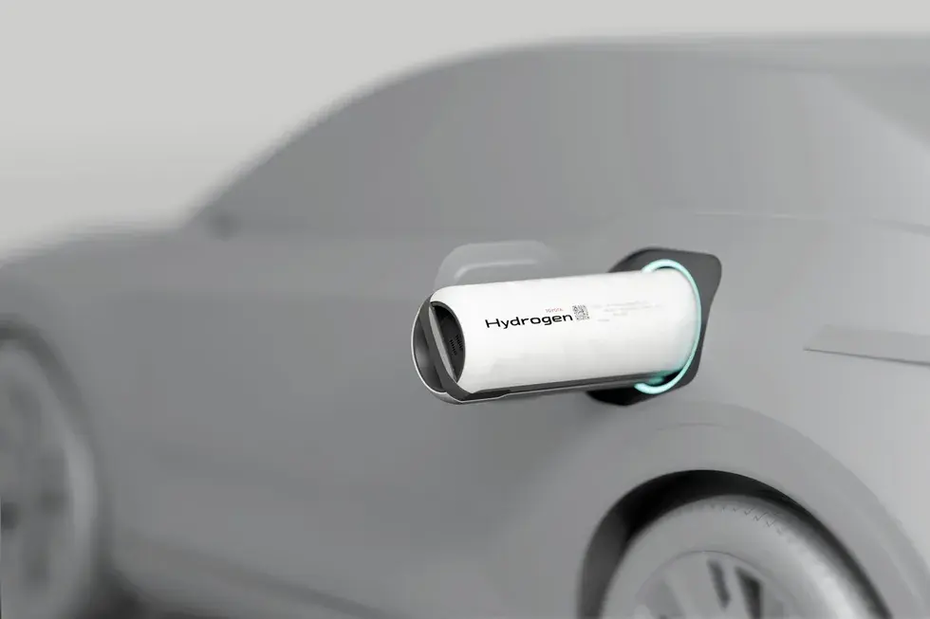
These lightweight cartridges, designed to fit effortlessly in a backpack, could potentially revolutionize how we power our vehicles and homes.
Hydrogen is often hailed as the ultimate clean energy source due to its high energy density and zero carbon emissions during usage.
Unlike solar or wind energy, which are dependent on weather conditions, hydrogen offers a reliable and on-demand power source.
It can also be burned to achieve high temperatures needed for various industrial applications.
Traditional electric vehicles (EVs) require several hours to charge, a factor that can limit convenience on long journeys.
Fuel cell electric vehicles (FCEVs), however, convert hydrogen into electricity and can be refueled quickly, thus drastically cutting down wait times.
However, creating a widespread network of hydrogen fueling stations poses significant challenges, reminiscent of the time-consuming infrastructure setups seen with fossil fuels and EV charging networks.
To address this challenge, Toyota proposes a novel solution: portable hydrogen fuel cartridges.
These cartridges enable users to easily swap fuel in vehicles and even carry extra cartridges when venturing on long drives, eliminating the need for frequent refueling stops.
Initially introduced by Toyota’s subsidiary, Woven, in 2022, these cartridges have seen notable enhancements, particularly in size and weight reduction, making them versatile for various applications beyond just vehicles.
Beyond mobility, Toyota envisions extending the use of these cartridges to power homes in emergency situations or even for everyday activities such as cooking.
Demonstrations at the event showed the potential of this technology, powering cooking stoves in partnership with Rinnai, a step further in demystifying the safety concerns surrounding hydrogen fuel due to its explosive nature.
Looking ahead, instead of conventional diesel generators, hydrogen-powered alternatives may become the norm for emergency backup power.
Toyota’s efforts implicitly aim at making hydrogen a familiar aspect of daily life, akin to how liquefied petroleum gas (LPG) is utilized globally for domestic and industrial applications.
The future challenge remains in ensuring that hydrogen extraction is both cost-effective and sustainable, mainly through renewable energy sources.
As Toyota advances with this innovative technology, it not only bolsters the company’s position in clean energy development but also sets a revolutionary path for utilizing hydrogen efficiently across different sectors.