
In an exciting development for the renewable energy sector, researchers have created a groundbreaking method to extract lithium from seawater efficiently.
This innovation leverages solar power to produce lithium, addressing the rising global demand for this crucial component in renewable energy storage systems.
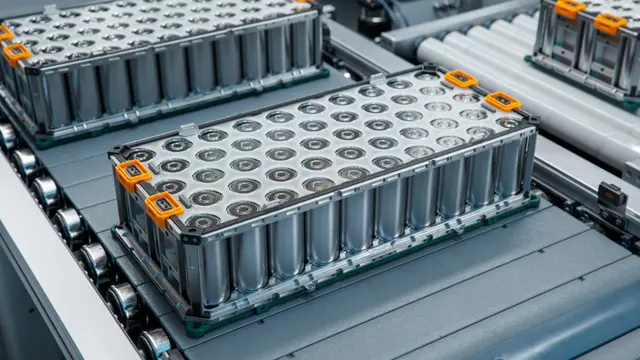
The newly developed Solar Transpiration-Powered Lithium Extraction and Storage (STLES) device utilizes sunlight to extract and store lithium from brine.
It employs iron phosphate electrodes to selectively capture lithium ions from salt water.
Once absorbed, these electrodes release the lithium into fresh water, making the process both efficient and environmentally friendly.
This innovative approach provides a cleaner alternative to traditional lithium mining, which typically involves harmful chemical processes and significant land disruption.
Researchers from Nanjing University and the University of California, Berkeley have highlighted the potential of this method in various studies.
One of the main challenges in extracting lithium from seawater has been the low concentration of lithium and the presence of other minerals like magnesium and calcium.
Despite containing about 230 billion tonnes of lithium, seawater’s extraction costs have been prohibitive, being over ten times more expensive than existing methods.
However, this new technique aims to make the process more cost-effective.
The STLES device operates without a membrane, experiencing high efficiency thanks to a unique system where lithium ions move between two compartments—one filled with brine and the other with fresh water.
These compartments are linked through silver/silver-halide redox electrodes, ensuring efficient cycling of lithium ions.
Iron-phosphate electrodes further facilitate the capture and release of these ions.
This membrane-free approach has proven to be stable, compatible, and scalable through long-term tests.
The system works passively, without requiring additional energy, thus saving costs.
Additionally, it integrates with existing evaporation ponds, reducing installation expenses and enabling the treatment of hypersaline brines with high osmotic pressure.
Researchers have also demonstrated the device’s effectiveness with harsh brines, even those containing high magnesium levels and low lithium concentrations.
In fact, the technology can produce lithium carbonate with over 99.95 percent purity, suitable for battery production.
Notably, pilot tests using a 33.75-square-meter cell to extract lithium from Dead Sea brine achieved an impressive 84 percent recovery rate.
Nevertheless, the economic viability and environmental impact of commercial applications of these technologies remain to be fully assessed.
Key challenges include optimizing extraction efficiency while minimizing water use and land disruption, considering the potential high costs of the materials involved.
The team’s findings have been published in the journal Science.
This breakthrough underlines the importance of ongoing research to meet the ever-increasing demand for lithium, driven by its crucial role in renewable energy infrastructure.
As lithium prices have soared in recent years, with predictions of continued growth, efficient and sustainable extraction methods like this one are crucial for supporting the renewable energy sector.