
A recent breakthrough from the Research Institute for Plant Molecular and Cellular Biology (IBMCP) in Spain has led to the development of a ‘Super Golden Lettuce’ that contains up to 30 times more beta-carotene than standard lettuce. This innovative advancement could significantly enhance the nutritional benefits of an everyday staple.
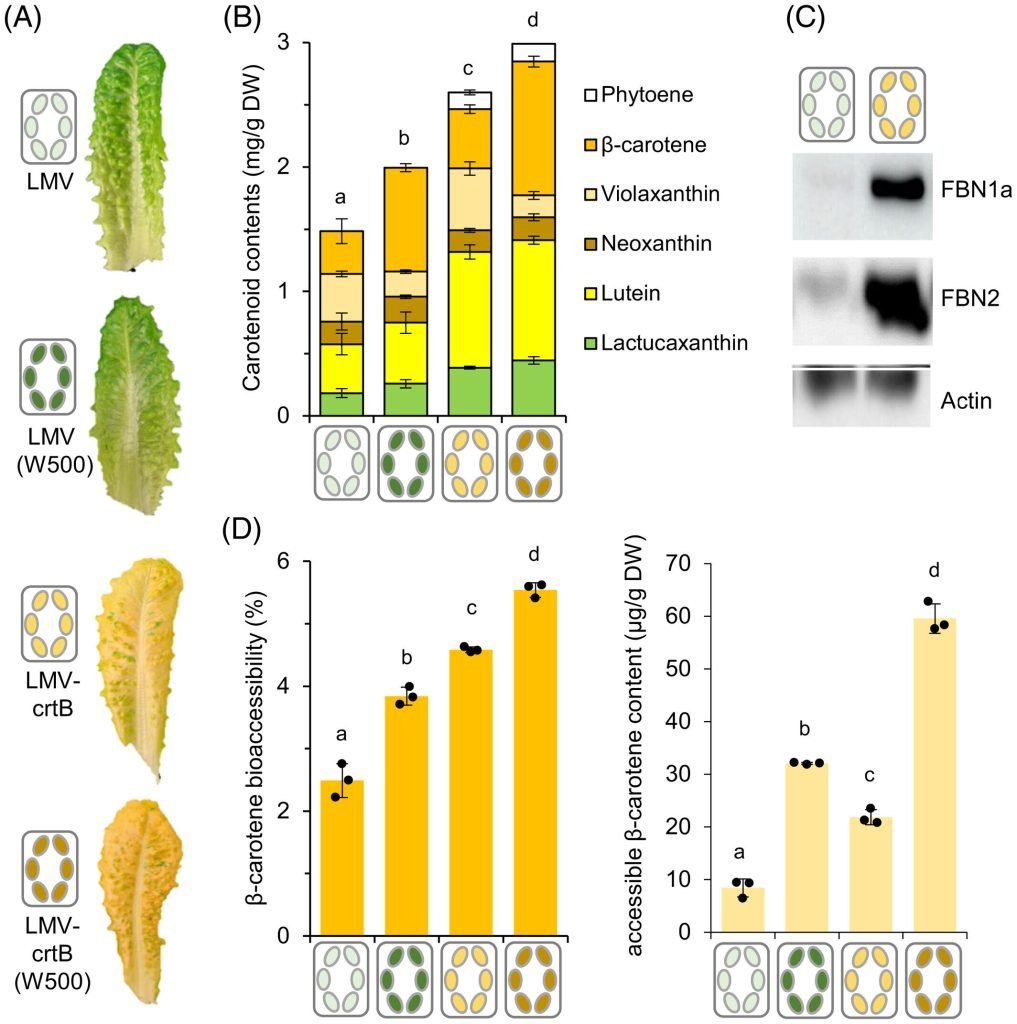
Beta-carotene is a vital antioxidant that the human body converts into vitamin A, essential for vision, immune function, and cell growth. Traditionally, beta-carotene is abundant in orange-colored vegetables like carrots and sweet potatoes. However, scientists have now succeeded in drastically increasing its content in green lettuce, which has resulted in a striking yellow hue for the newly engineered ‘Golden Lettuce’.
The journey to create this nutrient-rich lettuce involved complex biotechnological techniques. Normally, beta-carotene is produced within chloroplasts, the cellular structures responsible for photosynthesis. An overload of beta-carotene can hinder a plant’s ability to photosynthesize and, thus, remain healthy. To overcome this, researchers led by Manual Rodríguez Concepción employed a method to accumulate beta-carotene in different cell parts, such as plastoglobules, which do not interfere with photosynthesis.
The team exposed romaine lettuce plants to high light intensity for five days. This treatment, combined with genetic engineering, stimulated the formation and development of plastoglobules—fat-storage vesicles naturally present in chloroplasts but not usually rich in carotenoids. By leveraging these plastoglobules, the researchers achieved high levels of beta-carotene storage without compromising the plant’s vital processes.
The results were promising. Enhanced light treatment and biotechnological intervention resulted in the production of beta-carotene in new storage locations within the plant cells. This not only increased the beta-carotene levels but also enhanced bioaccessibility, meaning our digestive systems can extract and absorb these nutrients more efficiently.
The team also explored the synthesis of beta-carotene outside chloroplasts, within vesicles located in the cytosol—the liquid part surrounding cell organelles. According to co-author Pablo Pérez Colao, this dual strategy combining plastoglobules and cytosolic vesicles allowed a remarkable 30-fold increase in beta-carotene content compared to untreated leaves.
The implications of this research extend beyond lettuce. The techniques developed could be applied to other leafy greens like chard and spinach, potentially offering a significant upgrade in their nutritional value without altering their taste or scent. Such biofortification of vegetables stands to make a notable impact on public health, particularly in regions where vitamin A deficiency is prevalent.
Lead researcher Rodríguez Concepción emphasized the significance of this discovery, highlighting that it represents a major leap forward in improving nutrition through biofortification of everyday vegetables.
The study, published in The Plant Journal, showcases the promising future of genetically enhanced crops in tackling nutritional deficiencies and improving public health.
As more biofortified foods like ‘Super Golden Lettuce’ become available, people might find it easier to meet their dietary needs, potentially transforming how we view and consume vegetables.
For more detailed information, the full study is accessible in The Plant Journal under DOI: 10.1111/tpj.16964.