
It has long been hypothesized that dreams serve as reflections of our daily lives, packed with symbolic representations of our innermost desires, fears, and emotions.
A recent hypothesis, however, proposes a captivating twist: when we dream, we may be linking to alternate realities, encountering other versions of ourselves in parallel worlds.
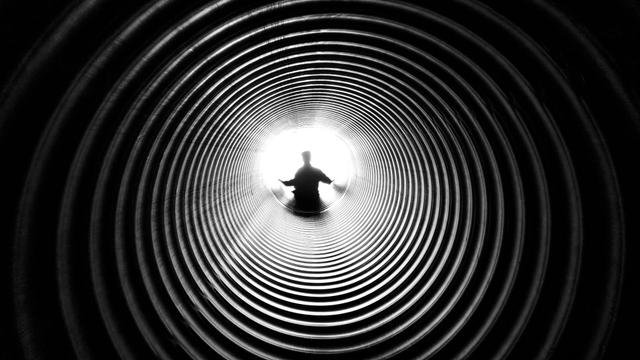
This groundbreaking idea draws inspiration from the multiverse theory, suggesting our dream worlds could be far more expansive and interconnected than we ever imagined.
The multiverse theory, also referred to as the “many worlds interpretation” of quantum theory, posits that every possible outcome of a quantum event takes place across different universes.
For instance, if you play a soccer match, your team might win in one universe while facing defeat in another.
In this context, scholars suggest that dreams might enable us to traverse these diverse realities.
However, this forms only a portion of the scientific premise supporting this hypothesis.
David Leong, an honorary professor at Charisma University and the lead author of the study, suggests that during sleep, the barriers of space and time may dissolve, allowing consciousness to roam beyond its usual confines.
He elaborates that while dreaming, our logical brain and physical senses are at their least active, potentially leaving space for the consciousness to experience phenomena much like quantum entanglement.
This is a concept that allows for two particles to influence each other’s states, regardless of the distance.
This perspective opens up a remarkable rethinking of consciousness as an entity.
It is viewed not merely as a product of individual neural processes but as a more expansive interconnected force capable of exploring a multiverse.
dditionally, Leong highlights the possibility of a shared collective unconscious across these parallel realities.
This concept, initially proposed by Carl Jung over a century ago, envisions a shared repository of memories and instincts passed down generations.
Yet, it’s crucial to note that there is currently no concrete empirical evidence supporting the idea that anyone can definitively travel to alternate realities through their dreams.
The science, for now, remains speculative.
Nonetheless, understanding the specifics of certain types of dreams may provide some insight.
Recurring dreams, particularly those that are vivid and carry strong emotional resonance, could signify connections to other universes, according to Leong.
For instance, if you frequently dream about being back in high school, it might symbolize unresolved themes like stagnation or anxiety about growth in your current life.
However, it might also point towards an alternate reality where you still grapple with those very challenges.
Leong suggests that these vivid recurring dreams should be subject to deeper examination as they may offer clues about experiences in alternate realities.
For now, investigating the potential for dreams to serve as portals into other realms remains an open and exciting field.
These hypotheses certainly warrant further exploration, as they possibly hold answers to some of the most profound questions regarding the mechanics of human consciousness and its capabilities.
This compelling research has been published in the journal Qeios, inviting scientists and dreamers alike to ponder the expansive mysteries of the human mind.