
For centuries, death has been viewed as the ultimate finality of life.
However, medical advancements spearheaded by Dr. Sam Parnia at New York University’s Langone Medical Center have introduced the radical possibility that death might not be as irreversible as traditionally perceived.
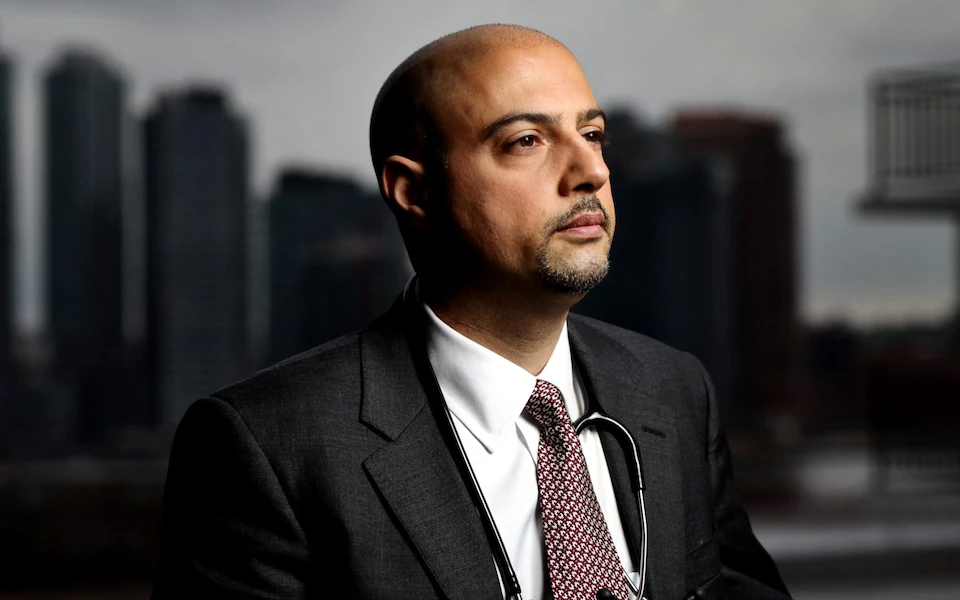
Parnia’s controversial research suggests that death could be seen more as a reversible state than an incontrovertible end.
Dr. Parnia, who trained at Guy’s and St Thomas’ in London, leads this frontier with over 30 years of research focusing on the delicate line between life and death.
His work indicates that even when the heart ceases to beat, it doesn’t necessarily mean the end of consciousness or the potential to revive bodily functions.
Through their studies involving near-death experiences and post-mortem revival techniques, researchers have demonstrated some astonishing findings.
In one of Parnia’s studies, subjects experienced brain activities and recalled memories up to an hour after cardiac arrest.
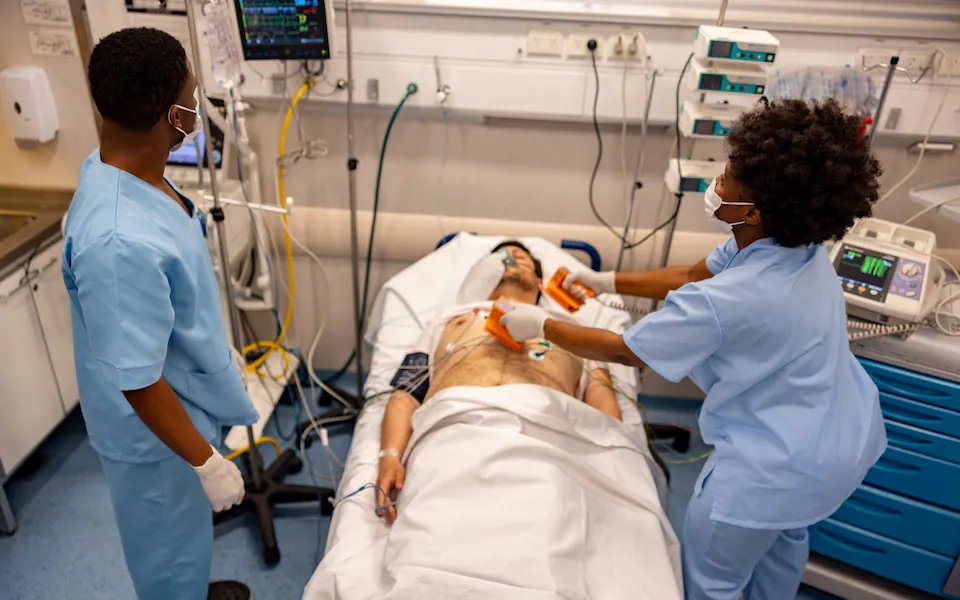
Further studies at institutions like Yale have shown that it’s possible to restore some brain functions hours after death.
These discoveries challenge deeply ingrained perceptions of death, which Parnia describes as merely a “social convention” rather than a scientific certainty.
According to him, the process of death needs reframing: “If we remove that social label that makes us think everything stops, and look at it objectively, it’s basically an injury process,” Parnia claims.
Central to Parnia’s work are methods aimed at reversing death, including the use of extracorporeal membrane oxygenation (ECMO) machines and innovative drug mixtures, dubbed “CPR cocktails.”
These combinations aim to restart and sustain essential bodily functions post-cardiac arrest.
Despite perceptions of resuscitation being wishful science fiction, the results from Parnia’s experiments have been concrete enough to rekindle hope in the scientific community.
Parnia points out that today’s medical interventions, some of which were inconceivable not long ago, now raise survival rates following cardiac arrest significantly.
For instance, successful resuscitation at his hospital is nearly double the average across the United States.
Parnia’s vision has fostered conversations that delve into not just preserving life but extending the potential for revival into what was once considered the realm beyond life.
Furthermore, Dr. Parnia emphasizes that only certain cases warrant reviving — those who die otherwise healthy but from sudden causes could be salvageable, emphasizing “hopeful, astonishing and life-affirming” possibilities.
This groundbreaking research trails a provocative question: what if death doesn’t have to be the definitive end?
Although society isn’t ready to see the broad application of these findings, Dr. Parnia remains optimistic about the prospects of these medical breakthroughs in reshaping our understanding of death.
While there remains much to explore regarding the ethical, social, and medical implications, Parnia’s work paves a new path forward.
His book, “Lucid Dying,” encapsulates this revolutionary approach, aiming to inspire a fresh way of thinking about life, death, and what lies beyond.