
In a groundbreaking development for satellite internet technology, SpaceX CEO Elon Musk has announced that the next generation of Starlink satellites will be so extensive that only the company’s colossal Starship rocket can deploy them.
This move is set to revolutionize internet connectivity by offering a tenfold increase in bandwidth and reduced latency, thereby significantly enhancing the network’s performance.
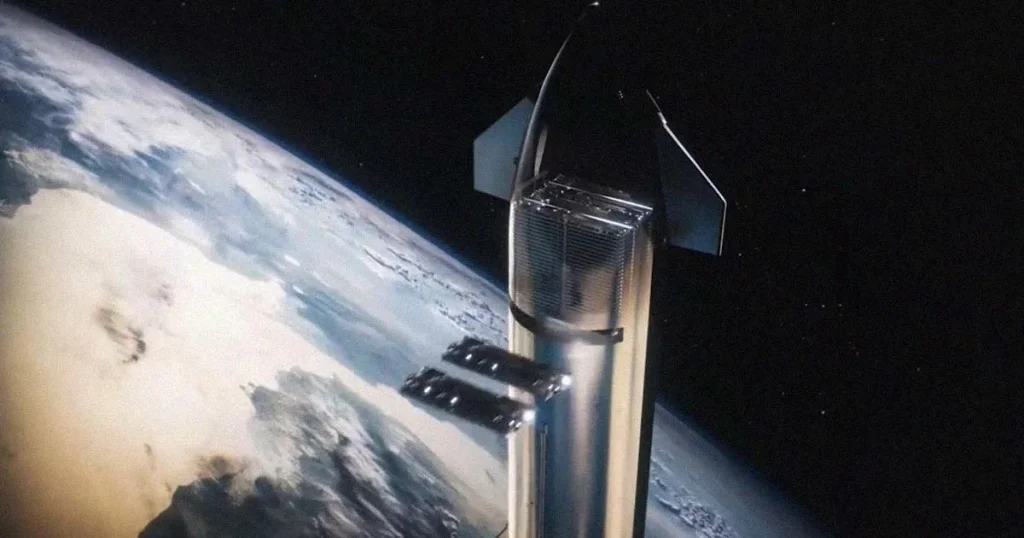
SpaceX’s current deployment method involves the Falcon 9 rocket, but Musk has emphasized the need for the Starship rocket to launch these revamped Starlink satellites.
This shift is crucial, as the new satellites will reportedly be much larger, enabling them to provide gigabit connectivity worldwide.
SpaceX has made a formal request to the Federal Communications Commission (FCC) to lower the operational altitude of these satellites, bringing them closer to Earth’s surface, which promises fiber-like broadband performance.
Michael Nicolls, Starlink’s Vice President of Engineering, echoed Musk’s enthusiasms, stating that Starship’s capabilities bring the company closer to global gigabit connectivity.
The ambition behind these advancements is to close the digital divide, offering ubiquitous mobile connectivity to billions, a vision that has spurred SpaceX to seek FCC approval for operational changes to the Starlink satellites’ parameters.
As reported by various sources, SpaceX has not only focused on enhancing connectivity but also teased the Starship’s ‘launch and return’ capabilities, a demonstration of the rocket’s innovative reusability.
Despite many achievements in engineering and space technology, the company’s previous efforts to expand Starlink’s capabilities faced challenges, with earlier larger models underperforming in terms of signal strength compared to their predecessors.
While the promise of improved performance is enticing, these developments are not without criticism.
SpaceX’s efforts to enhance connectivity have raised concerns among astronomers worried about increasing space debris cluttering Earth’s orbit and interfering with astronomical observations.
The balance between technological advancement and environmental responsibility remains a complex challenge for the company.
Despite these concerns, SpaceX is gearing up for future operations, with Starship, a towering rocket still undergoing testing, poised to become the linchpin of SpaceX’s satellite internet ambitions.
With a recent successful test flight, SpaceX demonstrated the potential for reusability in their design, capturing the booster back at the launch tower shortly after taking off.
As SpaceX advances its ambitious plans, the world watches to see if performance improvements can be delivered while addressing environmental concerns linked to launching massive satellites and rockets into space.