
An Australian firm has made a notable achievement in the field of cryonics by successfully implementing a cryogenic preservation process on a deceased individual.
Southern Cryonics, in collaboration with CryoPath Tech, has frozen a man following his death, with the hope that future medical advancements might someday allow for his revival and restoration to health.
This groundbreaking process, completed between May 12 and May 17, 2024, marks the first successful cryonics suspension in Australia.
The individual, affectionately referred to as ‘Patient 1’, was in his 80s when he opted for the procedure before his passing on May 12 in Sydney.
The cryogenic technique involves several intricate steps to stabilize and rapidly cool the deceased’s body to extremely low temperatures.
This effort, led by Southern Cryonics and Aaron Drake of Arizona Medical Science, aims to preserve individuals after legal death, anticipating that advancements in medical technology will eventually overcome ailments that are presently incurable.
The term ‘cryogenics’ originates from the Greek word “Kyros,” which signifies cold, and has often been associated with the notion of immortality, largely inspired by science fiction narratives.
The process was first set into motion when Patient 1’s health began to rapidly deteriorate.
The team, consisting of Southern Cryonics representatives, Australian Blood Management (ABM) members, and cooperating hospital staff, acted swiftly to initiate the suspension protocol upon his death.
This protocol was meticulously adhered to, involving complex stabilization and vitrification procedures that employed the latest in ECMO technology, ensuring safe preparation for the cryogenic state.
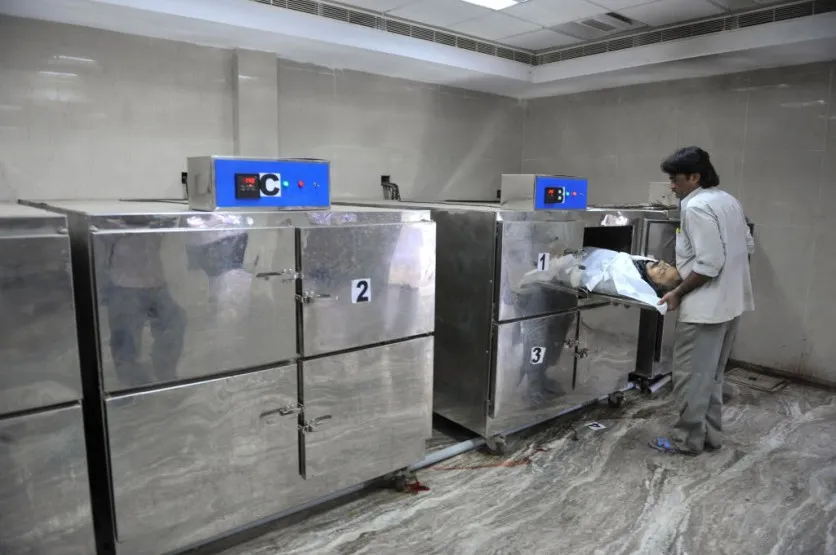
After legal death was declared, the body was initially relocated from the hospital’s cooling room to a funeral home, where it was packed in ice.
Subsequently, the body was transported to the Southern Cryonics facility in Holbrook, New South Wales, where further cooling took place.
A specialized sleeping bag ensured intact preservation in liquid nitrogen, with the body being reduced to dry ice temperatures during the transfer.
Phil Rhoades spearheaded the initiative, aided by Joe Allen, Neil Britt, and Scribble Films, finalizing the process over a span of ten hours.
Patient 1 was eventually brought to extremely low temperatures using computer-controlled cooling chambers at the Southern Cryonics facility before being securely placed in a Dewar for long-term storage.
This pioneering venture underscores a significant achievement for Southern Cryonics, highlighting not only the precision of the procedure but also the concerted teamwork and dedication of those involved.
The hope underpinning this procedure is that future technological developments may hold the key to reanimate and cure individuals preserved under these methods.