
In a remarkable step forward in electric vehicle (EV) technology, a modified electric car has demonstrated a unique ability to increase its battery’s energy density as it travels.
The key to this innovation is the E-Cat Power generator, equipped with the SKL NGU Power Cell, which was tested in a Renault Twizy 80 at the Circuito Internazionale di Latina racetrack in Italy.
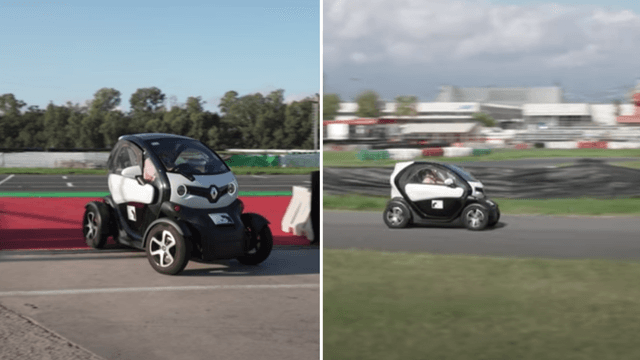
The demonstration involved two models of the Renault Twizy 80.
Notably, the vehicle fitted with the E-Cat power system exhibited an incredible increase in energy efficiency over a six-hour journey.
Initially, the experimental vehicle started with a battery energy density of 62%.
After the extended test drive, it was recorded at an 83% energy density.
Meanwhile, an unmodified vehicle saw its energy supply deplete after only covering 45 miles in about two hours and twenty minutes.
In stark contrast, the E-Cat powered car continued to drive seamlessly, covering a distance of 124 miles.
The E-Cat system, developed by Leonardo Corporation, offers a continuous power source that does not rely on traditional fuel or generate emissions.
This breakthrough relies on a component known as the SKL NGU Power Cell, which extracts energy from the vacuum energy of the Zero-point energy field, a limitless energy resource found throughout the universe.
Described as akin to a solar cell, the NGU Power Cell diverges by absorbing energy not from the sun but from the omnipresent Zero-point energy field.
One such cell, no larger than 60 mm in diameter, can perpetually deliver 10 watts of DC electricity.
Independent verification by Maico Marzocchi, a specialist in electronic engineering, underscored the functionality and promise of the E-Cat system.
The test he conducted affirms Leonardo Corporation’s claim that this technology can not only maintain but also enhance a vehicle’s battery life during use.
The E-Cat Power generator is noted for its versatility and affordability, making it viable for various applications in homes, businesses, and industry, such as lighting, heating, cooling, and powering electronic devices.
By removing the need for fuel or external energy sources, it aligns electric vehicles towards a sustainable, fossil-fuel-free future.
This advancement signifies a potential shift in the landscape of transportation technology, hinting at vehicles with ‘unlimited’ range capabilities and accelerating the move away from fossil fuels.