
Recently, scientists at the United States Department of Energy’s Facility for Rare Isotope Beams (FRIB) have reached a historical milestone that could transform the field of nuclear physics.
By accelerating a high-power uranium beam, they have achieved a record 10.4 kilowatts of continuous beam power.
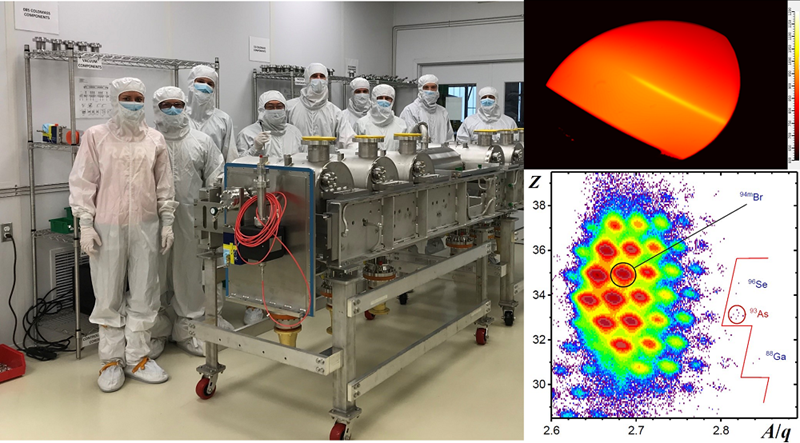
This remarkable accomplishment opens new doors in the study of rare isotopes, which are crucial for understanding elemental processes in the universe.
Uranium, known as the heaviest naturally occurring element, presents significant challenges when it comes to acceleration due to its mass and complex atomic structure.
However, because of its ability to produce a wide range of isotopes when fragmented or undergoing fission, uranium remains a valuable element in scientific research.
The achievement in powering the uranium beam focuses on exploring these rare isotopes, which could provide insights into the formation of elements in stars and supernovae.
The recent experiment at FRIB not only reached a new peak in beam power but led to the rapid identification of three previously unobserved isotopes: gallium-88, arsenic-93, and selenium-96.
This discovery was made within just eight hours of operating the advanced uranium beam, showcasing the potential and efficiency of the FRIB’s cutting-edge technology.
Such an endeavor required the seamless operation of a sophisticated setup involving a superconducting linear accelerator.
At the heart of this setup are 324 resonators held at extremely low temperatures within 46 cryomodules, enabling efficient ion acceleration.
Additional critical innovations included a liquid-lithium stripper that enhanced the charge of uranium ions for better acceleration, and a specialized heavy-ion Radio-Frequency Quadrupole (RFQ) system.
The seamless integration of these technologies was pivotal in facilitating the groundbreaking beam power observed during the experiments.
Furthermore, the use of the Electron Cyclotron Resonance (ECR) ion source allowed for the precise production and management of uranium ions.
This was complemented by a high-power target and beam dump designed to safely manage the intense energy output.
Collaboration played a vital role in this success, with scientists from Japan and South Korea contributing to the mission.
Their joint efforts have not only set a new benchmark in the field but also laid the groundwork for further advancements.
With funding supported by organizations including the National Science Foundation and the Institute for Basic Science in South Korea, this project promises future explorations into underexplored nuclear landscapes.
This accelerated uranium beam achievement at FRIB is expected not only to deepen our understanding of nuclear structures but also to extend the reach of nuclear physics research into previously uncharted territories.
Through these intense studies of rare isotopes, scientists anticipate unearthing new information that could unlock the mysteries of how elements are born and evolve in the cosmos, potentially reshaping our understanding of universal dynamics.