
In the ever-evolving world of battery technology, a significant breakthrough has been made that could redefine energy storage systems as we know them.
A research team has developed a novel method that addresses a fundamental challenge in solid-state batteries, promising a future of safer and longer-lasting power sources.
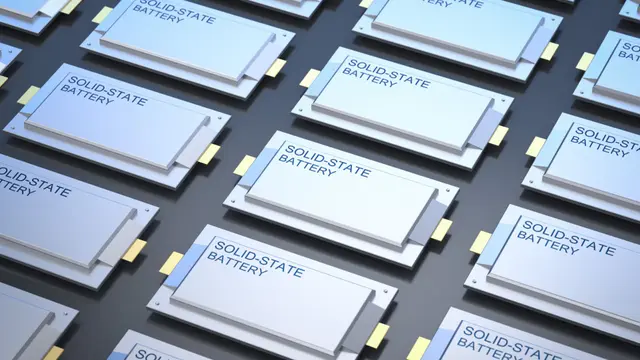
Batteries today, such as those used in smartphones and electric cars, primarily rely on liquid electrolytes to transport energy.
While largely safe, these liquid electrolytes are flammable, which presents safety concerns. Solid-state batteries, using solid electrolyte materials, emerge as a promising alternative.
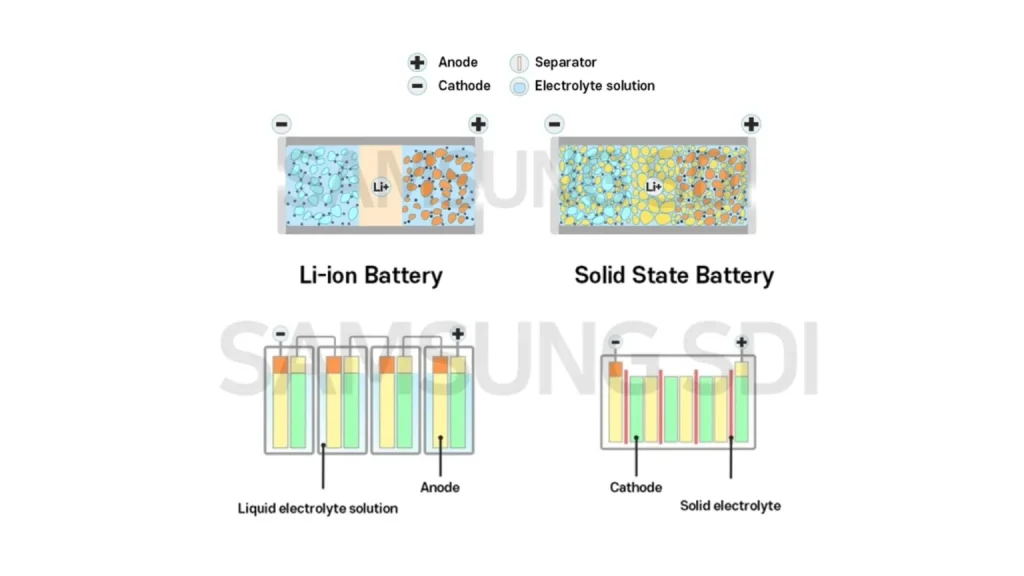
They potentially offer higher energy densities, powering intense research efforts focused on their development.
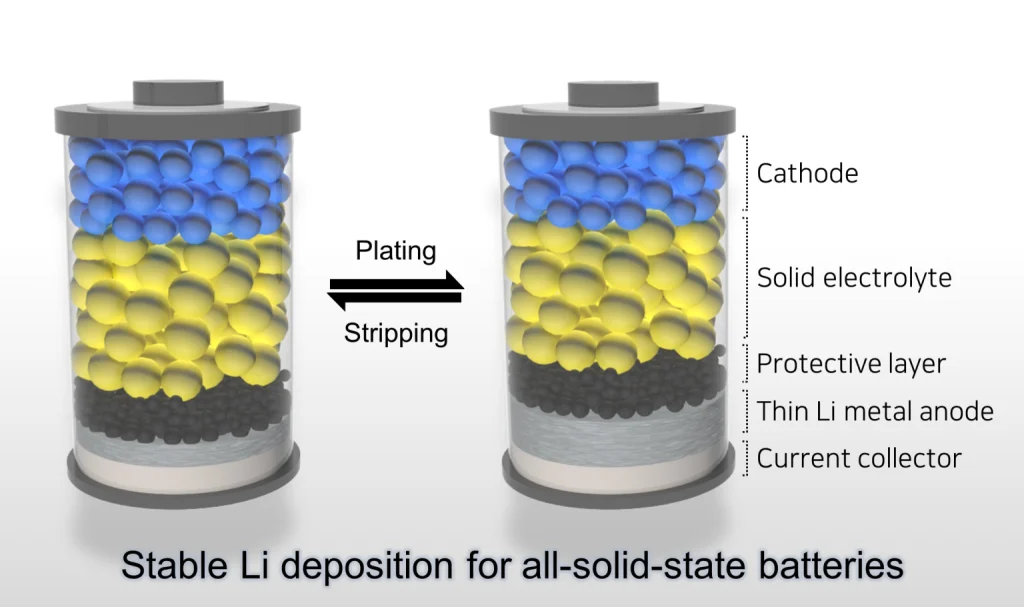
The crux of the problem with current solid-state battery designs lies in lithium deposition during charging and discharging cycles.
Typically, uneven lithium deposition patterns can hasten the depletion of the battery’s life and reduce its performance.
In a significant advancement, researchers, supported by POSCO N.EX.T Hub, have engineered a cutting-edge solution involving a “bottom electrodeposition” technique.
This method introduces an ultra-thin protective layer on the battery’s anode to guide lithium ions precisely as they stack up, thereby preventing random deposition patterns.
The breakthrough, involving the placement of lithium from the anode’s bottom, ensures more efficient battery operation.
Verified through advanced imaging techniques like scanning electron microscopes (SEMs), this advancement circumvents the longstanding issue of uneven lithium deposition.
Early tests of these upgraded batteries have yielded promising results.
Test batteries have shown improved performance even when using extremely thin lithium layers, indicating potential longevity and efficiency previously unattainable in prior solid-state designs.
Remarkably, batteries with these advancements demonstrated consistent electrochemical performance over time, even with lithium metal layers as thin as 10 micrometers or less.
Professor Soojin Park, who led this pioneering research, stated, “We have devised an enduring all-solid-state battery system through a novel electrodeposition strategy.
Further research could provide more effective ways to enhance battery life and increase energy density.”
This technological breakthrough also has potential real-world implications.
POSCO Holdings plans to spearhead efforts to commercialize this advanced technology, potentially unlocking new energy storage possibilities for both consumer and industrial applications.
This discovery in solid-state battery technology marks a critical step towards not just longer-lasting energy solutions but safer ones as well, paving the path for innovation in the battery manufacturing industry, as researchers seek to optimize energy storage systems further.