
NASA has made a pivotal decision to deactivate the Plasma Science Experiment aboard the Voyager 2 spacecraft as it journeys further into interstellar space.
This measure, aimed at conserving power, highlights the challenges faced by the spacecraft after 47 years in space.
Voyager 2 has traveled more than 12.8 billion miles, now residing alongside its twin, Voyager 1, as the most distant human-made objects from Earth.
As the power generated by its Radioisotope Thermoelectric Generators declines, steps are necessary to extend its life and scientific mission.
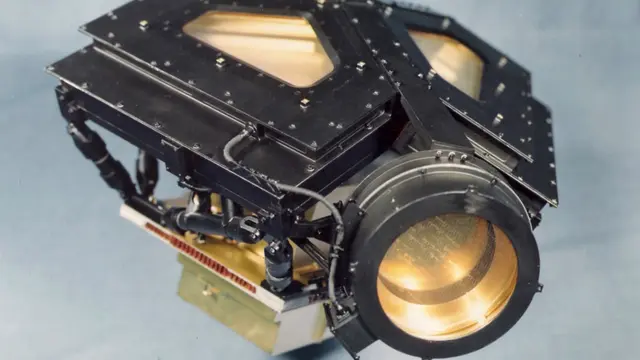
The Plasma Science Experiment, designed by MIT, has been crucial in analyzing charged particles in our solar system and beyond.
Its data was instrumental in determining Voyager 2’s crossing from the heliosphere into the interstellar medium in November 2018.
Despite its contributions, this instrument was deemed non-essential due to power constraints.
On September 26, NASA’s Deep Space Network sent the deactivation command, which took 19 hours each way to confirm.
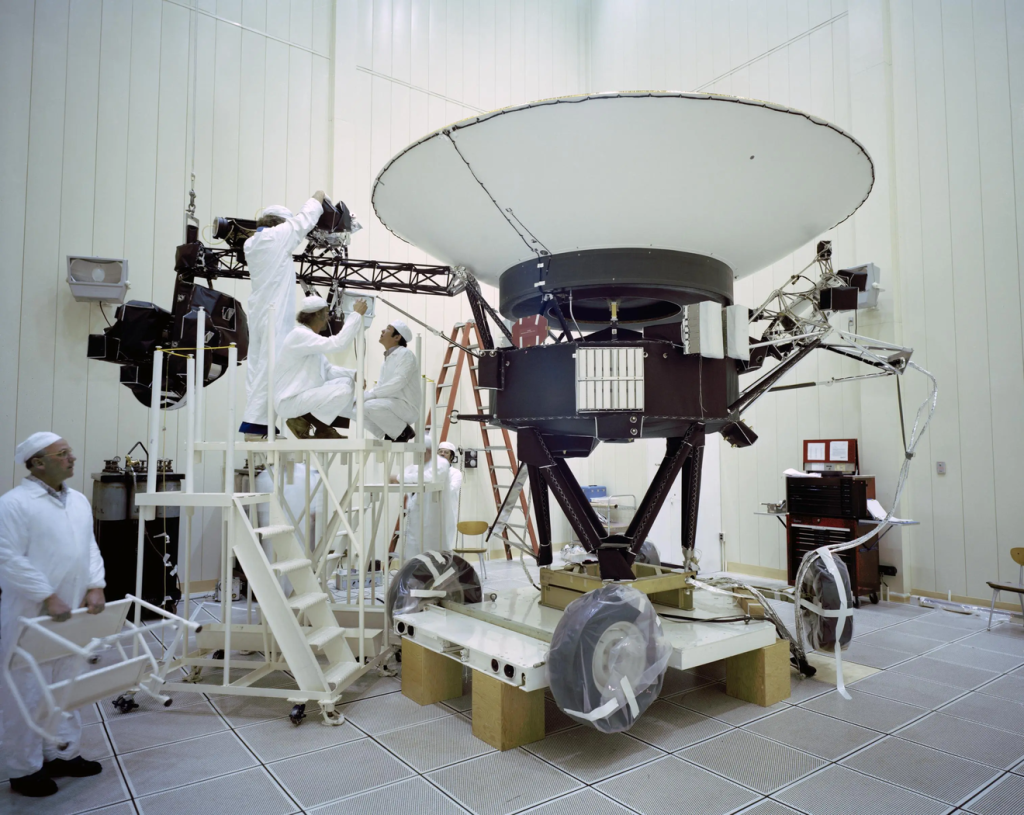
The mission team had to carefully strategize this move to avoid unwanted disruptions to the spacecraft’s operations.
Voyager 2 and its sibling, Voyager 1, rely on the slow decay of plutonium-238 for power, losing approximately 4 watts each year. Over the decades, NASA has had to turn off various non-critical science instruments to save power, ensuring the longevity of the mission.
Even without the plasma instrument, Voyager 2 still operates four other key instruments aimed at probing the mysteries beyond the heliosphere.
These instruments focus on studying the Sun’s influence through particles and magnetic fields in interstellar space.
The plasma instrument comprised four ‘cups,’ primarily focused on capturing plasma flow from the Sun.
However, as Voyager 2 ventured into interstellar space, only the fourth cup at a right angle to the others provided occasional useful data.
This limited data collection prompted its shutdown ahead of others.
Voyager’s mission continues to deliver unique scientific insights as it offers humanity’s first direct exploration of interstellar space.
With deliberate management of available resources, mission engineers aim to extend the operation of at least one science instrument into the 2030s.
The Voyager spacecraft, despite shutting down instruments over time, symbolize humanity’s quest for knowledge and exploration.
As Voyager 2 continues on its silent journey, it carries with it a message from Earth, exploring the vast, uncharted territory between the stars.