
A pioneering team of researchers from the California Institute of Technology (Caltech) and the Keck School of Medicine at USC has developed a revolutionary wearable device that can noninvasively assess stroke risk.
Utilizing a technique known as speckle contrast optical spectroscopy (SCOS), the innovative device shines infrared laser light through the skull to monitor blood flow and volume in the brain.
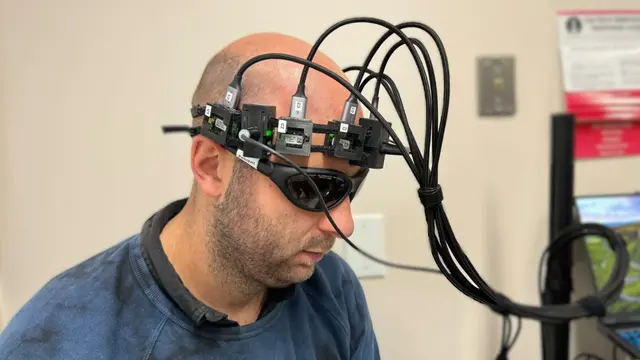
According to Simon Mahler, a Caltech postdoctoral scholar and co-lead author of the study, this is the first-time a device can physiologically measure an individual’s stroke risk.
The system demonstrated promising capabilities in distinguishing between individuals with low and high stroke risk based on changes in blood flow and volume during a breath-holding test.
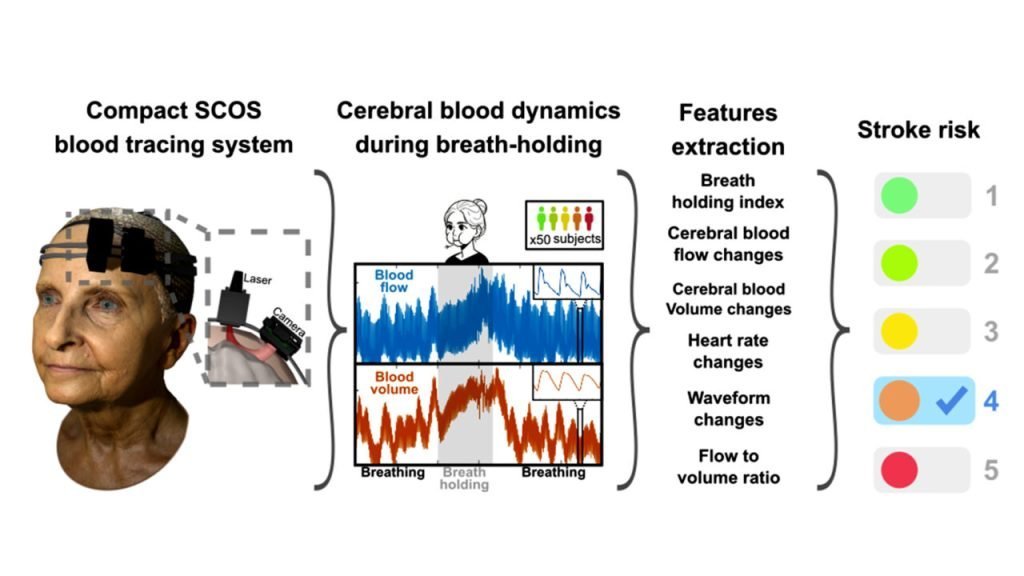
The SCOS technique involves directing laser light into the brain and using specialized cameras to capture the scattered light after it interacts with the brain’s blood vessels.
Researchers then measure the decrease in light intensity from its entry point to the collection point to determine blood volume, and analyze how light scatters into speckles, which fluctuate based on blood flow rate.
Through these measurements, the team calculates the ratio of blood flow to volume, providing significant insights into the stiffness of blood vessels.
In their study involving 50 participants, the SCOS method enabled the researchers to observe how blood vessels responded during a breath-holding exercise—an indicator of stroke risk.
Professor Charles Liu of USC highlights that a similar device for noninvasive stroke risk screening could become as commonplace as cardiac stress tests, significantly contributing to public health.
The device aims to bridge a critical gap by replacing indirect stroke risk markers, such as lifestyle and family history, with direct physiological data.
In the study, 25 low-stroke-risk and 25 high-stroke-risk participants were selected using the Cleveland Clinic Stroke Risk Calculator.
Wearing the SCOS device, they were asked to hold their breaths, inducing temporary stress on the brain and causing blood to surge.
The device successfully identified differences in blood flow and volume between the two groups, indicating the blood vessels’ capability to expand better in low-risk individuals.
The research uncovered striking evidence: individuals in the high-stroke-risk group showed significant differences in blood flow and volume, correlating with increased brain blood pressure during the breath-holding test.
Moving forward, the team plans to integrate machine learning algorithms to enhance data analysis and extend the study to a more diverse patient group.
Their goal is to refine the technology further and conduct long-term clinical trials to track real-world health outcomes.
If successful, this portable and cost-effective technology could radically transform stroke care and prevention worldwide.
Funded in part by the National Institutes of Health, the study’s results have been published in Biomedical Optics Express.
The research team includes notable contributors from both USC and Caltech, reflecting a significant collaboration aimed at addressing unmet needs in neurological care.