
The discovery of artifacts associated with an ancient board game is providing new insights into human interactions from thousands of years ago.
Archaeologists have found six carvings into rock surfaces at various sites on the Abşeron Peninsula and Gobustan Reserve in Azerbaijan.
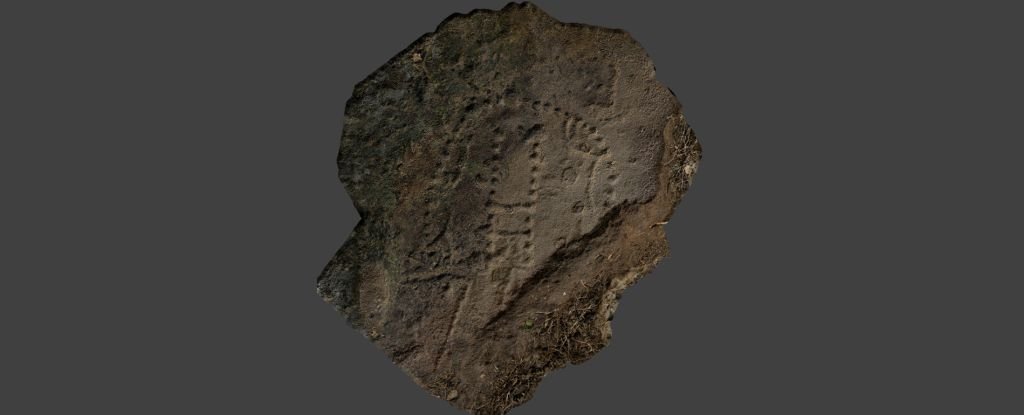
Dating back to around 2000 BCE, these carvings resemble the distinctive pattern of the ancient board game known as ‘Hounds and Jackals,’ or ‘Fifty-Eight Holes.’
This period is contemporaneous with the previously oldest example of the game found in the tomb of a government official in ancient Egypt.
The Azerbaijani findings challenge previous assumptions about the origins of the game.
Archaeologists Walter Crist from Leiden University in the Netherlands and Rahman Abdullayev from the Minnesota Historical Society suggest that ‘Hounds and Jackals’ might have originated in southwestern Asia instead of Egypt, as earlier thought.
Wherever it emerged, the discovery underscores a critical aspect of board games—they serve as excellent tools for forging social bonds.
The artifacts found in Azerbaijan were likely used by cattle herders.
As Crist and Abdullayev noted in their paper, at certain times in antiquity, specific games gained regional popularity, indicating that they helped connect cultures that regularly interacted with one another.
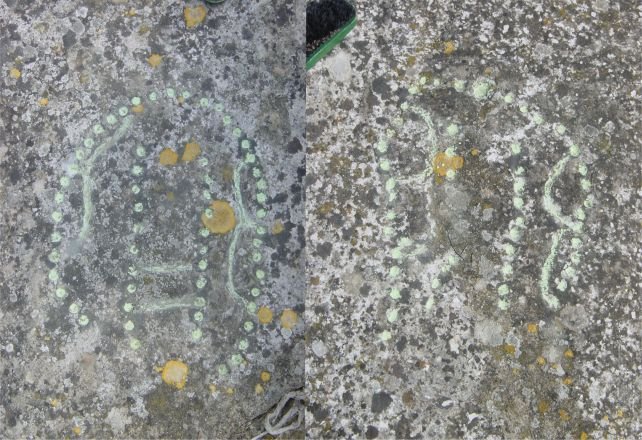
Crist and Abdullayev discovered their six ‘board’ designs at various sites across Azerbaijan: three at Ağdaşdüzü, and one each at Çapmalı, Yeni Türkan, and Dübəndi.
These carvings on rocks display the hallmark 58-holed pattern known from similar games and date back to the second millennium BCE.
Hounds and Jackals is a race game where two players move pieces around a track, aiming to reach the end first.
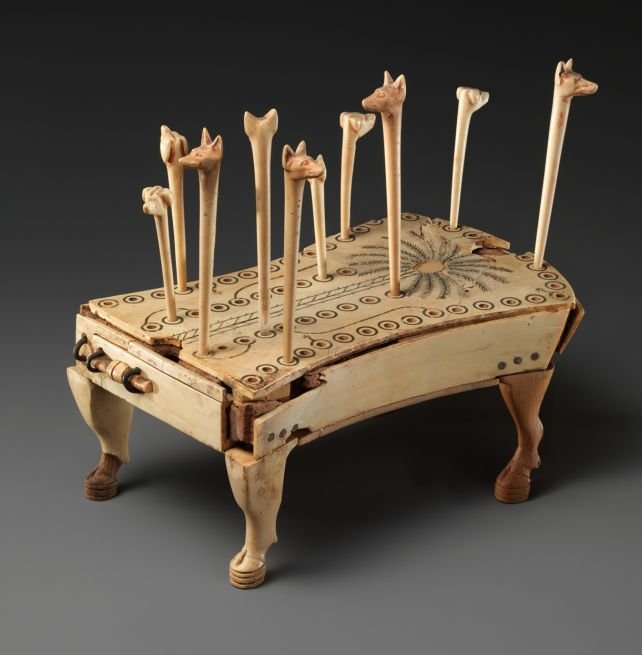
The game, akin to modern-day Snakes and Ladders or Ludo, has been found predominantly in Egypt, with the earliest dated example from a tomb at El-Assasif between 2064 and 1952 BCE.
However, the simultaneous appearance of the game in Azerbaijan suggests that its origin might be more complex.
The board game finds in Azerbaijan suggest widespread enjoyment across social classes.
In Çapmalı, a game board was found in a cave used as a winter shelter by cattle herders, while in Yeni Türkan and Dübəndi, boards were discovered in the tombs of the wealthy.
This wide geographical spread and range of social contexts imply that Hounds and Jackals served as a powerful tool for making connections, forming friendships, and assessing trustworthiness.
Whatever the true origin of the game, it quickly gained popularity across various regions and social strata—from the nobility of Middle Kingdom Egypt to Caucasian cattle herders and Old Assyrian traders in Anatolia to workers building the Middle Kingdom pyramids.
The rapid spread of the game attests to its ability to facilitate social interactions across boundaries, a function that continues to be relevant today.
This research was published in the European Journal of Archaeology, highlighting the pivotal role board games have played in human society throughout history.