
Deep in the rainforests of Madagascar, scientists have unveiled a new species of chameleon that could clinch the title of the smallest reptile in the world.
Officially known as Brookesia nofy, this miniature leaf chameleon is slightly larger than the previously discovered Brookesia nana but still remarkably tiny, measuring just over 33 millimeters in length.
Remarkably, B. nofy was first identified through photos taken by tourists and uploaded online.
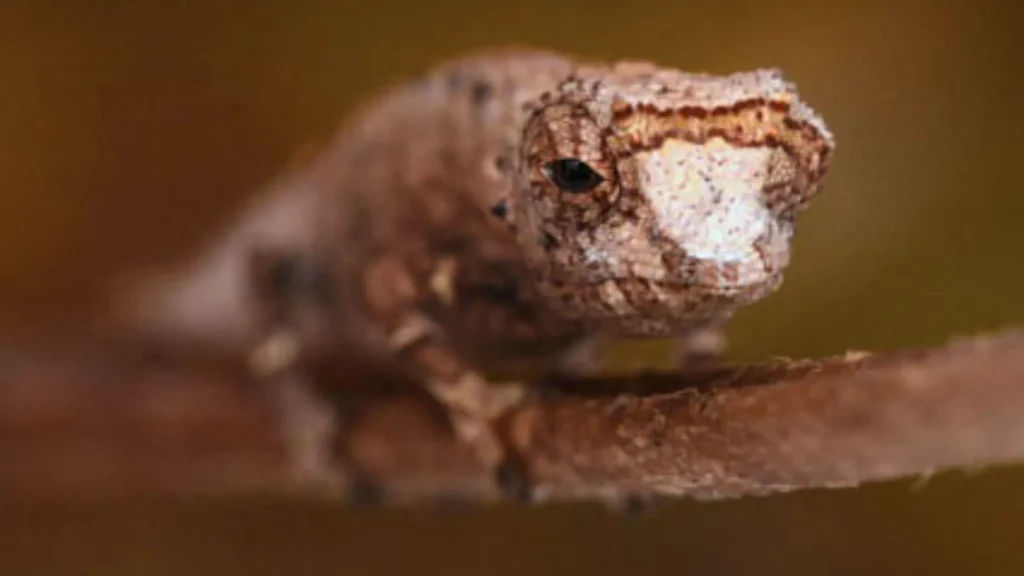
This triggered an investigation by Miguel Vences, a herpetologist at the Technical University of Braunschweig in Germany, and his team of local collaborators, Andolalao Rakotoarison and Alida Frankline Hasiniaina.
Their relentless efforts in the rainforests led to the collection of the first official sample of this species.
Leaf chameleons, such as B. nofy and B. nana, are known for their extremely small sizes. Measuring just 22 millimeters, B. nana, discovered in 2021, is currently the world’s smallest reptile.
These species have distinct adaptations that allow them to blend seamlessly with their forest floor environment, camouflaging as fallen leaves.
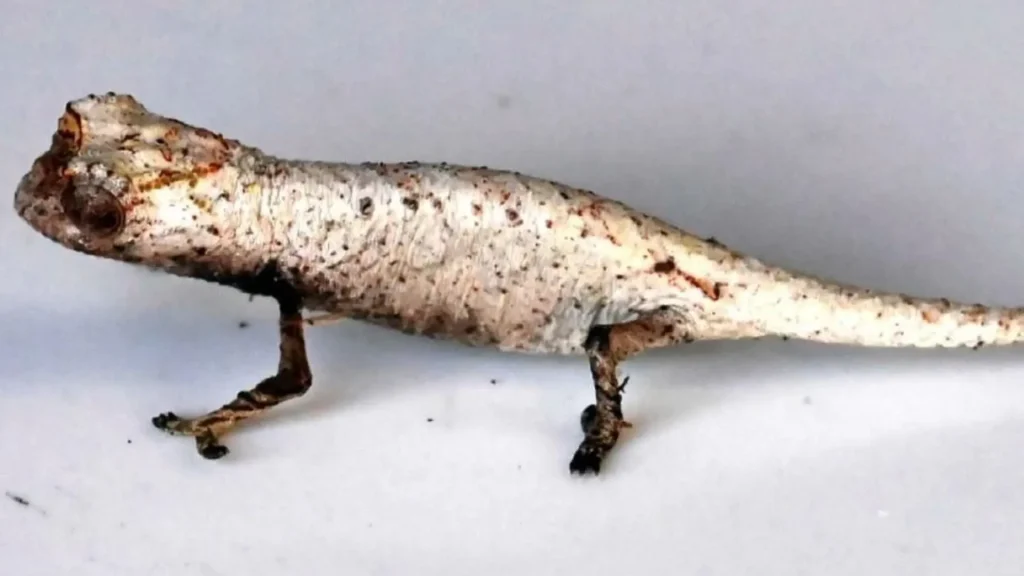
The discovery of B. nofy in particular underscores the fragile nature of Madagascar’s ecosystems.
Its name is derived from the Ankanin’ny Nofy tourist site on the eastern coastline of Madagascar, an area that harbors one of the island’s most endangered ecosystems: coastal rainforests.
These habitats are rapidly dwindling due to deforestation, bushfires, and human activities, with only about 10 percent of them remaining today.
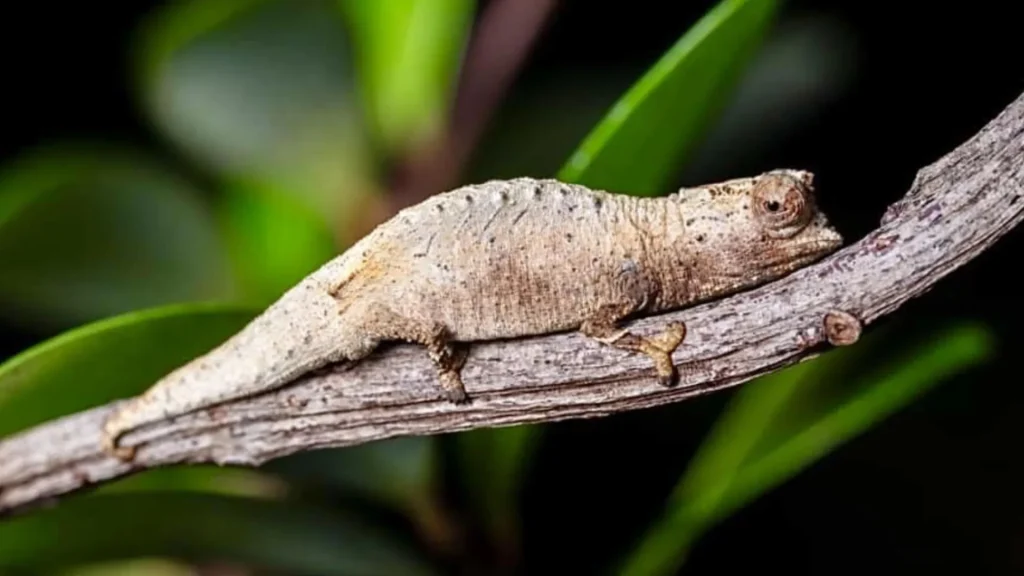
Researchers found that B. nofy has managed to survive in part due to a protected forest patch as part of a private reserve operated by a local hotel.
The owners have allowed the forest to regenerate over the last two decades, offering a sanctuary for this tiny chameleon. Ecotourism has emerged as a crucial factor in Madagascar’s conservation efforts.
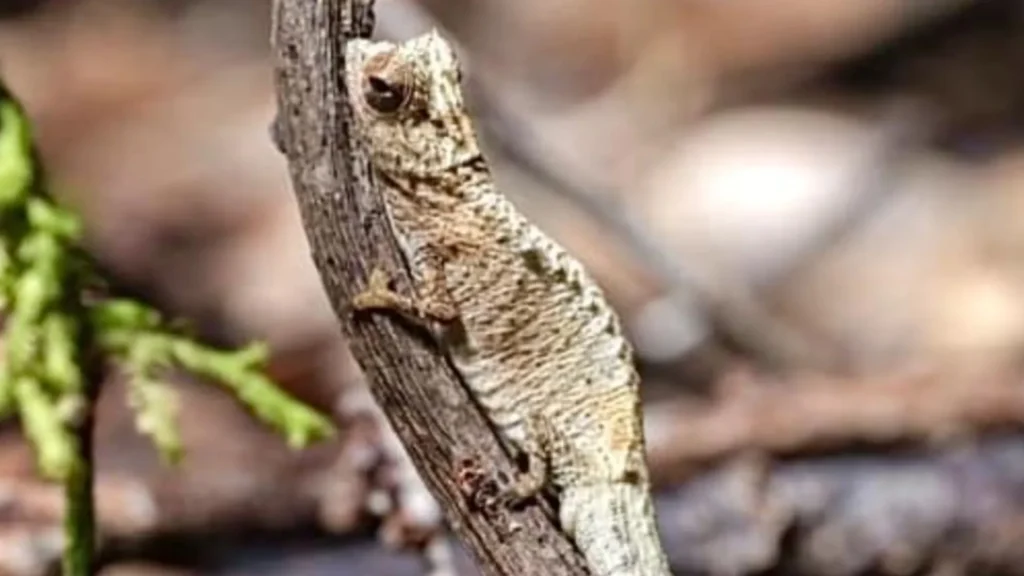
By attracting tourists eager to see unique wildlife such as chameleons and lemurs, ecotourism provides financial incentives to protect the remaining forests.
Vences highlights the importance of this economic model, asserting that without such incentives, the survival chances for species like B. nofy would diminish significantly.
The issue of habitat destruction remains a constant threat. Madagascar’s forests have seen significant loss due to slash-and-burn agriculture, logging, and fires.
Vences recounted witnessing extensive damage from bushfires during a visit to one of the species’ habitats.
The loss of forests poses a dire risk to the island’s biodiversity, including the newly discovered chameleon species.
Another notable finding was that B. nana, discovered in northern Madagascar, is its nearest competitor for the title of the smallest reptile.
Measuring about the size of a sunflower seed, the discovery of these minuscule reptiles raises interesting questions about the limits of vertebrate body sizes.
Such discoveries highlight not just the incredible biodiversity found in Madagascar, but also the pressing need for robust conservation strategies to protect these vulnerable species.
Scherz, an evolutionary biologist and study co-author, emphasized that the cuteness and uniqueness of these species continue to capture the imagination, spotlighting the urgent plight of their habitats.
Unfortunately, the prognosis for B. nofy and its habitat remains uncertain. As poverty and population pressures continue to drive deforestation, efforts must be intensified to preserve Madagascar’s natural heritage.
The fragile ecosystems require ongoing protection to ensure the survival of species that, like B. nofy, are seen nowhere else on Earth.